

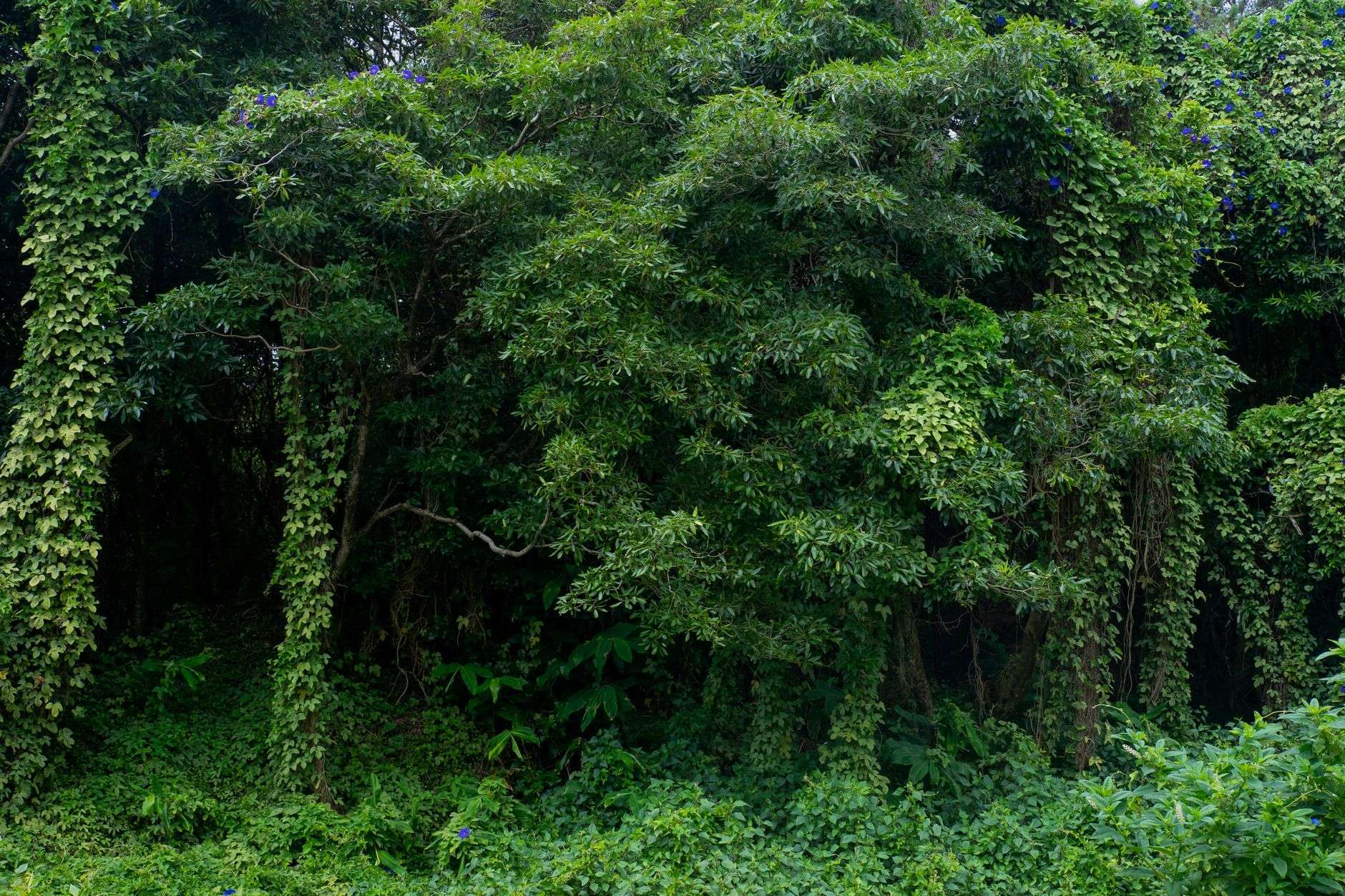
FOLEY, Ala. — Plants once brought to the Gulf Coast for decoration, erosion control and agriculture have become a growing threat to native ecosystems, according to conservation officials who spoke Monday at the Foley Community Library.
The presentation by Graham Creek Nature Preserve opened the library’s “Bites and Insights” discussion series on Sept. 15, giving residents a closer look at invasive plant species spreading throughout coastal Alabama and what can be done to control them.
Ryan Caver, nature parks superintendent for the city of Foley, and Hayden Hopkins, a park ranger II for the city, discussed species including cogongrass, Chinese tallowtree, kudzu, Chinese privet, Japanese climbing fern and nonnative honeysuckle.
Holding On at Graham Creek
For Caver, managing invasive plants is one of the most difficult parts of protecting Graham Creek Nature Preserve, a city-owned preserve that includes wetlands, pine habitat and areas managed with prescribed fire.
“We are at literal war with these invasive species,” Caver said. “It is my fiduciary duty to do everything I can to stop it, and right now we’re merely holding on.”
Plants That Were Brought Here on Purpose
Many of the plants now causing problems were deliberately introduced to the United States because they appeared useful.
Kudzu was promoted throughout the South for erosion control and livestock forage. Its rapid growth, however, allows it to cover trees and other vegetation, blocking sunlight and pushing out native species.
Chinese tallowtree, commonly called the popcorn tree, was introduced in hopes of producing oil from its seeds and later became popular as an ornamental because of its colorful fall foliage. Birds and water can spread its seeds into forests and wetlands, where the trees can crowd out native vegetation.
Hopkins told attendees that tallowtrees can appear even in recently landscaped areas because birds spread their seeds so easily.
“They’re everywhere, too,” Hopkins said. “If you recognize it, start walking around. Like anywhere that’s been freshly landscaped, look at one — man, is that a popcorn tree popping up in the middle of the grass? Birds spread it like crazy.”
Pull Them Young
Hopkins said removing invasive plants while they are young is often the simplest approach, because the entire root system can be pulled from the ground. Larger woody plants may require more targeted treatment to prevent them from growing back.
He also encouraged residents to pay attention during winter, when evergreen invasive plants such as camphor trees and privet can be easier to distinguish from dormant native vegetation.
That winter-identification tip is one of the more practical takeaways for homeowners. Once native deciduous trees and shrubs have dropped their leaves, a stand of something still green is conspicuous in a way it never is in July.
The Honeysuckle Problem
Another plant discussed during the presentation was nonnative honeysuckle. Hopkins said its long history in the region sometimes causes people to assume it belongs here.
“A lot of people think it’s native because it’s been around forever, and everybody’s growing up with honeysuckle,” Hopkins said.
The Lag Period
Some invasive species may remain relatively unnoticed for years before their populations begin expanding rapidly, Hopkins said. He described this as a “lag period,” in which a species can exist in an area for decades before becoming widespread.
The lag period is one of the reasons invasive species management is difficult to fund and to explain. A plant that has been present and unremarkable for 30 years does not look like an emergency, right up until the point at which it does — and by then, control is far more expensive than early removal would have been.
The One That Scares Him Most
Cogongrass was among the most serious threats discussed during the event.
Originally introduced to the Mobile area in the early 1900s and later planted for erosion control and livestock forage, cogongrass spreads primarily through underground rhizomes. It can form dense patches that prevent native plants from growing and reduce usable habitat for wildlife.
The grass also creates concerns for land managers who use prescribed fire to maintain native ecosystems. Its dense buildup of vegetation can fuel hotter and more intense fires than native grasses, Caver said.
“This one scares me the absolute most,” Caver said.
That fire interaction is what separates cogongrass from a merely aggressive weed. Longleaf pine and other Gulf Coast habitats depend on periodic low-intensity fire, and prescribed burning is the primary tool land managers use to maintain them. A grass that burns hotter than the native fuel it displaces undermines the very practice used to keep the habitat healthy — turning a management tool into a hazard.
What Residents Can Do
The rangers’ advice to homeowners was straightforward: learn to identify the species, remove seedlings and young plants by hand while the root system comes up whole, use winter to spot evergreen invaders, and avoid planting known invasive ornamentals.
Graham Creek Nature Preserve is a city-owned property in Foley encompassing wetlands and pine habitat, with trails and educational programming open to the public.