Former Williamson Linebacker Remembered by Coach After Fatal Shooting in Mobile
A Mobile high school football coach is calling for a jersey number to be retired in honor of a former player killed in a recent shooting.
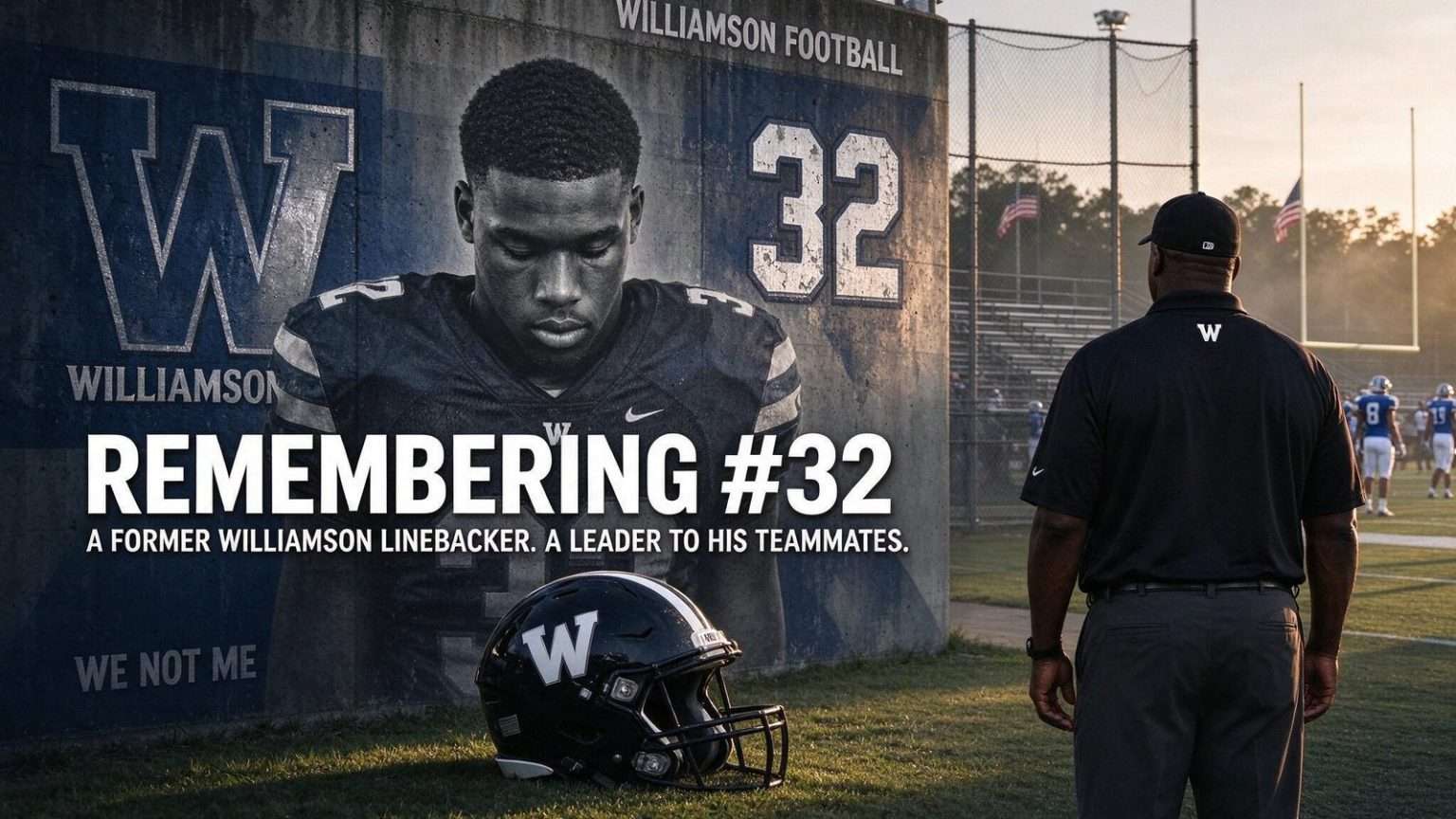
A Mobile high school football coach is remembering a former player as a natural leader and mentor to teammates after the 19-year-old was shot to death near Dauphin Island Parkway in late June.
Williamson head coach Dedrick Sumpter recalled Dave Populus as an undersized but talented middle linebacker who anchored the defense as a three-year starter, often arriving hours before summer practices to prepare and continuing to show up on the sidelines even after graduating.
Sumpter described Populus as someone teammates naturally listened to and respected, saying the young man had a way of connecting with players that went beyond football.
A Leader in the Weight Room and the Locker Room
Players like Populus are the ones coaches build programs around. A three-year starter in the middle of the defense sees the whole field before the snap, calls alignments and sets the tone for everyone behind him. Populus did that despite giving up size to bigger opponents week after week — the kind of deficit that football coaches across Mobile say is overcome in only one way, through preparation. His habit of arriving hours before summer workouts began, in the heat of an Alabama June with no coaches watching, told teammates everything they needed to know about what the standard was.
That standard did not end with his graduation. Former players who return to stand on the sidelines of their old programs are a valued presence at any school, and Populus kept showing up, staying connected to younger players who were coming up through the same routines he had mastered. At a school where many athletes come from homes without steady male guidance, an older teammate who takes that role seriously can shape a roster as much as any coach on the staff.
A Life Cut Short
After graduating, Populus had spent time at a college in Selma before returning home to Mobile. He had recently become a father and was working at a local fast-food restaurant to help support his son, according to his former coach. Just months before his death, Populus had stopped by to visit Sumpter, continuing a relationship that had lasted well beyond his playing days.
The visit stayed with the coach. Young men who leave a high school program and come back on their own — to talk, to check in, to be seen — are carrying the relationship forward, and Sumpter said that continued bond was part of who Populus was: someone who looked after people, on the field and off it.
Populus was killed on June 20 in an area near Webb Avenue that Mobile police have identified as a hot spot for violent crime. An 18-year-old has been charged with murder in the case, with prosecutors alleging the shooting occurred during a dice game and was not the first time the accused had shot Populus. The defendant remains held at the Mobile County Metro Jail on a $200,000 bond.
The details of the case, laid out in court filings, describe a dispute that escalated in the kind of casual setting — a street dice game — where arguments over small amounts of money can turn lethal in seconds. Prosecutors’ assertion that the defendant had shot Populus before added a further dimension to the proceedings, raising questions about how an earlier act of violence between the same two people had been resolved before the one that proved fatal.
Living With Violence, Not Bowing to It
Sumpter, who grew up near the same part of Mobile where Populus died, said neither his students nor the broader community tend to express open fear despite the ongoing violence in the area, describing it instead as something residents have had to adapt to over time. He said awareness of the danger doesn’t necessarily translate into daily fear for those who live there.
That resilience is familiar to anyone who has worked in the neighborhoods off Dauphin Island Parkway and Webb Avenue, where generations of families have raised children, attended the same churches and sent sons to the same schools while the city’s violence concentrated around them. Adaptation, though, carries its own cost. Coaches, teachers and pastors in these communities say young people learn early to read risk — which corners to avoid, which hours to stay off the street — a form of maturity that no child should have to develop, and one that never entirely keeps them safe.
Populus was doing what young men in his position are urged to do: he had come home, taken a job, become a father and stayed close to the mentors who had known him. His death underscored for his coaches and family the hard truth that following the script does not guarantee safety in a neighborhood where gunfire remains part of the backdrop.
A Program and a Community Grieve
Populus’s teammates planned to honor him even as they competed in a summer 7-on-7 tournament following his funeral. The summer passing circuit gives Mobile’s high school programs their first look at returning rosters each June and July, and teams from across the area gather at those events in an atmosphere that is equal parts competition and reunion. For Williamson’s players, taking the field days after burying a former teammate turned the tournament into something closer to a memorial.
Grief support has become a routine part of school life in communities touched by repeated violence. Counselors, coaches and pastors step in when a death touches a roster, and the weeks that follow a funeral often determine how young people process what happened — whether they withdraw, lash out or find their way back to the routines of practice, class and work.
Sumpter said he hopes to see Populus’s number permanently retired by the football program as a lasting tribute to a player he described as a leader both on and off the field, whose life was cut short by the kind of violence that has repeatedly touched the neighborhood.
Retiring a jersey is among the highest honors a high school program can give, reserved for players whose impact outlasted their eligibility. For Williamson, the gesture would also be practical: future teams would see the number hanging and hear the story of the man who wore it — a three-year starter who showed up early, came back after graduation and died doing his best to build a life for his son.
The Broader Toll in Mobile
Populus’s death fits a pattern that city leaders, police and community organizations in Mobile have worked for years to interrupt. The corridors around Dauphin Island Parkway and Webb Avenue have registered among the city’s highest concentrations of shootings, and the victims and defendants in such cases are overwhelmingly young. Each case removes a young man from his family and community, and in cases like this one it can remove two — the victim to the grave, the 18-year-old defendant to the Mobile County Metro Jail to await a murder trial that will stretch years into his own twenties.
Prosecutors and defense attorneys will now move the case through Mobile County’s court system, beginning with the early hearings where bond conditions are argued and evidence is tested. For Populus’s family and his former coach, the proceedings offer the slow, procedural form of accountability the courts provide — while the program he left behind remembers him the faster way, on the field, in the number he wore.
At Williamson, summer practices continued in the weeks after the funeral, with coaches leaning on the habits Populus embodied: show up early, do the work, look after the man beside you. His teammates will carry those habits into the fall season, and the program hopes, into a permanent reminder that outlasts them all.
Sumpter’s recollections sketch the arc of a player any program would prize. Undersized linebackers survive at the high school level on instincts and aggression, but the ones who last three years as starters combine those traits with the discipline to study opponents and communicate on the field. Populus was the defensive signal-caller in practice and the first voice teammates heard when a formation confused them, according to the coach’s account — a young man whose football intelligence was matched by an ability to reach teammates one on one when they were struggling with things no playbook covered.
The summer routine Sumpter described — Populus at the field hours before anyone else — became part of the program’s lore, the kind of story coaches retell to each incoming class. Players who watched him work in the empty heat of June learned the difference between talent and readiness, and the younger defenders who later took over the middle of the defense inherited both his position and his standard.
The tragedy of the case, those who knew him say, is how closely it tracked the dangers he had worked to avoid rather than any path he had chosen. Populus had followed the sequence his coaches and family laid out for him — school, work, fatherhood, mentorship — and the violence that took him came from the same streets it always had, indifferent to the progress he was making.
Community leaders along the DIP corridor, as the Dauphin Island Parkway area is known locally, have long described the tension residents live with: pride in neighborhoods that raised generations of working families, set against the reality that a handful of blocks can account for a disproportionate share of the city’s shootings. Mobile police have concentrated enforcement and outreach programs in the area, from increased patrols to violence-interruption work, but the pace of incidents has kept the corridor on the city’s list of persistent hot spots.
For Williamson’s program, the loss landed on a roster that already knew the stakes. Coaches at inner-city Mobile schools speak often about the double burden they carry — teaching the game while standing between their players and the streets outside — and the death of a former player is the outcome every one of them works to prevent and quietly fears. Sumpter’s willingness to speak publicly about Populus, teammates say, gave the roster permission to grieve openly rather than carry it silently.
The 7-on-7 tournament the teammates planned to play in became, in that light, an act of continuity. Football seasons march forward regardless of grief, and the summer circuit — with its long bus rides, its crowded fields and its scoreboard-less scrimmages — gave Williamson’s players a familiar structure at the moment they needed one. Playing well, and playing the way Populus had taught them to prepare, was the tribute they could deliver themselves.