

The sixth-grader running an egg business
Pull up to the Jones family driveway in Barnwell, just west of where U.S. 98 meets Scenic 98 in Baldwin County, and you will find a hand-built egg house stocked with two or three dozen cartons and a sign that reads “Fresh Farm Eggs.” The proprietor is eleven years old. Harper Jones, who recently started sixth grade, has built a working chicken and egg business from the coop up — breeding stock, incubation, predator management and all — and sells every carton her hens produce.
Harper lives with her parents, Jamie and John Ryan, and her 14-year-old brother Pierce on the family’s property in Barnwell, and she finished her final year at J. Larry Newton Elementary before moving on to Fairhope Middle School. The business started, as she tells it, with a simple ambition. “I thought it would be a cool thing to do, and I love animals, and I thought it would be fun.”
From two rabbits to forty hens
It began with rabbits — Charcoal and CoCo — and then, around the pandemic, a request for chickens. The family bought four birds from a local farmer: three hens and a rooster. The coop went up, the eggs started coming, and the flock never stopped growing. Today Harper keeps about forty laying hens spanning seven breeds: Rhode Island Reds, Barred Rocks, Silkies, ISA Browns, Buff Orpingtons, White Leghorns and Black Copper Marans.
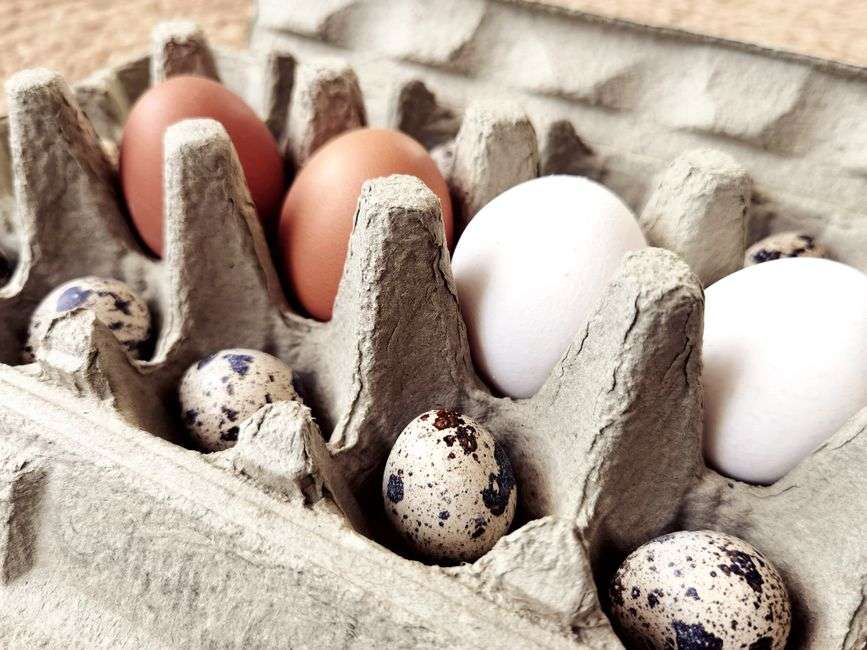
The breeds are the business. Harper learned to breed chickens by incubating eggs and working the swaps — chiefly the monthly Chicken Swap at the Elberta Co-Op, where breeders buy, sell and trade stock. Her father found Barred Rock hatching eggs online from South Florida, and Harper built a Barred Rock line from them. She added Silkies — the fluffy, fur-feathered breed with five toes instead of three — then bought Easter Egg chickens at the swap, the Ameraucana-crossed layers that produce pastel green and blue eggs.
The genetics have rules, and Harper can recite them. Pure breeds need their own roosters. Hens start laying at about six months, breed depending. Broody hens sit their own clutches; the rest go into the incubator. Either way, it takes 21 days for a chick to hatch. Last summer the flock was producing about a dozen eggs a day.
The economics of a driveway egg stand
The numbers work like any small business. Chicks sell for $2 to $6 depending on breed, and full-grown chickens bring $20 to $40, often as breeding trios of two hens and a rooster. The egg house operates on the honor system at $4 a dozen, stocked daily, with unwashed eggs selling alongside washed ones — and Harper can explain exactly why: an unwashed egg carries its natural protective bloom and keeps on the counter, but once an egg is washed it must be refrigerated.
The hens eat like royalty — fruits and vegetables from the family garden, including the wormhole riddled ones, plus out-of-date bread — and the leftovers with no wormholes go into the egg house free for customers. All of the marketing is word of mouth. There is no sign on the highway and no website; the customers are teachers, neighbors and friends who heard about the eggs from someone who bought them.
Predators, roosters and a business sense
The operation has weathered real losses. Free-ranging worked until raccoons and coyotes found the flock, so the run was enclosed and automatic doors installed — the birds learned to head inside at dusk on their own. And the roosters, Harper reports with the weary authority of experience, crow all day, not just at dawn.
What started as a cool thing to do has become a genuine enterprise: breeding programs, a supply chain that runs through Tractor Supply and the Elberta Co-Op, a hand-built retail outlet drawn first on a piece of wood by an eleven-year-old and built by Harper, her brother and her dad. She names every chick as soon as it hatches, which makes selling them the hard part — “She doesn’t want to let any of them go,” Jamie says.
The best part of the story may be what comes next: Harper is one year into a business most adults would find demanding, and she runs it every afternoon after school, feeding, watering and collecting, one dozen at a time. The chickens, it turns out, were the easy part.