

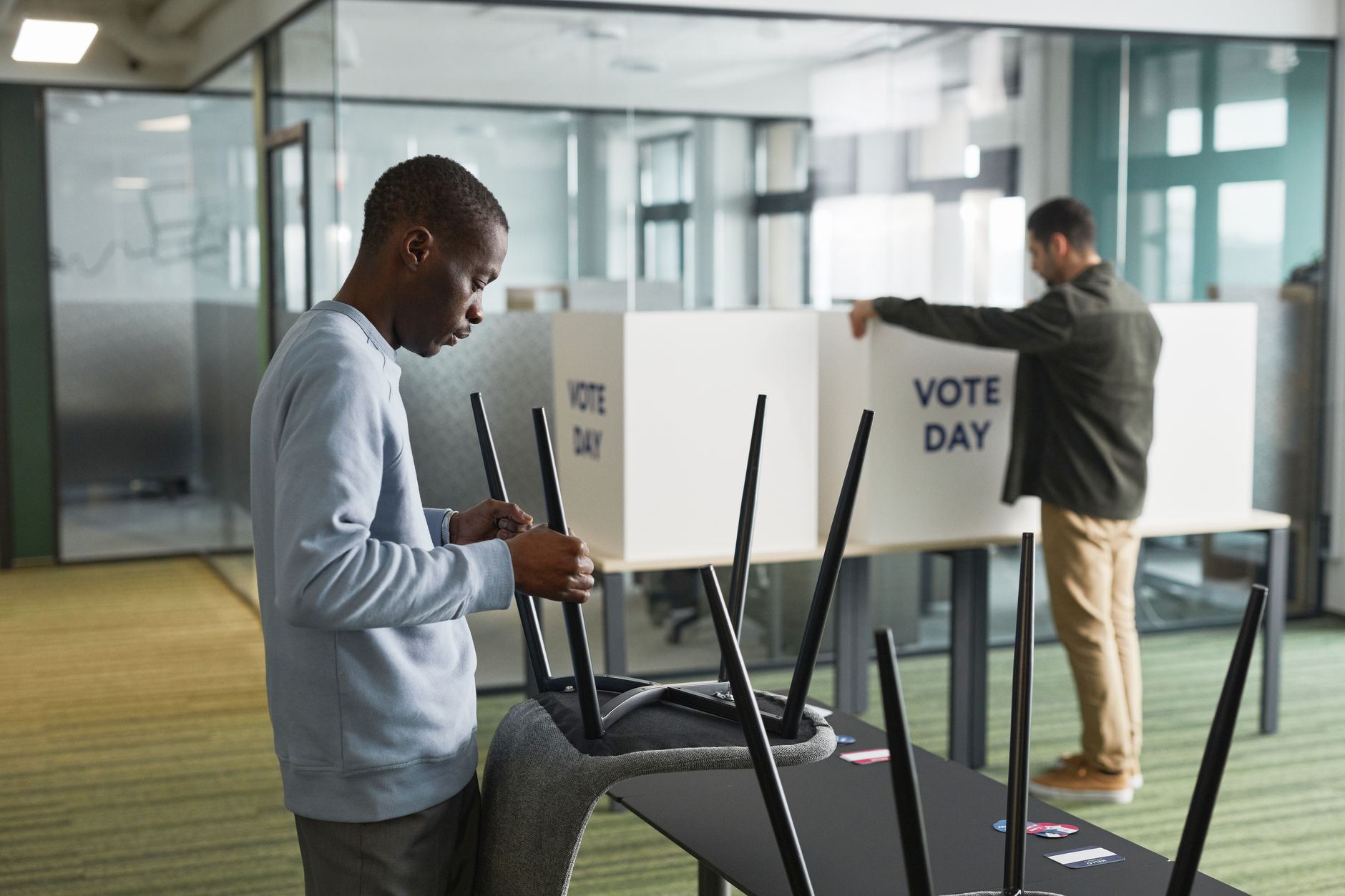
Voters in Frisco City return to the polls today, Tuesday, Sept. 22, for a court-ordered Frisco City special election that will once again decide who holds the town’s mayor’s office and its District One council seat. Polls open at 7 a.m. and close at 7 p.m.
The do-over election was set by a Monroe County judge after a legal challenge and criminal indictments tied to allegations of voter fraud in the municipal race held last August. For a small town in southwest Alabama, the case has become an unusually public test of how the state handles disputed local elections and the absentee ballots at the center of them.
How Frisco City Got Here
The special election traces back to a lawsuit filed by former Mayor Allen Lang against current Mayor Brandaun Love. In the suit, Lang claimed that more than 100 illegal absentee ballots were cast in last August’s election and that those ballots cost him the race.
A Monroe County judge ultimately set a new election date, ordering voters back to the polls to settle both the mayoral contest and the District One council race. The judge’s order means the results of the earlier election for those two offices will be decided anew by today’s vote.
Alongside the civil case, the allegations produced criminal charges. Three Monroe County women, Samantha Kyles, Sarah Bennett and Sharon Denson, were indicted and are accused of filling out illegal absentee ballots. An indictment is a formal accusation brought by a grand jury; it is not a finding of guilt, and each of the women is presumed innocent unless and until proven guilty in court.
What Is on Today’s Ballot
Today’s special election covers two offices:
- Mayor of Frisco City
- Frisco City Council, District One
Voting hours are the standard hours for Alabama elections, 7 a.m. to 7 p.m. Anyone in line at 7 p.m. is generally permitted to cast a ballot. Voters who are unsure of their polling place can confirm it through the Alabama Secretary of State’s online voter lookup or by contacting Frisco City Town Hall or the Monroe County Board of Registrars.
Alabama requires voters to present an acceptable photo ID at the polls. Accepted forms include an Alabama driver’s license or nondriver ID, an Alabama photo voter ID card, a state or federal government-issued ID, a U.S. passport, a government employee ID, a student or employee ID from a public or private college or university in Alabama, a military ID or a tribal ID. A voter who does not have acceptable ID may cast a provisional ballot and then has a short window to provide ID to the county board of registrars for that ballot to be counted, or may be identified by two election officials who know the voter.
Only registered voters who live within the town limits and within the relevant district may vote in each race. Residents who live outside the District One boundaries will vote for mayor but not for the District One council seat.
Voters with questions on Election Day can ask the poll workers at their precinct or call the Monroe County election officials. The Alabama Secretary of State’s office also maintains a voter hotline and online resources on registration status and polling locations.
Why Absentee Ballots Draw So Much Scrutiny
Absentee voting in Alabama is not open to everyone on request. Voters must qualify under reasons spelled out in state law, such as being out of the county on Election Day, having an illness or disability that prevents them from going to the polls, working a shift that covers all polling hours, or serving in the military. The process has several steps: a voter applies for an absentee ballot, submits a copy of a valid photo ID in most cases, and returns the completed ballot in an affidavit envelope that must be signed and either notarized or witnessed by two adults.
Those safeguards exist because absentee ballots are cast outside the view of poll workers. In a polling place, a voter’s identity is checked in person and the ballot is marked privately in a booth. With an absentee ballot, the state relies on paperwork, signatures and witnesses to confirm that the right person filled it out. That is why disputes over absentee ballots have surfaced repeatedly in small-town races across the state, where a relatively small number of contested ballots can swing an outcome.
In 2024, the Alabama Legislature adopted a law aimed at so-called “ballot harvesting,” which restricts who may help voters with absentee ballot applications and makes it a crime to pay or be paid for distributing, collecting or submitting another person’s application, with exceptions for family members and voters who need assistance because of a disability, blindness or inability to read or write.
How Election Contests Work in Alabama
A losing candidate in Alabama who believes an election was tainted can file a formal election contest in circuit court. The challenger must spell out the grounds, which can include illegal votes being counted, legal votes being rejected, or misconduct by election officials. Because the burden rests on the person bringing the challenge, contests often turn on painstaking reviews of individual ballots, voter records, applications and affidavit envelopes.
If a court finds that the problems were serious enough to cast doubt on who actually won, it has several options, and ordering a new election is among the most significant. That is the path the court took in Frisco City, where a Monroe County judge set today’s date for voters to decide the two races again.
Election contests and criminal cases move on separate tracks. The civil lawsuit is about who rightfully holds office, while the criminal indictments address whether specific people broke the law. The outcome of one does not decide the other, and the criminal cases against the three indicted women will proceed through the Monroe County court system independently of today’s vote.
What the Mayor and Council Do
Alabama’s municipal officers are elected to four-year terms in elections held statewide in August, with winners normally taking office on the first Monday in November. In smaller Alabama towns such as Frisco City, the mayor typically serves as both the chief executive and the presiding officer of the town council, and in municipalities under 12,000 residents the mayor also votes as a member of the council.
That means the mayor’s office carries more day-to-day weight than the title alone might suggest. The mayor oversees town employees, carries out council decisions and represents the town in dealings with the county, the state and outside agencies. The council, elected by district in many towns, adopts the town budget, sets policies and ordinances, approves contracts and decides how local tax dollars are spent on streets, public safety, water and sewer service, and parks.
A single council seat can shift the balance on a small council, so the District One race on today’s ballot is more than a footnote to the mayor’s contest. Together, the two offices shape how the town is governed for the remainder of the current term.
About Frisco City
Frisco City is a small town in southern Monroe County, located south of the county seat of Monroeville along Alabama Highway 21. Like much of Monroe County, it grew up around timber and agriculture, and the town has long been part of the rural fabric of southwest Alabama between the Alabama River and the Florida line.
Monroe County is best known as the home of Monroeville, the literary town that produced Harper Lee and Truman Capote and that celebrates that heritage with its historic courthouse museum and annual literary events. Frisco City, a short drive south, is a quieter community where local government is close to home and the mayor and council handle everyday matters such as streets, utilities, police protection and town services.
In a town of Frisco City’s size, municipal elections are often decided by modest vote totals, which helps explain why a dispute over roughly 100 absentee ballots could carry so much weight.
What Comes Next
Once polls close at 7 p.m., ballots will be counted and results reported by local election officials. Under Alabama law, a municipal candidate must win a majority of the votes cast to be elected outright. If no candidate in a race reaches that threshold, the top two finishers advance to a runoff.
Results are typically unofficial on election night and become official after canvassing. Any candidate who disputes the outcome of the special election would again have access to the courts under the state’s election contest procedures.
For now, the decision is back in the hands of Frisco City’s registered voters. Residents who have not yet voted have until 7 p.m. today to cast their ballots in the mayor’s race and, for those who live in the district, the District One council race.