

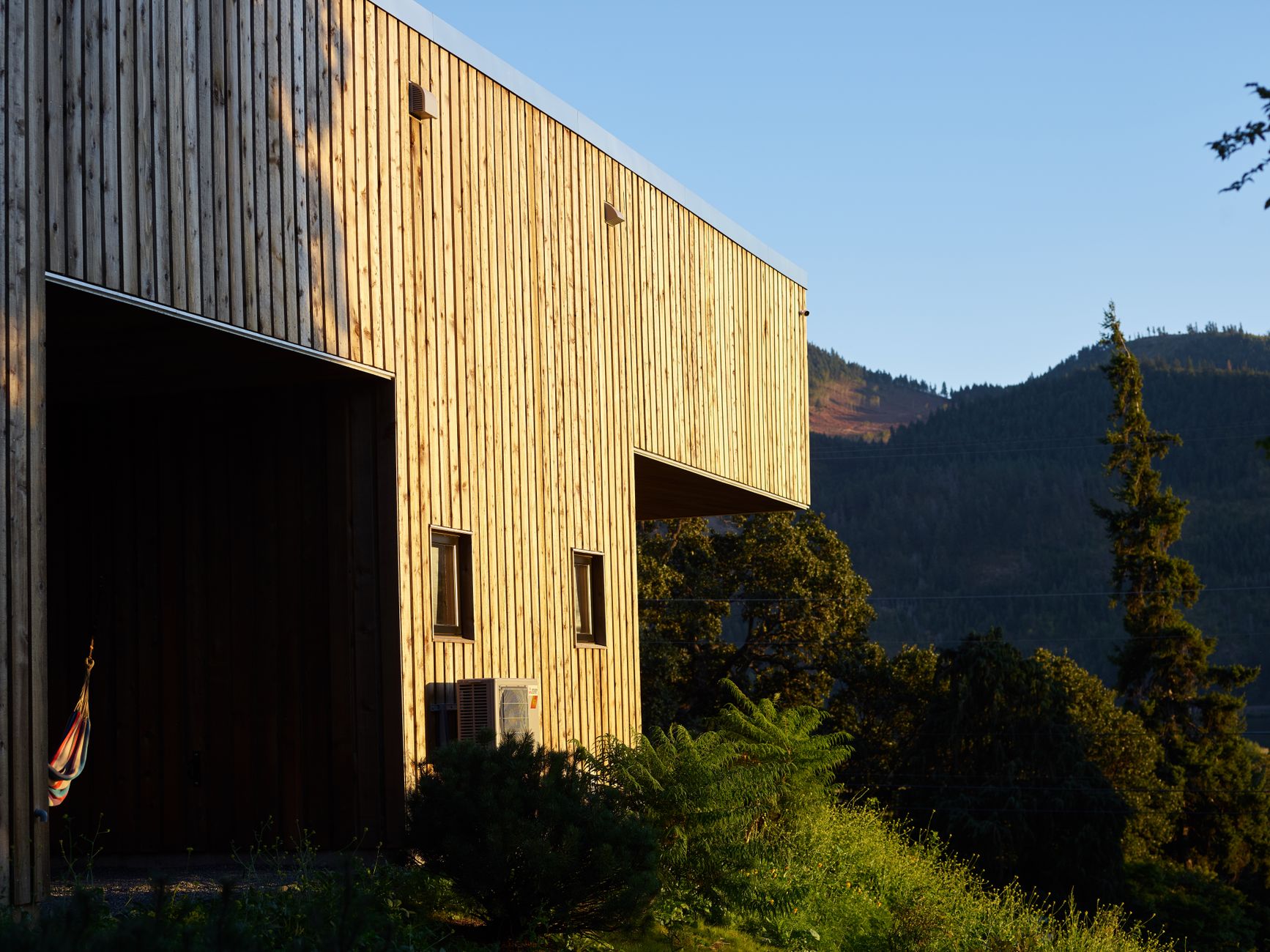
Coastal Alabama is one of the most biologically diverse places in the country, and it is also one of the fastest-growing. That combination can set up a collision between development and the natural landscape that draws so many people here in the first place. Fairhope architecture firm WATERSHED has built its practice around the idea that the collision is not inevitable. Led by architect Rebecca Dunn Bryant, the firm designs buildings and landscapes meant to conserve energy and resources, restore the ecology of each site and reconnect people with the natural world, and its sustainable architecture work stretches from Bayou La Batre and Mobile to the Eastern Shore and Gulf Shores.
Bryant is quick to redirect credit. “It’s the firm, not just me,” she says. But her philosophy runs through the firm’s projects, and she states it plainly.
A Firm Built on ‘Conservation First’
WATERSHED describes its mission as creating healthy buildings and landscapes that conserve energy and resources while fostering a greater connection to the natural world. Its work ranges from individual homes and businesses to campuses and public parks. On every project, the firm designs for energy efficiency, resource conservation, a healthy indoor environment and restoration of the site’s ecology.
Bryant also looks for projects with the potential for a “ripple effect,” work that demonstrates better ways to build and encourages others to follow. Among the firm’s earlier local efforts was the master reconstruction plan for American Legion Post 199 in Fairhope, which was badly damaged by Hurricane Sally in 2020.
Bryant rejects the notion that growth must come at nature’s expense. “So many people move here because they love to fish, to be on the water, to walk under the live oaks,” she says. “The natural beauty of this place, which springs from the ecological health of this place, is essential to our quality of life on the coast. So why should we accept this idea that development that destroys nature and erases our sense of place is some kind of necessary sacrifice for a healthy economy? We’ve all been trained to think that is the price of doing business. Nonsense!”
An Ecotourism Campus Beside Gulf State Park
One of the firm’s most visible projects is the campus of the Gulf Coast Center for Ecotourism and Sustainability in Gulf Shores, adjacent to Gulf State Park. The project is part of a broader effort to grow an ecotourism economy that supports the restoration and preservation of the Gulf Coast’s ecology and culture.
WATERSHED partnered with ArchitectureWorks of Birmingham to design the wooded campus as a place where schoolchildren and tourists can experience coastal ecology and learn about sustainable living. The plans called for visitors to be able to:
- Set out on bicycle or kayak adventures from the campus
- Zip-line through a longleaf pine forest canopy
- Enjoy produce grown on site
- Use a bike-powered compost blender to turn food waste into fertilizer
- Grow tree seedlings for reforestation
- Try nature arts and crafts and forage for wild foods
- Help restore landscapes as wildlife habitat
In early 2023, construction was set to begin that spring, with operations planned for 2024. The campus has since opened as the Gulf Coast Eco Center, a hands-on outdoor learning center connected by trails to Gulf State Park.
A ‘Boat to Table’ Vision for Bayou La Batre
On the western side of Mobile Bay, WATERSHED is the architect for the Bayou La Batre City Docks Redevelopment Project, next to the Lighthouse Point shoreline restoration. As designed, the project includes a marina, a kayak launch and a seafood market where locals and visitors can watch fishing boats return to the docks, buy seafood straight off the boats and pick up other supplies at the market. It is a boat-to-table concept rooted in the town’s identity.
The engineering firm Moffatt & Nichol designed the adjacent Lighthouse Point shoreline restoration, which protects the City Docks site from hurricanes, enhances habitat for shrimp, crabs and fish, and creates a destination for paddlers and anglers. Moffatt & Nichol is the lead engineering firm for City Docks and brought in WATERSHED to design the buildings because of the firm’s experience with ecotourism and resilient design.
The redevelopment’s goal is to stimulate Bayou La Batre’s economy by giving visitors more ways to engage directly with fishermen and experience, and taste, the beauty of the bayou. In early 2023, the project was in its final phase of design and scheduled to begin construction that year. The plan aims to support both ecotourism and the fishing industry by showcasing Bayou La Batre’s “small town coastal atmosphere and historical heritage as the Seafood Capital of Alabama.”
The NEST and Hatch Fairhope at the Historic K-1 Center
Closer to home, WATERSHED designed a new outdoor classroom on the campus of Fairhope’s historic K-1 Center downtown, working with Thompson Engineering and Sherer Engineers. The classroom was built for the Fairhope Educational Enrichment Foundation, known as FEEF, whose program for students in kindergarten through sixth grade helps them understand the ecology of Mobile Bay and the surrounding waters. FEEF was 25 years old in 2023.
The outdoor classroom allows FEEF to expand its “down by the bay” field trips and other STEAM (science, technology, engineering, arts and mathematics) experiential education, which the foundation has offered at the Pelican’s Nest Marine Science Center. The classroom is Phase One of a new educational campus for FEEF called the NEST.
Bryant emphasizes that the NEST is not just for schoolchildren. The public can rent NEST facilities for events or stroll through a pollinator garden, a songbird sanctuary and a bluebird trail to learn how to create habitat in their own yards or at their businesses. Visitors can also see green infrastructure at work, including a bioswale, rainwater collection and “living machines.” These low impact development features filter and clean stormwater on the campus while doubling as decorative landscape elements.
The historic K-1 Center building is also home to Hatch Fairhope, an entrepreneurial development center where new tech companies can network, grow and create local, high-paying jobs. The revitalization is a partnership between the City of Fairhope and the Baldwin County Community and Economic Development Foundation, and WATERSHED worked with Thompson Engineering on a master plan for the historic building and campus that integrates Hatch and the NEST.
When the K-1 Center was still a school, it was common to see children on field trips walking through downtown Fairhope or down to the bay, a visible reminder of the community’s commitment to education. The NEST and Hatch Fairhope aim to carry that tradition forward.
“We are so excited about the NEST and Hatch not just because we get to bring new life to these old buildings, and engage in environmental education, but because these two projects have such a great purpose,” Bryant says. “Both NEST and Hatch help Fairhope meet its future, by building key skills and knowledge that our community needs to thrive in a 21st-century economy.”
Water, Storms and the Cost of Pavement
Asked about her concerns as the region grows, Bryant points first to water. “Our climate is changing towards a pattern with more intense storms and longer periods of drought between them. At the same time, we are developing rapidly and replacing the natural systems that are used to absorb and filter our stormwater for free, with impervious surfaces that turn rainwater into pollution.”
Impervious surfaces such as roofs, roads and parking lots prevent rain from soaking into the ground. Instead, water runs off quickly, carrying sediment, fertilizers, oil and other pollutants into streams and, ultimately, Mobile Bay. That runoff can worsen flooding downstream and degrade water quality for fish, shellfish and swimmers alike.
“This means we need to start thinking about water differently than we have in the past,” Bryant says. “We need to get smarter about how we build to manage nuisance flooding, and droughts, and to protect water quality. We need incentives to do better planning and design on the front end. I’d like to see more carrots integrated into our zoning ordinances and building codes. But you need the sticks too.”
Habitat Starts in the Backyard
Bryant sees habitat loss and biodiversity loss as a single problem. “They are one and the same,” she says. “In a meadow or forest, there are hundreds of ecological niches, and hundreds of different plants and fungi, coexisting on each patch of land. That’s a stark contrast to a typical yard made up of sod and a handful of plants that are not native to this area.”
Habitat loss is often discussed in terms of rainforests or the Arctic, but it is also happening in local neighborhoods. Many subdivisions include green space that offers little food or shelter for native wildlife. As more land in Baldwin County is converted to ornamental landscaping with introduced species, the question becomes what happens to the migrating birds and monarch butterflies that pass through the coast each year. Coastal Alabama sits along a major migratory flyway, and its woods and marshes serve as critical resting and feeding stops for birds crossing the Gulf.
Homeowners and businesses can help. The South Alabama Land Trust, known as SALT, has launched a Native Habitat Program aimed at reconnecting habitats one yard and one garden at a time. Any yard, large or small, can be turned into a natural setting that attracts birds and butterflies. Properties that meet a set number of best practices in each program category can be designated “Native Habitat Certified,” and the program offers resources that anyone can use whether or not they seek certification.
Simple steps often recommended for wildlife-friendly yards include:
- Replacing some lawn with native trees, shrubs and flowering plants
- Providing water sources such as birdbaths
- Reducing pesticide use
- Leaving leaf litter and dead stems where practical to shelter insects
- Capturing rainwater with rain barrels or rain gardens
Keeping the Big Idea in Front
For Bryant and the WATERSHED team, every project begins with the same principle. As she puts it, the goal is to “keep the big idea in front of us.” That means “conservation first. Better practices and more thoughtful designs that relate to each specific site’s relationship to the sun, the rain, the wind, and wildlife.”
From an ecotourism campus in Gulf Shores to a working waterfront in Bayou La Batre and a revived school campus in downtown Fairhope, the firm’s projects offer a vision of coastal growth that works with the landscape rather than against it.