

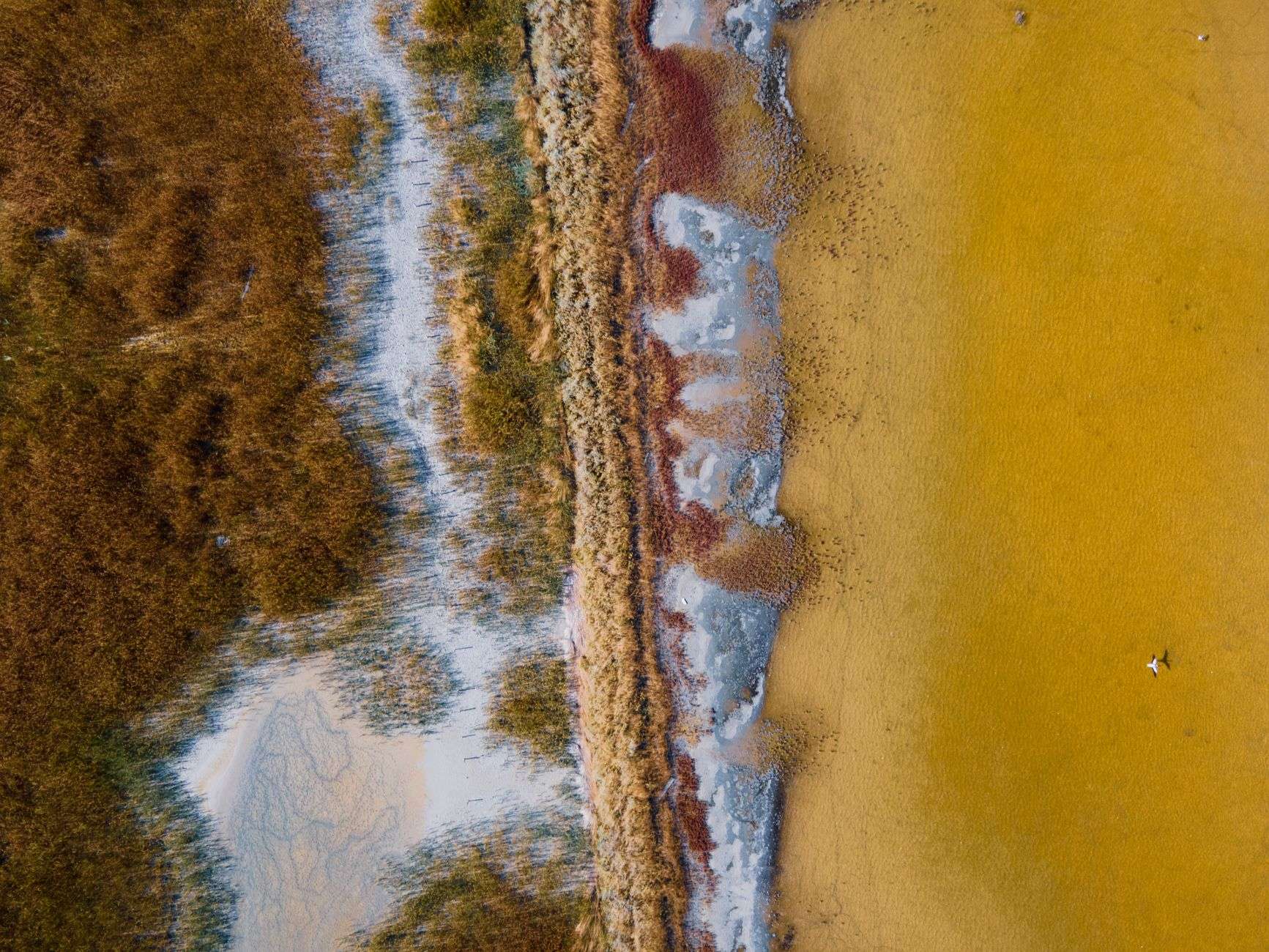
Coastal Alabama is growing fast, and the pressure that growth puts on marshes, bayous, barrier islands and river deltas is not always visible from the highway. Behind the scenes, though, a considerable amount of conservation work is under way. Among the organizations leading it, The Nature Conservancy in coastal Alabama has spent more than 35 years quietly acquiring sensitive land, rebuilding eroding shorelines and bringing together partners who once worked in isolation, with a philosophy its local coastal director sums up in four words: we work with everyone.
Judy Haner, director of Coastal Programs for The Nature Conservancy in Alabama, outlined several of those projects in a conversation published in March 2025. They range from a working-waterfront inlet in Bayou La Batre to the recreational islands near Perdido Pass in Orange Beach, and together they show how a global nonprofit operates at the scale of a single bayou.
A Global Organization With Deep Local Roots
The Nature Conservancy, often shortened to TNC, is a worldwide organization of scientists, staff and members working on conservation in more than 80 countries and territories. Founded in the United States in 1951, it is best known for protecting land through purchase and conservation agreements, but its work has expanded over the decades into water quality, coastal resilience, fisheries and climate adaptation.
In Alabama, the state chapter is headquartered in Birmingham, while a staff of three works out of the Mobile office. That small coastal team collaborates with counterparts in the other Gulf states, because rivers, bays and migrating wildlife do not respect state lines. Private funding is a critical part of the model. Donor money pays for the staff who write the grant applications that, in turn, bring in the much larger sums needed to design and build projects.
That private support has made headlines. In 2024, TNC acquired 8,000 sensitive acres in the upper Mobile-Tensaw River Delta for $18.2 million, with much of the funding coming from private donors, including the founders and operators of the Patagonia clothing brand. The Mobile-Tensaw Delta, often called America’s Amazon for its extraordinary biological diversity, is one of the largest river delta systems in the country, and protecting land there helps safeguard water quality for everything downstream, including Mobile Bay.
Early Footholds: Oyster Bay and Splinter Hill Bog
TNC first made its mark in coastal Alabama by acquiring land in Oyster Bay near the Bon Secour River, with support from donors in North Alabama. The Bon Secour area, known for its commercial fishing heritage and its maze of marshy shoreline, is part of a landscape where freshwater and saltwater meet, creating nursery habitat for shrimp, crabs and fish.
Another signature project in the region is the Ruth McClellan Abronski Splinter Hill Pitcher Plant Bog in north Baldwin County. Longleaf pine savannas and seepage bogs of this kind were once widespread across the Gulf Coastal Plain, but much of that habitat has been lost to development, fire suppression and conversion to other uses. Splinter Hill is home to many unique pitcher plant species, carnivorous plants that thrive in wet, nutrient-poor soils and depend on periodic fire to keep competing vegetation in check.
Splinter Hill also matters for what lies downstream. It sits near the headwaters of the Perdido River, which flows south to Perdido Bay and the Gulf, linking the bog to several of TNC’s other coastal efforts.
Lightning Point: Rebuilding a Working Waterfront in Bayou La Batre
Few places in Alabama have taken as many hits in recent decades as Bayou La Batre, the South Mobile County fishing and shipbuilding town often called the Seafood Capital of Alabama. Hurricane Katrina in 2005 and the Deepwater Horizon oil spill in 2010 severely affected the fishing industry and damaged access to the waterways that the town depends on.
At Lightning Point, TNC and its partners restored the shoreline at the mouth of the bayou. The partners included the City of Bayou La Batre, Mobile County, the Alabama Department of Conservation and Natural Resources, environmental engineers, the University of South Alabama and the Dauphin Island Sea Lab.
“Mother Nature came in and did her thing,” Haner said. “Working with our partners including the City of Bayou La Batre, Mobile County, ADCNR, environmental engineers, the University of South Alabama, and the Dauphin Island Sea Lab, we developed a plan and went to work. We added breakwaters and marsh to shore up the inlet. The public now has a pavilion with an entire view of Alabama’s Mississippi Sound.”
The work was tested almost immediately. Haner described Bayou La Batre as the “strike zone” in the unusually active 2020 hurricane season, when Hurricane Cristobal arrived in June, Sally in September, Delta in early October and Zeta in late October. “Zeta was the worst, with storm surges of 8 feet and 3’ to 4’ waves on top of that. Thankfully, nature protected this area.”
Without the restoration, she said, the inlet could have become another Katrina Cut, the breach that split Dauphin Island in two. With shipbuilding and fishing as the primary economic drivers along the South Mobile County coast, the stakes were high. Plans now call for a public park and market on the restored waterfront property.
How TNC Approaches a Project
Haner described a consistent approach built around a single question: “How do we solve this problem and add value?” After land is acquired, TNC hires an engineering firm to assess the site and develop designs, then seeks the funding to build what is wanted and needed.
“There is too much to do all by ourselves, so we work with everyone,” Haner said. “Flooding in Southern Mobile County is a big issue, and we try to get as big a bang for our buck as we possibly can. We study how much and where the water is moving through the system. We strive to make a great investment turn into an economic benefit for everyone.”
That approach applies to more urban settings as well. At the Brookley Aeroplex, where the Mobile Airport Authority has been developing a new airport, flooding involves a different watershed and requires a different solution. “We are partnering with the Mobile Airport Authority to get in front of this issue. In its current state, it’s not up to par. We want a solution that will filter the water before it enters tributaries and then Mobile Bay. Each project we work on is unique, and we are trying to meet the community’s needs by looking across the entire landscape with each endeavor.”
In Baldwin County, TNC has worked with University of South Alabama engineering students and faculty on a project at Waterfront Park in Orange Beach. “We try to leverage our partnerships. This project will have an impact on the area in which they live. They have some skin in the game. We want some buy-in, so we don’t do it all.”
Ecotourism is another piece of the value equation. “Even at the high school level, we are introducing ecotourism through our current projects,” Haner said, noting that people from across Alabama and many other states vacation on the coast. The Alabama Birding Trail runs throughout the state, connecting the mountains to the Black Belt and the coast, where visitors can observe more than 50 species of birds that migrate across TNC project sites.
Robinson Island and the Perdido Pass Islands
One of the most visible efforts described in the interview is in Orange Beach, where Robinson Island is a popular gathering spot for boaters. The island sits near Perdido Pass, the inlet between Alabama and Florida, and is surrounded by Old River, Cotton Bayou, Terry Cove and, to the north, the Gulf Intracoastal Waterway.
When Hurricane Sally struck in September 2020, it came in forcefully, and as the water receded it pulled sand away from the islands. That undermined trees and marsh grasses and caused extensive damage to Robinson Island, Bird Island and Walker Island, which is closed to human access. Walker Island lost its “tail” after Sally, leaving an unstable shoal. More frequent and intense storms threaten the islands’ existence and the wildlife habitat they provide.
The challenge for TNC and partners, including the City of Orange Beach, the Alabama Marine Resources Division and the Perdido and Pensacola Bays National Estuary Program, was to stabilize the shoreline, restore sand and dunes, and protect nature while still allowing recreation.
“Balancing nature here involves a different type of livelihood than what we were able to accomplish in Bayou La Batre,” Haner said. “Working with the engineers, regulators, and City of Orange Beach, among others, we designed a series of habitat enhancements that will help feed sand downstream to the recreational islands and provide more space for both humans and wildlife.”
The project involves re-establishing the dune ridge and relocating seagrass that would otherwise be affected by construction. “This is one of the few areas in the nation where seagrasses are expanding,” Haner noted. In August and September 2024, more than 40 volunteers dug up and transferred 4,600 squares of seagrass, moving them out of the construction footprint and adding them to existing seagrass beds.
Seagrass is especially valuable in coastal waters. The underwater meadows stabilize sediment, improve water clarity, and provide shelter and food for juvenile fish, shrimp, crabs and other marine life, which is why transplanting rather than simply losing those beds was a priority.
Funding, Permits and Patience
The Perdido work drew on several funding streams. The National Oceanic and Atmospheric Administration awarded TNC a first-of-its-kind grant to study the Perdido watershed in its entirety, and the Alabama Trustee Implementation Group committed Natural Resource Damage Assessment funds from the Deepwater Horizon oil spill settlement to the project. NRDA funds are designated specifically to restore natural resources harmed by the 2010 spill, and the Alabama trustees select projects through a public planning process.
Large coastal projects also require extensive permitting, typically including review by the U.S. Army Corps of Engineers for work in navigable waters and wetlands. “Projects take a long time. This project has been several years in the planning. It took two years to get a permit from the US Army Corp of Engineers,” Haner said. At the time of the interview in March 2025, she said the team hoped to finish pumping sand at Robinson Island by the end of April, with the rest of the work done by mid-summer, and asked recreational boaters to watch for dredge pipes and machinery. Extensive monitoring was planned to see how the project performs.
Lillian Swamp, Bronson Field and a Connected Landscape
TNC’s other regional involvement includes the Lillian Swamp on the Perdido River and Bronson Field near Naval Air Station Pensacola in Florida. “Forever Wild owns the 6,000 acres that make up the Lillian Swamp Complex,” Haner said, referring to Alabama’s voter-approved public land conservation program. “This marsh is an important transition between the bay and river and ties to Splinter Hill Bog at the headwaters of the Perdido River.”
Across Perdido Bay to the southeast, Bronson Field, a naval airfield that closed after World War II, has shoreline and hydrology issues, and TNC is working with the Department of Defense on that project.
The Director Behind the Work
Haner grew up on a potato and dairy farm in the Finger Lakes region of western New York. She earned her undergraduate degree at Lynchburg College in Virginia and a master’s in marine science from William & Mary, where she was “studying crabs.” She then spent a dozen years in Naples, Florida, with the National Estuarine Research Reserve system, followed by two years at the Kachemak Bay Research Reserve in Alaska and six years managing Everglades restoration projects.
She and her husband moved to Dog River in 2008 and still live there. TNC hired her in 2010, just before the Deepwater Horizon disaster. “When the Deepwater Horizon explosion happened, we had an opportunity to make some big changes along the Gulf Coast. The Deepwater Horizon allowed partners that had been competing with each other, or had remained in their silos, to come together and make things better.”
“Change is difficult. Seeing is believing,” she said. “Working together with our partners leverages all of our work toward addressing real issues and finding effective solutions to protect and save the areas that we all enjoy.” As for what keeps her on the coast: “We need clean water for our livelihoods. For me, the saltier, the better.”
How Residents Can Get Involved
- Volunteer: Projects like the Robinson Island seagrass transplant have relied on community volunteers. Conservation groups on the coast regularly post opportunities for planting, cleanups and monitoring.
- Boat responsibly: Around active restoration sites, watch for construction equipment, respect closed areas such as Walker Island, and avoid prop-scarring seagrass beds in shallow water.
- Visit and learn: Public spaces such as the Lightning Point pavilion in Bayou La Batre and stops on the Alabama Birding Trail offer a firsthand look at restored habitat.
- Support conservation funding: Private donations help pay for the staff and planning that unlock larger public grants.
As coastal Alabama continues to grow, the lesson of these projects is that conservation and a working coast are not mutually exclusive. From a fishing town’s inlet to a boater’s favorite sandbar, the goal is the same: protect the natural systems that make the region worth living in.