

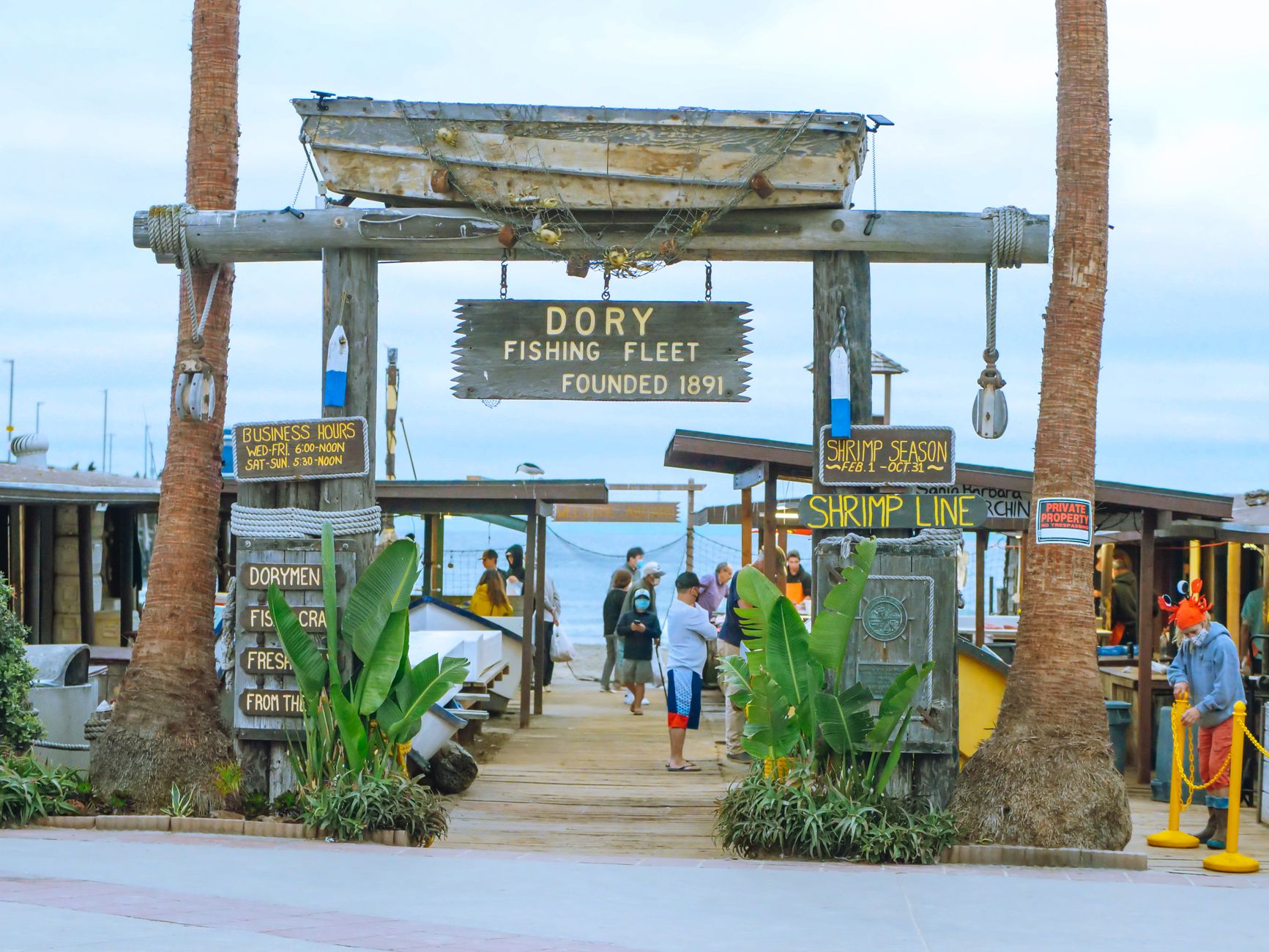
For most of human history, a boat was a tool before it was anything else, and on Mobile Bay that tool was made of wood. Around Bayou La Batre, generations of builders turned mahogany, cypress and pine into skiffs and shrimp boats that fed families and powered an entire seafood economy. Today only a handful of people still carry that knowledge, and two of them, David Bosarge and Rena Landry, are described by one working shrimper as the last true craftsmen of wooden boats on this stretch of the Gulf Coast.
Their stories, and the stories of the boats they built, trace the rise and slow fade of a craft that once kept yards along the bayou busy year-round. It is not a tragedy so much as a record of change, told by the people who lived it.
Boats as Tools on Mobile Bay
Mention wooden boats around the bay and many longtime residents will bring up Lawrence Stauter, whose Stauter Built Boats are synonymous with Mobile Bay and the Mobile-Tensaw Delta. Stauter designed his boats to be ideal fishing boats for local waters, nothing more and nothing less. For him the water was a livelihood, a highway and a playground, and building a boat was a matter of survival before it was ever a way to make a living.
That practical ethic runs through the whole history of boatbuilding on the northern Gulf. Long before Stauter built his first boat in the delta marsh, people here took to the water for food and transportation, and for nearly all of that history their boats were built of wood. Traditional wooden construction in the region relied on a skeleton of sawn frames covered with planks, the seams caulked and the hull painted to keep water out and marine borers at bay. Rot-resistant cypress, which grows throughout the swamps of the Gulf South, was prized for framing, while imported mahogany made durable planking on larger vessels.
Bayou La Batre: A Seafood Community
Bayou La Batre was founded in 1786, when Joseph Bouzage received a Spanish land grant of 1,259 acres, during the period when Spain controlled the Mobile area. The town takes its name from a French battery installed there, the Battery Bayou. Beginning in the 1920s, seafood became the central industry, and although the town was not incorporated until 1955, it has always been better described as a seafood community than as a municipality.
Like the mill towns of an earlier era, nearly everyone in Bayou La Batre took part, directly or indirectly, in the dominant industry. Unlike a mill town, though, the economy was never controlled by one powerful employer. It was a nearly vertically integrated network of family-owned suppliers and customers. Residents made the nets, built the boats and processed the catch, all along the bayou, and nearly everyone earned at least part of a living on the water.
Skills passed from one generation to the next, often starting when children were very young. One shrimper, recalling the day he started working on his father’s boat, put the entry requirements bluntly: essentially, you only had to be old enough to take care of yourself.
Over time, local constraints on the oyster harvest and global competition in the shrimp market reshaped the economics of the Bayou La Batre seafood industry. The town now hosts a large shipbuilding industry, but those enormous steel hulls are built for the Navy and for the oil and gas sector. No shrimp boat has been built on the bayou in years. Mom-and-pop seafood shops remain, and shrimp boats still line the water, but many of the children of fishing families are finding other work. As the economics shifted, skills handed down for generations began to become obsolete, wooden boatbuilding among them.
Bosarge Boat Works: A Skiff Every Day and a Half
“At that specific time, everybody and their brother would build [boats],” said David Bosarge, who was born and raised in Bayou La Batre. David learned the trade from his uncle, Floyd Bosarge. “They might bring a boat to Uncle Floyd to have a piece cut out, then they would take it home and build it back themselves.” Floyd had learned from an older relative, Garland Bosarge, and it is easy to imagine the lineage of knowledge running all the way back to the town’s founder, Joseph Bouzage.
David began working summers for Floyd in the seventh grade. In those days Floyd tonged oysters in the winter and built boats the rest of the year, but his skiffs grew popular among people working the water along the Mississippi and Alabama coasts, especially oystermen. By the early 1970s Floyd was building boats full time, and David joined him year-round in 1976 as demand climbed.
“From the late 70’s to the mid 80’s it was all you could do to keep up,” David said. The shop turned out a skiff every day and a half and still carried a backlog of 15 to 20 boats.
The oyster trade drove that demand. “At that time, all of the oyster reefs stayed open seven days a week, 365 days a year,” David said. “People would go out and get oysters, bring them back to their house and sell them. There would be a [oyster] shop on this side of the road, two shops there, and another 100 yards there’d be a shop. They just dotted the landscape all the way down the bayou.”
The decline of wild oysters in Mobile Bay and the Mississippi Sound is well documented, with environmental degradation and years of heavy harvest among the contributing causes. By the end of the 1980s, oysters in the waters around Bayou La Batre were nearly depleted. “Everything kind of bottomed out after that, and I moved on,” David said.
He took a job at a chemical plant on the industrial canal and stayed there for the rest of his career, but he never stopped building boats. Neither did Floyd, who built his last boat three months before he died in 2007. David reckons his uncle “built a thousand of these [skiffs], all by hand, maybe more than that.”
Now retired, David builds 10 to 12 boats a year on the same basic model he built with his uncle: 18 feet long, with a 5.5-foot beam and a flat bottom. “He had something that worked; there’s no reason for me to play around with it,” David said. No two boats are identical. He builds some with V-hulls and fits out each interior to suit the customer. He still has Floyd’s old patterns but works from no formal plans, just “some notes I have jotted down.” Most of his boats now go to fellow retirees looking for something to piddle around in.
Landry Boat Works: Mahogany Shrimp Boats and a 12-Month Backlog
Landry Boat Works was founded by Roy Landry “right at the tail end of WWII” to repair boats in Bayou La Batre. When his brothers Joe and Shine came home from the war, they joined the business. Rena Landry is the third generation of the family to run the operation.
The yard began as a repair shop, but the brothers soon started building boats, particularly shrimp boats. A typical Landry shrimp boat ran about 85 feet long with a 20-foot beam, built “with mahogany planks, cypress framing, and treated pine deck and bulwarks.”
Beginning in the late 1960s, Rena said, the yard was “hot and heavy” building shrimp boats. A 45-man crew launched a new shrimp boat every eight to ten weeks, and contracts stretched out 12 months, a limit set by her father. “Daddy wouldn’t go any longer than 12 months,” she said. Demand was so strong that a secondary market developed for the build contracts themselves, with shrimpers buying other people’s places in line to get their boats sooner.
Things began “tailing off” in the 1980s. “The whole shrimping industry started going a little bit downwards,” Rena said. Steel shrimp boats were also arriving on the scene, and the productivity gap was hard to overcome. “With three good men, you could put 4 or 5 planks on a boat in a day. [Steel boat builders] would take two men and put a ten-foot by forty-foot plate on in a day, then bring someone in that night to weld it out. It’s hard to compete with that.” One Bayou La Batre shipyard was delivering a steel shrimp boat every week.
As orders slowed, the Landrys would build a boat and add it to their own shrimping fleet, then sell it “ready to go” if a buyer came along. The yard built its last shrimp boat in 1988 and has worked as a repair yard for wooden and fiberglass boats ever since. Between the early 1950s and 1988, Landry Boat Works built about 180 boats, many of which are still working today.
Rena recently sold the yard to Stephen Sanger, a longtime customer. “Used to, everyone from Texas to the Big Bend of Florida would bring their boat to be hauled out here,” she said. Sanger appears intent on putting Landry back on the map, though finding qualified help is already a challenge. His vessels, scale replicas of two of Christopher Columbus’s ships, the Nina and the Pinta, were built in South America, and he hopes to use those connections to recruit a couple of shipwrights from there.
Why the Wooden Fleet Keeps Shrinking
Looking back, there seems to have been a heyday for wooden boats around Mobile Bay, a stretch from the 1960s into the 1980s when hard-won skill and craftsmanship lined up with strong market demand, and local builders produced boats that could not be matched even with supposedly better materials. The last of those builders are now getting older, and what remains is a chicken-and-egg problem.
Did younger people fail to learn the trade because there was no market for wooden boats, or is there no market because too few people learned to build them to the old standard? Perhaps both. “I think it’s dying for a couple reasons,” David said. “I’m almost 70, I’m not going to be doing it much longer, and nobody behind me is doing it, and there is very little demand. The combination of the two is taking it down.”
Whatever the cause, the Gulf Coast’s wooden fleet grows smaller each year. Several forces work against it:
- Storms: hurricanes regularly sink, strand or wreck older vessels, and wooden boats are costly to repair after major damage.
- Decay and marine borers: in warm, salty Gulf water, wood-eating shipworms and rot claim hulls that are not constantly maintained.
- Economics: steel and fiberglass boats are faster to build and require less ongoing upkeep.
- Changing practices: Rena believes the arrival of the portable boat lift did more damage to the wooden fleet than any storm.
The Captains Who Still Run Them
“[David and Rena] are the last two true craftsmen,” said Freddie Stewart, who owns a shrimp boat built by Bosarge Boat Works (the Bosarges built a few shrimp boats, too) and runs it out of Bon Secour, the Baldwin County fishing community on the Bon Secour River. Sidney Schwartz owns and operates a Landry shrimp boat out of Dog River, on the western shore of Mobile Bay.
Visits with those captains turned up less romance than one might expect. To the men who work them, these boats are tools, with advantages and drawbacks compared to the alternatives. That practicality is, in a sense, the same spirit in which they were built.
Seeing the Boats and the Bayou
For readers interested in the region’s maritime heritage, there are good ways to experience it firsthand:
- Drive the bayou road in Bayou La Batre, where shrimp boats still tie up along the water and seafood shops sell the day’s catch.
- Visit Bon Secour and the Dog River area, where working shrimp boats, some of them wooden, remain part of the scenery.
- Look for wooden boat shows and maritime events around Mobile Bay, which regularly showcase classic skiffs and restored vessels.
- Support local seafood markets and restaurants that buy from Gulf fishermen, the customers whose livelihoods built this boatbuilding tradition in the first place.
David Bosarge summed up the fate of his craft without sentiment. “It’s sad,” he said, “but it’s inevitable.” Until that day comes, a retired builder in Bayou La Batre is still turning out a dozen skiffs a year from his uncle’s patterns and a few jotted notes, and a handful of mahogany-and-cypress shrimp boats are still working the bay.