

Some trips are about checking boxes. A four-day, three-night run through Florida’s Big Bend and Forgotten Coast — swimming with manatees, diving for bay scallops, eating oysters in Apalachicola — was exactly that for two Fairhope travelers who set out on a seven-hour drive to Crystal River with a bucket list and time to fill.
Leaving Fairhope at 7 a.m. and losing an hour to the time change, the pair rolled into Crystal River around 3 p.m. and checked into the Reserve at Crystal Manatee, a newly renovated complex of clean, attractive rooms set along a pathway of well-kept native plants beneath live oaks and palms. Crystal River sits on a stretch of U.S. Highway 98 that once served as the overnight stopping point for Miami-bound travelers in the pre-interstate era — a road Alabama beachgoers know well from its Panhandle stretch, here threading marsh and shell island toward the Big Bend.
Manatees before breakfast was over
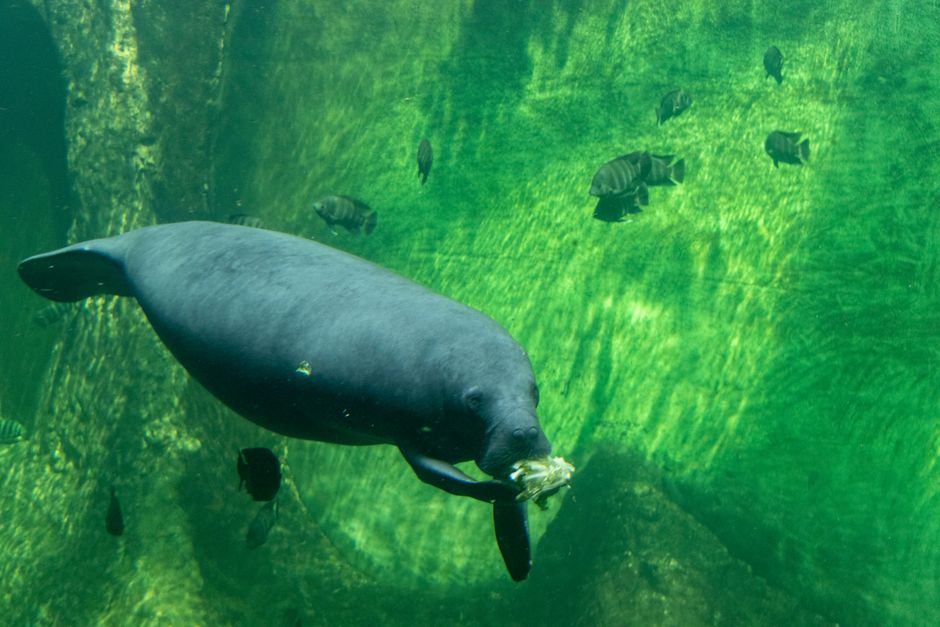
Crystal River is home to the largest population of manatees in the world. In late summer the animals range widely, but in winter they return to the springs that hold a constant 72 degrees — which is when the swim season peaks. The excursion company River Ventures runs the operation from the river: wetsuits, masks and snorkels supplied, licensed captains on each of six pontoon boats, and a guide who swims alongside every guest.
After breakfast at the Biscuit Barn, a classic American diner that packed the group club sandwiches for the ride, the boat left the dock at 9:45. Within ten minutes, the swimmers were hovering over two large manatees — huge, docile animals lazily nibbling grass beds, sleeping and occasionally surfacing for air, with mullet and small fish circling unbothered. Thirty minutes in the water was enough to understand why people drive hours for it.
Scalloping the shallow Gulf
Then came the second box to check: an hour’s run out into the Gulf for bay scallops. The waters are shallow and demand local knowledge to navigate; one shell island at the river’s mouth was built by Native Americans more than 2,400 years ago as a navigation marker, and it still stands where the river meets the barrier islands. Scallop season runs from early July through late September, and recent rains had pushed the clean, clear water farther out, so the guide moved the boat twice before anchoring among several other scallop boats — dive flags required, boats keeping safe distances.
In six to eight feet of water, with fins, masks and snorkels but no wetsuit, the hunt is simple in concept: swim against the current, spot the bivalves in the seagrass, take a breath and dive straight down to drop one into the mesh bag strapped to your wrist. The real reward, as often as not, is the light — sunlight shimmering off the seagrass in water that clear. The guide made sure the group collected enough scallops for a meal, shucked the lot on the ride back, and everyone returned sunburned and happy.
The evening rounded out with a cocktail at Crump’s Landing near Homosassa Springs — known for its first-magnitude spring system and wildlife park — and an early dinner at St. Johns Tavern in Crystal River.
Cedar Key’s watermark, Perry’s swamp cabbage
The next morning the route turned to Cedar Key, an island fishing community that is home to the nation’s largest farm-raised clam operation — and, at one time, the world’s largest pencil manufacturing plant. It reminded the travelers of Bayou La Batre: a working fishing town with a small, walkable center. Eleven months after Hurricane Helene made landfall between Steinhatchee and Cedar Key, evidence of the storm was everywhere. One gift shop owner had a watermark stenciled five feet above ground on her front door — the level the water reached before she loaded everything into U-Haul trailers and evacuated. “Live to see another day,” is the local motto, and it shows.
The drive east to Perry ran through pine forest, live oaks and native palms, with a lunch stop at Deal’s Famous Oysters, a Perry institution since 1961 known for oysters, fresh fried mullet and swamp cabbage — the heart of the Sabal palmetto, the same delicacy sold elsewhere as hearts of palm.
Old Florida to the end of the road
An hour west of Perry, Highway 98 reaches the coast, and the drive becomes the destination: white-sand barrier islands, inlets and bays with only scattered clusters of beach homes. The route passes Alligator Point, Dog Island, Cape St. George Island and St. Vincent Island before arriving in Apalachicola, where the historic Gibson Inn makes a landmark base for exploring the town’s shops — including Apalach Outfitters, where a fly-fishing guide from tarpon-famous Boca Grande held court.
Evenings belong to the water. The Apalachicola Yacht Club, a watering hole a few blocks from the inn, produces conversations with strangers — a Panama City couple celebrating a 32nd anniversary, swapping stories of mutual acquaintances — and no visit is complete without oysters: two dozen split between fried and Rockefeller at the Franklin Cafe inside the Gibson.
That is the Forgotten Coast’s appeal, and its insistence. This is old Florida — marshes, spring-fed rivers, shell islands and towns that have seen better economic days and seem perfectly content. While the growth wave rolls from Panama City through 30-A, Destin, Pensacola, Orange Beach, Gulf Shores and the Eastern Shore, the Big Bend’s little communities have stayed small, weathered hurricanes, and kept their working waterfronts. Judging by the folks in Cedar Key, they like it that way.