

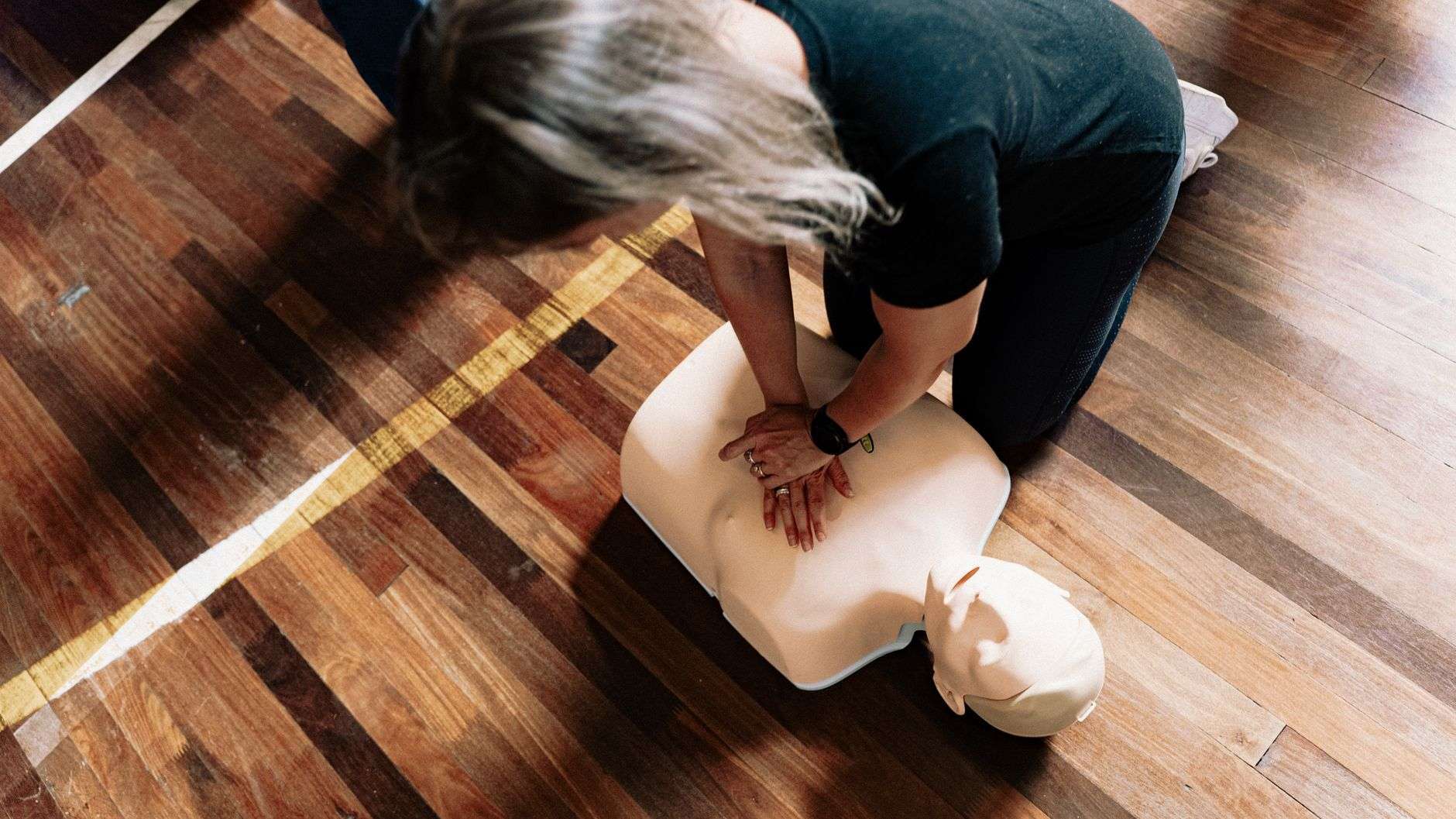
GULF SHORES, Ala. — Two Gulf Shores police officers have received the department’s Life Saving Award for their actions during separate cardiac emergencies this spring.
Command Sergeant Landon Coker and Sergeant Will Phillips were honored by the Gulf Shores City Council in recognition of what the department described as exceptional actions during recent medical emergencies in the community.
May 9: Sergeant Phillips
On May 9, Sergeant Phillips responded to a cardiac arrest involving a local resident.
Upon arrival, he immediately began CPR and restored the resident’s pulse and breathing within three minutes.
Medical staff later told the patient that the survival rate for cardiac arrest outside a hospital is only 2 percent, making the recovery an extraordinary outcome.
June 3: Command Sergeant Coker
On June 3, Command Sergeant Coker responded to a separate cardiac arrest.
He arrived to find the patient’s wife already performing CPR and stepped in to continue the effort. Coker performed CPR for four and a half minutes until medical personnel arrived.
First responders continued treatment until the patient regained a pulse. He was alert and conscious as he was transported for further care.
The 2 Percent Figure
The survival statistic cited to the May patient deserves explanation, because it is both accurate and incomplete.
Out-of-hospital cardiac arrest is among the most lethal medical emergencies there is. Overall survival to hospital discharge in the United States has historically hovered in the single digits, and in some populations and settings falls to around the figure the patient was given.
But that aggregate number conceals enormous variation, and the variable that matters most is what happens in the first few minutes.
Survival from cardiac arrest declines by roughly 7 to 10 percent for every minute that passes without CPR or defibrillation. A patient who receives immediate bystander CPR has survival odds two to three times higher than one who does not. When high-quality chest compressions begin within a minute or two of collapse, and especially when a defibrillator arrives quickly, outcomes improve dramatically.
The 2 percent figure describes what happens on average, across all circumstances, including the many arrests that are unwitnessed or where no one nearby knows CPR. It does not describe what happens when a trained responder arrives fast and does the right thing immediately.
Both of these cases illustrate the second scenario.
Why Police Officers Matter in Cardiac Arrest
In most American communities, police patrol units are geographically dispersed across the jurisdiction at any given moment, while fire and EMS units operate from fixed stations.
The practical consequence is that a police officer is frequently the closest emergency responder to a given address, and often arrives first. Many departments equip patrol vehicles with automated external defibrillators for exactly this reason, and CPR certification is standard training.
That first-arriving role is not incidental — in cardiac arrest, it is the whole game. The interval between collapse and the start of effective compressions is the single strongest predictor of whether a patient survives with intact neurological function.
The Wife Who Started CPR
One detail from the June 3 call deserves more attention than it usually gets: Coker arrived to find the patient’s wife already performing CPR.
That is the bystander intervention the entire chain of survival depends on, and it is the link most often missing. Nationally, bystander CPR is attempted in fewer than half of witnessed out-of-hospital cardiac arrests. The reasons are consistent — people do not know how, they are afraid of doing it wrong, or they are afraid of causing harm.
Current guidance for untrained bystanders is deliberately simple: call 911, then push hard and fast in the center of the chest, at a rate of 100 to 120 compressions per minute, and do not stop until help arrives. Rescue breathing is not required for untrained responders performing compression-only CPR on an adult.
The patient in the June case regained a pulse and was conscious when transported. His wife’s decision to begin compressions before any responder arrived is part of why.
Four and a Half Minutes
The duration noted in Coker’s citation — four and a half minutes of continuous CPR — is worth appreciating physically.
Effective chest compressions require pressing the chest down about two inches, roughly twice per second, without pause. It is exhausting work, and quality degrades measurably after a couple of minutes even in trained responders, which is why protocols call for rotating compressors when enough people are present.
Maintaining it alone for four and a half minutes until medical personnel arrive is sustained physical effort under pressure.
Recognition by the Council
The Gulf Shores City Council presented the awards, placing the recognition in a public forum rather than an internal ceremony.
That choice has a function beyond honoring the officers. It puts two concrete, local examples in front of residents of what immediate CPR accomplishes — which is the most effective argument there is for learning it.
CPR training is widely available through the American Heart Association, the American Red Cross, local fire departments and community organizations, and basic courses typically run only a few hours.
A Coastal Consideration
Gulf Shores has a year-round population that expands substantially during visitor seasons, and its demographics skew toward an older resident and visitor base than many Alabama communities — a population in which cardiac events are correspondingly more common.
That combination makes the response capability of first-arriving units a recurring operational concern, and it makes the outcomes in these two cases representative of a call type Gulf Shores officers encounter regularly.