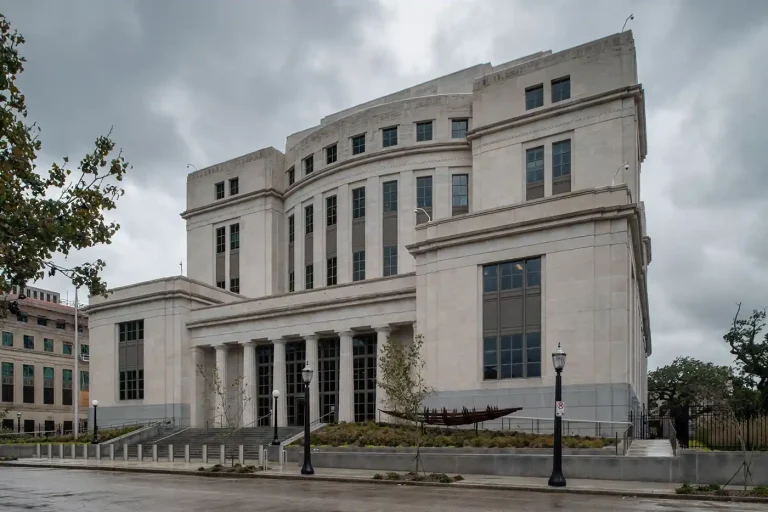
MOBILE, Ala. — A Houston-area cocaine supplier sentenced this week in Mobile federal court will spend 25 years in federal prison after investigators identified him as a major source of cocaine for traffickers in Mobile, and a second man arrested with him received a sentence of more than five years, the U.S. Attorney’s Office for the Southern District of Alabama said Friday.
Adan Ubaldo Sepulveda-Ruiz, 39, and Juan Ali Popoca-Flores, 42, are both citizens of Mexico who, according to federal prosecutors, were living in the United States without legal authorization. Sepulveda was sentenced to 25 years in prison. Popoca received a 68-month sentence. After completing their prison terms, both men are to be turned over to U.S. immigration authorities for removal proceedings.
Federal officials described the case as the result of a long-term investigation into a large-scale drug trafficking operation that supplied cocaine to distributors in Mobile.
From a Mobile arrest to a Houston supplier
According to court documents, the FBI began investigating multiple cocaine distributors operating in Mobile. A turning point came in December 2022, when agents arrested a Mobile-based cocaine and heroin distributor who was found with approximately nine kilograms of cocaine.
Rather than close the case with that arrest, federal agents continued working to identify where the drugs were coming from. Their investigation pointed to Sepulveda, who lived in the Houston area. Prosecutors said he was the primary supplier for the Mobile distributor arrested in 2022 as well as for other bulk traffickers.
The Houston traffic stop
On March 31, 2025, Sepulveda and Popoca were arrested after a traffic stop in Houston. During the stop, officers found approximately $442,900 in cash inside the vehicle. Investigators determined the money was proceeds from drug sales.
Officers also recovered a detailed drug ledger. According to federal officials, the ledger documented the distribution of thousands of kilograms of cocaine and tens of millions of dollars in related payments — evidence that pointed to an operation far larger than the transactions tied to any single city.
The pleas and sentences
Both men pleaded guilty in federal court in Mobile:
- Adan Ubaldo Sepulveda-Ruiz, 39: pleaded guilty to conducting a continuing criminal enterprise and to possession with intent to distribute cocaine; sentenced to 25 years in federal prison
- Juan Ali Popoca-Flores, 42: pleaded guilty to conspiracy to distribute cocaine; sentenced to 68 months in federal prison
The court also ordered the forfeiture of all property seized during the investigation, including the cash found during the Houston traffic stop and the vehicle the men were in when they were arrested.
What a continuing criminal enterprise charge means
The charge Sepulveda admitted, conducting a continuing criminal enterprise, is one of the most serious drug offenses in federal law. Sometimes called the “kingpin” statute, it is aimed at people who organize, supervise or manage a drug operation rather than those who simply take part in it.
To prove the offense, prosecutors generally must show that a defendant committed a series of federal drug felonies in concert with five or more other people, that the defendant held an organizing, supervisory or management role over them, and that the defendant obtained substantial income or resources from the enterprise. A conviction carries a mandatory minimum of 20 years in federal prison and a maximum of life.
Popoca’s conviction for conspiracy to distribute cocaine is a more common federal drug charge. Conspiracy cases require proof that two or more people agreed to commit a drug offense and that the defendant knowingly joined that agreement. Penalties depend largely on the amount of drugs involved and a defendant’s prior record.
There is no parole in the federal system, so defendants generally serve most of their sentences, with limited credit available for good conduct.
A wide multiagency effort
Federal officials credited a long list of agencies with working the case. Investigators included:
- The Federal Bureau of Investigation
- The Department of Homeland Security and Homeland Security Investigations
- U.S. Immigration and Customs Enforcement’s Office of Enforcement and Removal Operations
- U.S. Customs and Border Protection
- Internal Revenue Service Criminal Investigation
- The Mobile County Sheriff’s Office
- The Mobile Police Department
- Multiple state and local partners in Texas
Assistant U.S. Attorneys Gloria Bedwell and Justin D. Kopf prosecuted the case.
“Complex criminal organizations are not dismantled overnight,” said Christopher R. Flowers, special agent in charge of the FBI’s Mobile field office. “The sentences imposed on Adan Ubaldo Sepulveda-Ruiz and Juan Ali Popoca-Flores reflect the results of a long-term investigation conducted by the FBI and our law enforcement partners, who worked tirelessly to uncover the full scope of this drug trafficking operation. We especially want to thank the U.S. Attorney’s Office for its commitment and hard work in successfully prosecuting this case.”
Part of the Homeland Security Task Force effort
Federal officials said the prosecution is part of the Homeland Security Task Force initiative, established under Executive Order 14159. According to the Justice Department, the task force is a whole-of-government partnership focused on cartels, foreign gangs, transnational criminal organizations and human smuggling and trafficking rings operating in the United States and abroad, with special emphasis on crimes involving children.
The task force’s Mobile unit includes agents and officers from Homeland Security Investigations, the FBI, the Bureau of Alcohol, Tobacco, Firearms and Explosives, the Drug Enforcement Administration, the U.S. Marshals Service and U.S. Customs and Border Protection. Prosecutions are led by the U.S. Attorney’s Office for the Southern District of Alabama.
Why the case was prosecuted in Mobile
Although the men were arrested in Texas, the case was brought in federal court in Mobile because the investigation centered on drug distribution in the Mobile area. Federal law allows conspiracy and trafficking cases to be prosecuted in any district where part of the offense took place, including where drugs were delivered or sold.
Mobile and Houston are connected by Interstate 10, a major east-west route along the Gulf Coast that law enforcement agencies have long identified as a corridor for moving drugs and cash between Texas and the Southeast.
What happens next
Both men will serve their sentences in the custody of the federal Bureau of Prisons. Once their terms are complete, the court ordered that they be transferred to U.S. immigration authorities, where they will face removal proceedings.
Federal prosecutors have not said whether additional defendants connected to the ledger or the broader supply network have been charged.