

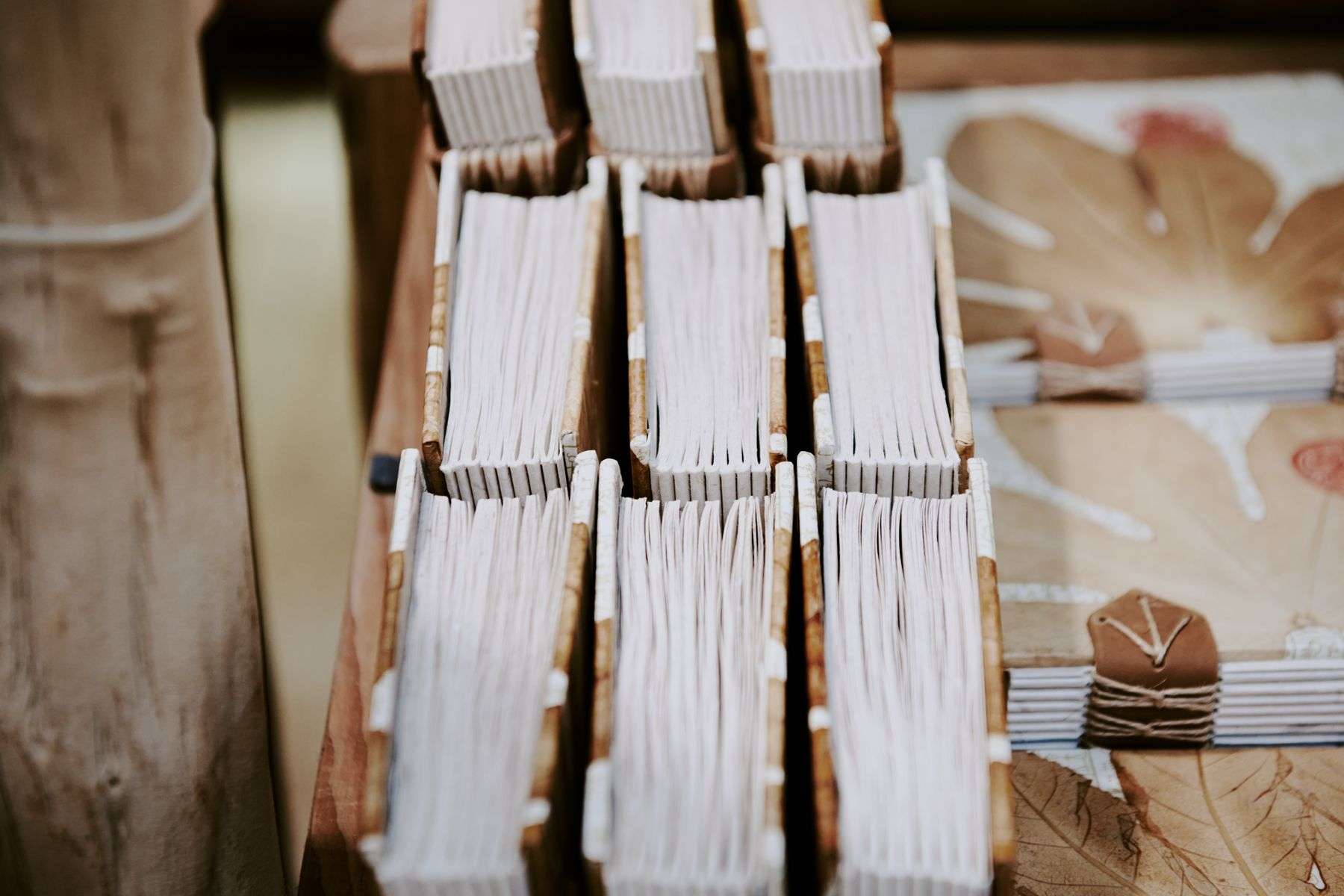
In the fall of 2009, downtown Mobile’s Dauphin Street corridor was in the middle of a slow but steady transformation, with small galleries, studios and shops moving into storefronts that had sat empty for years. Among the artists leading that charge was Wayne McNeil, a bookbinder and artist who had turned a long-held ambition into a working gallery and bindery at 306 Dauphin Street. In an interview published in October 2009, McNeil spoke about the studio he founded, The Paper Wasp Gallery and Bindery, and the handmade-book culture he hoped to build in the heart of the city.
A Long-Held Dream Takes Shape on Dauphin Street
McNeil described The Paper Wasp as a goal he had carried with him since his college years, one that finally became reality when his creative partner, identified in the interview only as Vikki, decided to return to the studio to make ceramics. That decision, he said, accelerated plans that had been sitting on the back burner for years. Rather than wait any longer, McNeil said he felt that the building at 306 Dauphin Street "had more to say artistically" and decided to take the lead in bringing a dedicated bookbinding gallery to downtown Mobile.
For McNeil, the appeal of opening a bindery-focused gallery went beyond simply selling art. He wanted a space where bookbinding, a craft with centuries of history but a comparatively small footprint in most contemporary gallery scenes, could sit at the center of the mission rather than as an afterthought. "It is a dream come true to have an art space in town that features bookbinding at the forefront of its mission," McNeil said in the interview, adding that he wanted The Paper Wasp to be "full of whimsy and life for downtown Mobile."
Bookbinding as a Craft and an Art Form
Bookbinding is one of the older applied crafts still practiced by hand today, tracing its roots back centuries to the earliest efforts to protect and preserve written pages. Traditional binding techniques, many of which are still used by contemporary book artists, involve folding and sewing paper signatures together, attaching them to a spine, and covering the finished text block in materials ranging from cloth and leather to hand-marbled or hand-printed paper. In the decades before McNeil opened his studio, a broader book arts movement had taken hold across the country, with dedicated book arts centers, guilds and university programs helping revive interest in hand bookbinding, letterpress printing and other traditional paper crafts as fine-art mediums rather than purely functional trades.
That movement gave rise to a small but committed community of binders, papermakers and book artists who treat the finished book itself as a sculptural object, not just a vessel for text. Handmade books produced in this tradition are often collected much like other works of art, prized for their materials, construction and the individual hand of the maker. It’s within that tradition that McNeil situated The Paper Wasp, positioning bookbinding not as a specialty craft on the margins of the art world but as a legitimate and central gallery focus.
Book Fair: A Trunk-Show Approach to Handmade Books
Among the events McNeil discussed was Book Fair, which he described as a trunk-show-style event built around handmade books. According to McNeil, the books featured at the event were intended to be diverse in style, appealing to a range of tastes, and positioned as gift options heading into the holiday season. The trunk-show format, more commonly associated with fashion and jewelry sales, suggested an intimate, hands-on shopping experience where customers could browse and purchase directly from the artists and binders who made the pieces, rather than encountering the work in a traditional retail display.
For a small, craft-focused gallery like The Paper Wasp, an event built around gift-season shopping made practical sense. Independent galleries and studio businesses in small and mid-sized cities frequently rely on seasonal sales events, holiday markets and trunk shows to reach customers who might not otherwise walk through the door, and to give visiting artists a direct outlet for one-of-a-kind pieces that don’t fit neatly into typical retail inventory.
Looking Ahead to "The Art of Function"
Beyond Book Fair, McNeil used the interview to preview the gallery’s next major exhibition, "The Art of Function," scheduled to run in November and December of 2009. McNeil said the show would bring together functional ceramics, glass, books, weaving and wearable art created by local and regional artists, describing it as an exploration of functional art and fine craft.
Exhibitions organized around functional art occupy a particular niche in the broader craft and fine-art world. Unlike purely decorative or conceptual pieces, functional art is designed to be used: a hand-thrown ceramic bowl meant for the table, a woven textile meant to be worn, or a hand-bound book meant to be read and held. Galleries that showcase this kind of work often argue that everyday objects, when made with the same intention and skill as sculpture or painting, deserve to be treated as fine art in their own right. By pairing ceramics, glass, weaving, wearable art and bookbinding under a single exhibition theme, McNeil signaled an intent to showcase Mobile-area craft traditions across multiple disciplines rather than limiting The Paper Wasp to books alone.
McNeil also mentioned that the gallery had a full calendar of exhibits planned for the year ahead, including a show titled "Peter and the Wolf" slated for early spring. While the interview did not go into further detail on that exhibition, the title suggests a possible tie to the classic Sergei Prokofiev orchestral fairy tale, a recurring source of inspiration for illustrators, book artists and children’s-focused exhibitions across the country.
306 Dauphin Street and Mobile’s Arts Corridor
The choice of address was not incidental. Dauphin Street forms the spine of downtown Mobile’s historic commercial district, an area lined with 19th- and early 20th-century commercial buildings that have, over multiple waves of revitalization, become home to restaurants, bars, retail shops and art spaces. The Lower Dauphin Street Historic District, which encompasses much of this stretch, is recognized for its collection of historic storefronts and architecture, and the broader downtown area has long been anchored by what many locals refer to as the LoDa arts district, short for Lower Dauphin.
Over the years, that district has become closely associated with Mobile’s monthly ArtWalk, an evening event organized in partnership with the Mobile Arts Council in which downtown galleries, studios and small businesses open their doors simultaneously, drawing residents and visitors out to see new exhibitions, meet artists and shop locally made work. Small, independently run galleries and studio spaces like The Paper Wasp have historically formed the backbone of that kind of downtown arts scene, offering a more intimate alternative to larger institutional museums and giving working artists a direct venue to sell and display their pieces close to home.
Downtown Mobile’s revitalization has unfolded gradually over multiple decades, shaped in part by historic preservation efforts, targeted investment from the Downtown Mobile Alliance and a broader civic push to draw both residents and tourists back into the city’s historic core. Art galleries, studios and creative businesses opening in previously vacant or underused storefronts have been one visible marker of that broader trend, alongside restaurant and retail growth along Dauphin Street and the surrounding blocks.
A Craft Business Rooted in Partnership
McNeil’s account of the gallery’s founding also highlighted the role of collaboration in getting The Paper Wasp off the ground. He credited Vikki’s decision to return to ceramics work as the catalyst that pushed his own long-standing plans into motion, suggesting that the gallery emerged from a shared creative partnership rather than a solo venture. Small craft galleries frequently rely on exactly this kind of complementary skill-sharing, pairing a binder with a ceramicist, or a printmaker with a metalworker, to diversify the kinds of work on display and to spread the workload of running a small retail and studio space.
That model, common among independent craft businesses nationwide, allows galleries to host a wider range of workshops, classes and exhibitions than a single-discipline studio could manage alone, while giving each participating artist continued access to their own dedicated studio space under one roof.
Why Bookbinding Studios Matter for Local Arts Scenes
Dedicated book arts spaces remain relatively rare compared to painting, ceramics or photography-focused galleries, in part because bookbinding requires specialized tools, presses and materials, and because the finished work occupies a middle ground between fine art and functional craft that can be a harder sell in a conventional gallery market. Communities that do have an active bindery or book arts center often use it as a hub for teaching traditional skills to new generations of crafters, hosting workshops in basic bookbinding, paper marbling, letterpress printing or box-making that give the public direct, hands-on exposure to a centuries-old trade.
By anchoring a gallery around bookbinding while also showcasing ceramics, glass, weaving and wearable art from other regional makers, McNeil’s Paper Wasp reflected a broader pattern seen in small-city craft economies: a single flagship studio serving as a gathering point for a wider network of local artists working in adjacent, but distinct, hands-on disciplines.
The 2009 interview offers a snapshot of that effort in its early stages, capturing McNeil’s ambitions for The Paper Wasp as it prepared for its first holiday season and set its sights on an exhibition calendar stretching well into the following year.