

Don Bates grew up on his family’s fish camp at Manchac, Louisiana, running his uncle’s fishing lines off an old cypress tree — usually the same tree an osprey nested in. Back then, he says, “sighting an osprey was about as common as sighting a unicorn,” a legacy of the DDT era that had pushed fish-eating birds toward extinction.
When DDT was recognized and restricted, pelicans, eagles and ospreys came roaring back, and Bates absorbed the lesson that would shape his career: the right initiatives, implemented correctly, produce results. Today his company — fittingly named Osprey Initiative — is one of the Gulf Coast’s quiet environmental success stories, with its litter-catching devices working in 18 states and two countries.
The Litter Gitter
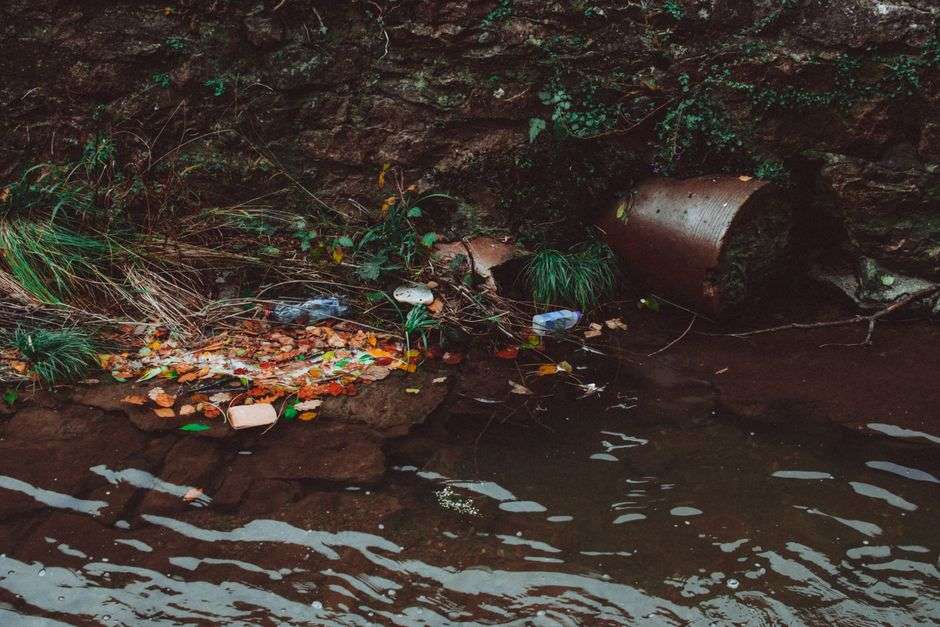
The company’s founding idea came in 2017, during a volunteer cleanup with the Mobile Bay National Estuary Program in Mobile’s Three Mile Creek watershed. “The concept is to intercept stormwater-conveyed litter closer to the source, thus preventing impairment to water bodies downstream,” Bates explained.
The result was the Litter Gitter, an aluminum floating structure that uses booms to funnel flowing water — and everything it carries — into a trap. Two companion products followed: the Litter Interceptor and the Litter Boom. Together they form a product line now deployed at 60-plus locations across 18 states, from Alabama and Arkansas to Texas, Florida, Arizona and the Carolinas, with projects underway in Mexico and Canada.
Osprey remains headquartered in Bates’ home in Fairhope, with a second office in Mobile, and fields 12 full-time employees.
Where the Devices Work
The City of Mobile is the company’s largest client, running a dozen Litter Gitters along with tactical riparian litter removal in the Dog River and Three Mile Creek watersheds. Other clients include the Mobile Bay National Estuary Program, Daphne Utilities, the cities of Fairhope and Foley, and Dog River Clearwater Revival.
The results have been visible enough that locals along Dog River report seeing the water cleaner than they can remember. “We’ve been working with the city of Mobile and Dog River especially, and now they’re saying that they’ve never seen it as litter-free as they see it today,” Bates says. “So we know what we’re doing is having a positive impact on wildlife and water quality.”
Beyond the Water
Osprey’s reach extends onto land through its recycling work: the company has led recycling efforts for the Alabama Coastal Cleanup for nine straight years, coordinates recycling at the Alabama Deep Sea Fishing Rodeo, the Fairhope Music Festival and Live at Five, and even works with the Fairhope High School Key Club on post-football-game cleanups.
The Give Five Program turns employees into community ambassadors and directs 5% of the company’s gross revenue to local projects such as cleanups. Osprey World, the company’s online storefront for mugs, shirts and jewelry, sends a portion of its revenue to cleanup efforts as well.
Why the Coast Was the Right Start
Bates traces the business back to family. “You can’t help but have a passion about a place on the water that means something to you,” he says. “Six generations of my family have been on Manchac Swamp, and I have swamp water in my veins. Our business teaches us we need to work with Mother Nature.”
His wife Greta shares the calling, and their four children — Jack, Madison, and twins Meredith and Amelia — have grown up accompanying him to cleanup events; Jack now works for the company. “Here, the connection to nature is everywhere, and there are so many people working to protect and enhance our natural places,” Bates says of the Gulf Coast. “So much of our litter is carried by heavy rains, so we put our Litter Gitters to work.”
From one volunteer day on Three Mile Creek to a national operation, Osprey Initiative has proven its founder’s childhood lesson on an industrial scale: when you build the right device and put it in the right stream, the birds come back — and so does the water.