

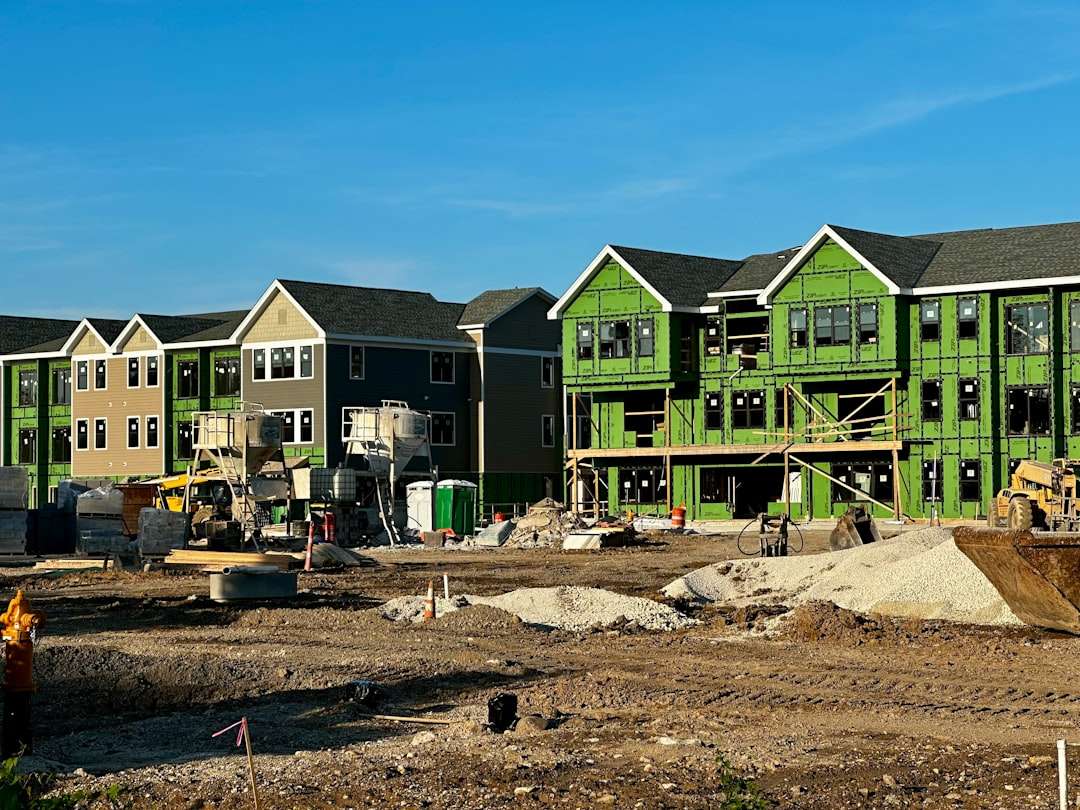
A large stretch of undeveloped land along Highway 59 in Loxley is now under new ownership after a fast-moving financing deal cleared the path for a major multifamily housing project.
Vision of Loxley APT, LLC secured a $1.5 million loan to help fund its purchase of a 41.09-acre site that has already been fully entitled for 420 apartment units, according to details of the transaction released this week.
The loan was arranged by Kennedy Funding, a New Jersey-based direct private lender that specializes in fast-turnaround commercial real estate financing across the country. The company says it closed the deal in just 18 days, a timeline the borrower needed in order to meet a contractual deadline for completing the land purchase. The overall purchase price for the property is $3 million, with the loan covering a portion of that acquisition cost.
The arithmetic of the deal tells the story of a buyer racing a clock: a $3 million purchase, half of it financed through a bridge loan, closed inside of three weeks because the purchase contract gave the buyer no room to wait. In conventional commercial real estate, 18 days from loan application to closing is a sprint; in the bridge-lending world, it is the product.
Why the Highway 59 site stands out
Highway 59 is one of Baldwin County’s busiest north-south corridors, linking Interstate 10 to the growing communities of Loxley, Robertsdale, Summerdale and the county’s beach towns farther south. A 41-acre parcel on that corridor is, by the standards of the county’s development market, a substantial piece of ground — large enough to support hundreds of apartments, their parking, amenities and green space, with immediate access to the traffic that runs between the interstate and the coast every day.
Because the parcel is already “fully entitled,” meaning local zoning and development approvals for a 420-unit multifamily project are already in place, the buyer can move toward construction without the lengthy rezoning and permitting process that often delays new housing developments.
Entitlement is the quiet word that carries this entire deal. Turning raw land into a buildable site normally requires rezonings, planning commission approvals, traffic studies and council votes — a process that can consume a year or more and end in denial. A parcel that walks in with all of that complete is a different asset class entirely.
Land that is ready to build on, particularly in fast-growing parts of coastal Alabama, has become harder to come by. Developers and lenders alike have pointed to a shrinking supply of entitled sites as a key bottleneck slowing new housing construction even as demand keeps climbing.
The bottleneck explains why a buyer would pay a premium — and race a contractual deadline — for land that has already cleared the approvals process. In a market where the waiting list for entitled acreage is long, the parcel’s paperwork is worth as much as its soil.
A county feeling growth pressure
Baldwin County has been among the fastest-growing counties in Alabama for more than a decade, driven by a mix of retirees, remote workers and families drawn to its schools, beaches and lower cost of living relative to other Gulf Coast destinations.
That population growth has been matched by an expanding industrial and manufacturing base in the region, which has, in turn, fueled demand for rental housing near job centers.
Local officials and housing advocates have repeatedly flagged a shortage of available apartments and workforce housing across the county as new residents and employers continue to arrive.
The shortage has a particular shape in Baldwin County. The coastal towns draw most of the attention, but the growth corridor along Highway 59 — Loxley, Robertsdale, Summerdale and the areas around them — is where much of the county’s new population and new employment are landing, and rental supply there has not kept pace. Apartments built near the corridor put residents within an easy drive of both the industrial job centers in the north county and the tourism economy along the coast.
A 420-unit development, once built, would represent a significant addition to the area’s rental housing stock and could help ease some of that pressure, particularly for workers employed by the region’s growing industrial employers.
How the financing worked
Kennedy Funding describes itself as one of the nation’s leading direct private lenders, a type of lender that typically provides short-term, asset-based loans outside the traditional bank lending process.
These loans are often used by developers who need to move quickly on land acquisitions or who may not yet qualify for conventional bank financing because a project is still in its early stages.
The distinction between private bridge lending and bank lending is fundamental to how deals like this one happen. A bank underwrites the borrower’s financials, the project’s full business plan and its completion — a review that takes months and assumes a project ready for construction financing. A private bridge lender underwrites the collateral — the land itself, its entitlements and its value — and closes on the strength of that asset, accepting a shorter term and higher cost in exchange for speed.
In this case, the speed of the loan closing, 18 days from start to finish, allowed Vision of Loxley APT, LLC to meet a deadline written into its purchase contract for the land. Missing such a deadline can jeopardize a deal entirely or force a buyer to renegotiate terms, so bridge financing of this kind is a common tool developers use to keep acquisitions on schedule while longer-term construction financing is arranged separately.
The structure is a two-stage financing plan in miniature: bridge money buys the land and stops the clock, then conventional construction debt — which requires completed plans, cost estimates and a lender’s full underwriting — takes out the bridge loan once the project is ready to build. Developers pay for the option to move at contract speed rather than banking speed.
For the seller, a buyer armed with bridge financing is a buyer whose contract is more credible. Land deals die in financing contingencies more often than they die in negotiations, and an acquisition that can close in weeks rather than months tends to win bidding situations in a competitive land market.
What comes next
The transaction announced this week covers only the land acquisition. No construction timeline, site plan details or property amenities have been released publicly.
As with any large-scale multifamily project, next steps would typically include finalizing construction financing, site engineering and infrastructure work before vertical construction could begin.
Site engineering on a 41-acre tract is a substantial undertaking in its own right: drainage plans, utility extensions, road access points and environmental review all precede the first slab. Baldwin County’s rapid growth has made infrastructure coordination — water, sewer, traffic — a central issue in developments of this scale, and the utility districts along the Highway 59 corridor have been expanding capacity to keep up.
The entitlement already in place for 420 units, however, means the project’s regulatory permitting stage is largely behind it. That head start is what distinguishes this acquisition from the more common pattern — buying raw land and then hoping the approvals follow — and it is why the new ownership could, in principle, move to construction financing on its own schedule.
Market conditions will shape the timeline as much as the paperwork. Multifamily construction across the Gulf Coast has been running hard for years, and construction costs and interest rates influence how quickly even a fully entitled project pencils out for its lenders. The buyer’s willingness to lock in the land now suggests confidence that the project will support construction debt when the drawings are ready.
For Loxley, the deal marks another milestone in the city’s transformation from a Highway 59 pass-through town into one of Baldwin County’s growth centers. A 420-unit community, when built, would bring hundreds of new residents into the city’s schools, churches and businesses, and the city’s planning framework will shape how the development connects to the corridors around it.
The project will be worth watching as additional details, including a construction schedule, become available — a rare case in which the land, the entitlements and the financing all arrived before the public learned the project’s name.
The rental math behind a 420-unit project
Numbers of this scale put the project in context. A 420-unit community, at typical household sizes, houses well over a thousand residents at full lease-up — more people than many Baldwin County municipalities hold in their entire city limits. The development would function as its own small neighborhood, with the traffic generation, utility demand and school enrollment that follow.
For the rental market, the addition matters at both ends of the housing ladder. New construction units typically lease at market rates, which does not directly solve the affordability squeeze that advocates describe, but every unit built reduces the pressure on the older, cheaper stock that new renters would otherwise bid up. Housing economists describe that filtering process as the main mechanism by which market-rate construction eventually eases costs for lower-income households.
The timing also reflects where Baldwin County’s multifamily market is heading. For years the county’s growth was absorbed largely by single-family subdivisions — the rooftops that transformed the Highway 59 corridor and the beach towns. As prices for entry-level homes have climbed, the rental share of the county’s growth has grown with it, and developers have responded by assembling larger multifamily sites in the corridors where employment and schools sit.
Loxley’s position at the crossroads of Interstate 10 and Highway 59 has made it a natural staging point for that shift. The city sits within commuting distance of Mobile’s job market to the west, the industrial corridor of north Baldwin County, and the beach economy to the south — a location that developers of workforce housing have long identified as one of the county’s strongest.
What residents can expect to see
In the near term, visible activity on the site will likely be limited to surveying, engineering and site work — the unglamorous phases that precede any construction start. Neighbors along the Highway 59 corridor can expect to see the standard sequence: drainage infrastructure, access roads and utility extensions before any residential buildings rise.
Traffic will be the question local residents ask first, and it is the one entitlement processes spend the most time on. A 420-unit development generates hundreds of daily trips at full build-out, and its access design onto Highway 59 — already one of the county’s busiest corridors — will be shaped by the approvals already in place on the parcel.
The deal is, in the end, the earliest and least visible step of a long process. But it is also the step that determines whether anything else happens at all: the land is bought, the entitlements ride with it, and a 420-unit apartment community now has an address on Baldwin County’s most traveled north-south highway.