Mississippi abuse survivor shares story to help other women
A George County, Mississippi, abuse survivor is sharing her story to encourage other women in violent relationships to get out and seek help.
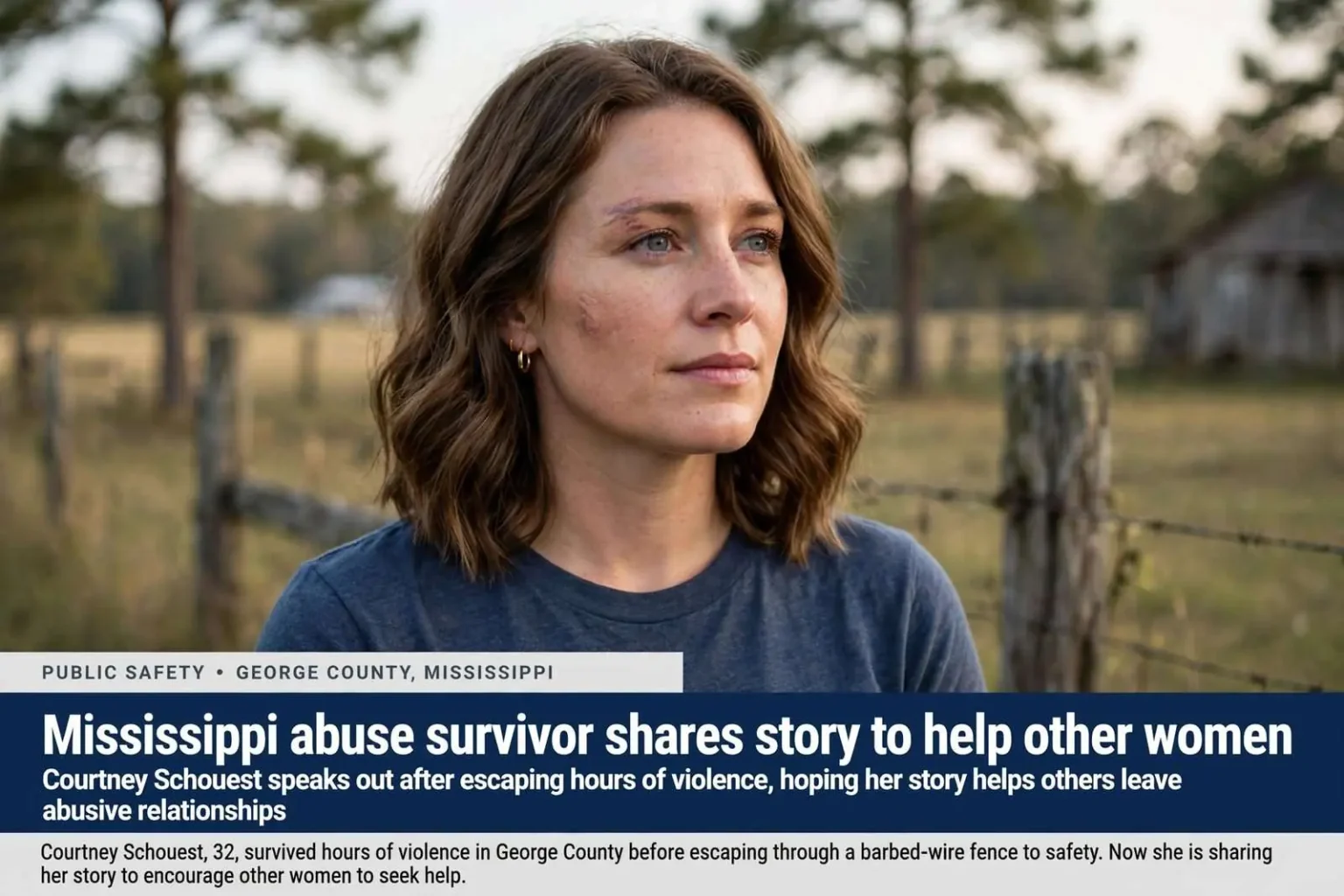
A George County, Mississippi, woman is sharing her experience as a survivor of domestic violence in hopes of urging others in abusive relationships to get out. Courtney Schouest said she was beaten for hours by the father of her daughter, Chase Tanner, and left with serious injuries.
She managed to get away by pulling herself through a barbed-wire fence to reach a nearby home, where a couple took her in and called 911. The escape ended hours of violence and began the process that put her attacker behind bars — but only after she had endured injuries serious enough that getting help meant crawling through wire.
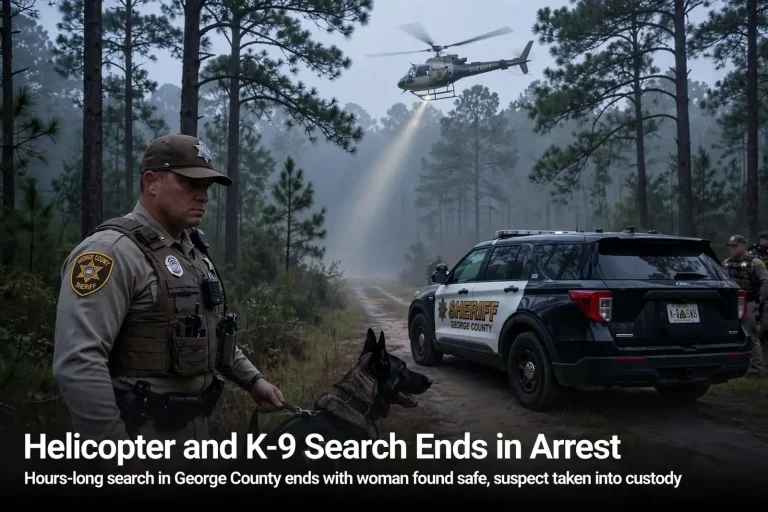
Tanner was on the run for three days before he was taken into custody. Authorities charged him with domestic violence-aggravated assault, a felony that carries serious prison time in Mississippi and reflects the severity of the injuries Schouest suffered.
Schouest said she is telling her story to try to save another woman, and she encouraged anyone in a violent relationship to leave as soon as possible.
“If he tells you he’s going to kill you one day he will eventually try. Because I didn’t believe it either and I kept going back over and over and over. And he eventually did what everybody told me he was going to do,” Schouest said.
Hours of violence, then a crawl through wire
What Schouest describes is the pattern advocates recognize in the most severe domestic violence cases: an assault that lasts not minutes but hours, escalating until the victim is seriously injured and the abuser believes she cannot get away. Survivors of such attacks describe the same arithmetic Schouest faced — the distance to help, the abuser’s watchfulness, the injuries that make every step harder — and the moment when the calculation finally resolves into one desperate attempt.
Hers took her through a barbed-wire fence. That detail matters, advocates say, because it shows the condition she was in: a woman whose injuries were serious enough to leave her pulling herself along the ground rather than running, choosing wire and open ground over one more minute in the house. The couple who took her in and called 911 did what law enforcement officers ask every rural neighbor to do in that moment — open the door, get the victim inside and get help on the line.
In rural counties like George County, that decision is often the difference between survival and death. Homes sit far apart down county roads, neighbors may be the first people a victim can reach, and the minutes between an escape and a 911 call are the most dangerous of the entire ordeal. Emergency responders from the county and nearby communities answered the call that night, and Schouest’s injuries were treated as the serious wounds they were.
The three days that followed — with Tanner on the run — added fear on top of injury. Manhunts for domestic violence suspects draw on deputies, investigators and often other agencies, because the fugitive in these cases is considered dangerous to the victim, to her family and to anyone who stands with her. When Tanner was taken into custody, the charge he faced, domestic violence-aggravated assault, put the case on the felony track where Mississippi law treats serious injury inflicted on a household or family member as what it is: a violent crime with significant prison exposure.
Why victims go back
Schouest’s own words get at the question people always ask about these cases: why did she keep going back? “Because I didn’t believe it either,” she said — and that belief, that the threats will not really be carried out, is one of the most dangerous features of an abusive relationship. Advocates and counselors who work with survivors say the pattern is depressingly consistent: violence, apology, a calm stretch, then escalating abuse, with each cycle training the victim to doubt her own judgment and her own fear.
Leaving is also the most dangerous moment in an abusive relationship. Research and law enforcement experience consistently show that risk to the victim peaks around separation, when the abuser loses control and the threats made for years stop being abstract. That is why advocates urge victims to plan before they leave — where to go, who to call, what documents to take — and why protective orders, safe houses and law enforcement involvement matter so much in the days and weeks after a departure.
Children change the calculation too. Schouest is the mother of Tanner’s daughter, and custody of and contact with a child are among the ties that pull victims back into an abuser’s orbit. Advocates who run support programs in southeast Mississippi say mothers in abusive relationships often stay because they fear leaving the child behind, not because they fear the abuser less — and that the presence of a child in a violent home is itself a reason courts and shelters treat those cases as emergencies.
The cost of domestic violence in Mississippi
Mississippi’s record on domestic violence is grim by any measure. The state has appeared for years in national studies ranking the rate of women killed by men, and advocates in the state have long argued that its rural geography, its shortage of shelter beds and its cultural reluctance to discuss family violence combine to make dangerous situations deadlier. Cases like the one in George County — hours of beating, a crawl through a fence, a three-day manhunt — are the sharp end of a problem that fills court dockets across the state every week.
The legal framework has evolved in response. Mississippi’s domestic violence laws treat violence between household and family members as a distinct category of crime, and the aggravated assault charge Tanner faces is among the most serious counts available when the victim is seriously injured. Judges can issue protective orders that bar contact, and violations of those orders are themselves crimes. Prosecutors in south Mississippi have increasingly treated these cases as the violent felonies they are rather than private matters to be mediated.
Help exists along the Gulf Coast and in south Mississippi, though advocates acknowledge it is stretched. Domestic violence shelters in the region take in victims and their children, provide crisis counseling and help with protective orders, and operate hotlines that run around the clock. The National Domestic Violence Hotline — reachable at 1-800-799-7233 — connects callers to local resources anywhere in the country, and 911 remains the first call in an active emergency. Law enforcement officers in Mississippi are trained to connect victims with advocates at the scene, because the hours right after an assault are when a victim is most likely to act.
Why she is telling the story
Schouest’s decision to speak publicly is the step many survivors never take, and she has been clear about why: she wants her story to reach a woman who is where she was, believing the threats, going back over and over. Survivors who tell their stories describe the same hope — that one sentence in one interview lands with one listener at the right moment, and that woman leaves before the hours of violence begin instead of after.
Her warning is specific and it comes from experience: when a man tells a woman he is going to kill her, believe him. Family, friends and neighbors had told her what was coming, and she has said so herself. The injuries she carried, the fence she crossed and the three days she spent not knowing whether her attacker was caught are the evidence she now asks other women to weigh.
For the community around George County, the case is a reminder of what domestic violence looks like up close. It is not an argument that got out of hand; it is hours of beating, a seriously injured woman on a county road, a couple who did the right thing, and a fugitive in the woods while deputies searched. It is also, in the end, a survivor talking — a woman who got out, saw her attacker charged, and decided the best use of what happened to her is to make sure the next woman runs sooner.
Anyone in immediate danger should call 911. Anyone in an abusive relationship who is planning a way out can call the National Domestic Violence Hotline at 1-800-799-7233, where advocates answer around the clock and can connect callers to shelters, counselors and legal help in southeast Mississippi and along the Gulf Coast.
Sheriff’s investigators in cases like this one also gather the history. Prior calls to the same address, prior threats, messages between the couple and statements from family members all become part of the file that follows the defendant into court. That record matters at sentencing, where the aggravated assault charge and the defendant’s history with the same victim help determine how much prison time the conviction ultimately carries.