

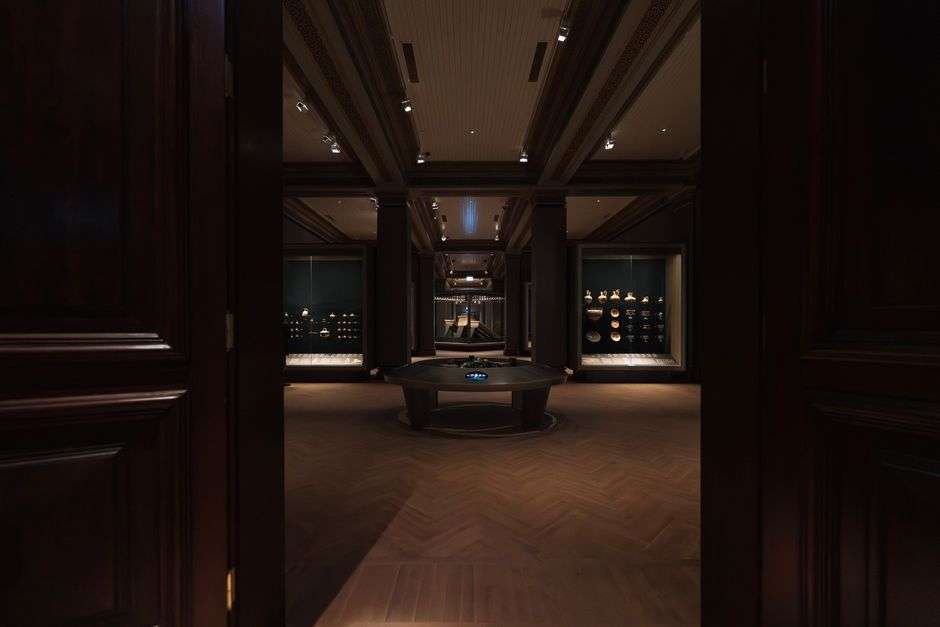
The Mobile City Council has approved a $240,954 contract with a local design firm to shape the visitor experience inside the long-awaited Africatown Welcome Center, moving one of the city’s most significant heritage tourism projects from an empty, newly built shell toward a fully realized museum and community gateway.
The council voted unanimously Tuesday to award the contract to Watermark Design Group, a Mobile company that will oversee the design and development of the museum exhibits planned for the center, which rises along Bay Bridge Road near the foot of the Africatown USA Bridge. The vote was backed by District 2 Councilwoman Samantha Ingram, who represents the Africatown area, and by Mayor Spiro Cheriogotis.
What the design contract covers
Under the agreement, Watermark Design Group will oversee the museum exhibits that will anchor the interior of the welcome center, manage the content that appears within them, organize programming for the museum and provide guidance on the overall layout of the space as visitors move through it. The firm will also collaborate with the project’s curator and work within the plans for the various phases of the museum’s development.
Ingram said after the vote that she was excited about the project and pointed to the breadth of the work ahead. The contract, she said, covers two parallel tracks: creating the overall design and flow of the welcome center — what a visitor actually encounters upon walking in — and building the exhibit program that will carry the community’s story.
“The first part is creating what the design and what the flow should look like for the welcome center, so you have the building, but what happens internally once you walk in? What should you experience?” Ingram said. “This contract will allow for the consultant to create the design based on best practices. In addition to that, the consultant will also collaborate with the curator. Another part of that is also working with the plans for the various phases of the museum.”
Ingram also said the hope is that the welcome center will be open by January 2027, giving the design work a firm horizon.
A mayor’s push to make it more than a building
Cheriogotis told reporters that the contract is intended to drive the focus of the center and ensure it stands apart as a genuine reflection of the community it serves, rather than a generic visitor facility dropped into a historic neighborhood.
“If you haven’t ridden by, the building looks great,” he said. “It really stands out sitting up atop the hill. We want to make sure it’s a true asset to the Africatown community. One thing I recognized is there really wasn’t much programming planned for that. We want to make sure this Welcome Center is not just ho-hum. That it’s something that’s a real attraction to anyone driving through that area. Something that can pull them in, get them to stop, and hear the story of Africatown, see the story of Africatown.”
The mayor emphasized that the center is not designed to be a full museum on the scale of a dedicated institution, but rather a first stop that orients visitors and sends them onward to the community’s other cultural sites.
“It takes planning. It takes assets. It takes exhibits,” Cheriogotis said. “It’s not meant to be a museum, but we’ve got to have something to show people at least a part of the story of Africatown, so they can be inspired to go out to the Heritage House, to the landing, to see the different pieces of Africatown and really understand its history.”
The history the center will tell
The story the welcome center is being built to introduce begins with the Clotilda itself. In 1860 — more than 50 years after the United States had outlawed the importation of enslaved people — the schooner smuggled 110 African captives into Mobile Bay on its final illegal voyage. The ship’s owners burned and scuttled the vessel to hide the evidence of the crime, but the people it carried survived, and after emancipation many of them pooled their resources, bought land and founded their own community north of Mobile, which became known as Africatown.
For generations, descendants kept the story of the voyage and the community it produced alive through oral histories, even as the ship’s remains lay hidden in the murky depths of the Mobile River. Cudjo Lewis, one of the last survivors of the Clotilda, lived until 1935 and served as a spokesman for the community, recounting the journey for interviewers and historians. The 2019 confirmation of the wreck’s identity turned those long-held oral histories into documented fact and set off the wave of recognition and investment that produced both the Heritage House and the welcome center now taking shape.
The welcome center has been roughly a decade in the making as a formal project, but the idea of a proper gateway for Africatown stretches back far longer. For years, the community’s welcome center consisted of little more than a temporary mobile unit stationed across from the Old Plateau Cemetery, a stopgap that residents outgrew long before funding arrived for anything permanent. Around 2018, roughly $3.58 million in BP oil spill funds managed by the Alabama Gulf Coast Recovery Council was dedicated to the project, and the planning process formally began from there.
Construction of the current center took a major step forward in February 2025, when the City Council approved a $4.6 million construction contract with Fairhope-based C. Roberds General Contractors for the roughly 18,000-square-foot building. The money came from a $5 million grant under the RESTORE Act, which channels penalty payments from the 2010 Deepwater Horizon oil spill into Gulf Coast restoration and tourism projects. The city broke ground in May 2025, and construction wrapped up earlier this year, leaving the finished building standing atop the hill near the Old Plateau Cemetery as residents waited for the interior story to catch up with the exterior.
City leaders have described the project as a connecting thread rather than a destination in itself. The center is intended to direct visitors to the Africatown Heritage House, which already hosts “Clotilda: The Exhibition” honoring the ship and its survivors, as well as historic sites, the cemetery and the water tours that trace the community’s story along the Mobile River.
Community input remains central
City officials have repeatedly framed the welcome center as a project that must be shaped by the community whose story it tells. Since July, the city has been asking residents to submit local memories, photographs and stories to help populate the center and its exhibits — a deliberate effort to make sure the narrative inside the building comes from the people who lived it rather than from outside institutions.
That approach carries particular weight in Africatown, where questions of who controls the community’s story have been central to heritage tourism conversations nationwide. The design contract approved this week puts a professional team in charge of translating that community material into exhibits, layouts and programming, with an explicit mandate to work alongside the curator and the phased plans already in place.
Ingram said the goal is a center where the interior experience matches the promise of the building itself — an immersive introduction to the history of the community, developed with descendant families and residents rather than simply presented to them.
“Now that we have the physical building, we have to focus on the interior of the building so when a visitor is there, they’re truly immersed in the story,” she said.
What comes next
With the design contract in place, the project shifts toward exhibit development, content gathering and the early stages of the programming that Cheriogotis said will determine whether the center becomes a true attraction or simply another stop. City leaders are targeting a January 2027 opening, a timeline that leaves roughly a year for design, fabrication and installation work.
For a community that waited decades for recognition of its history — and that watched the Clotilda’s discovery transform international interest in the neighborhood — the contract approval marks the point where the welcome center stops being a construction project and starts becoming a storyteller. Residents who want to contribute their own memories and materials to the effort can continue to submit them to the city as the exhibit planning moves forward.
“We want to make sure it’s something that’s a real attraction to anyone driving through that area,” Cheriogotis said. “Something that can pull them in, get them to stop, and hear the story of Africatown, see the story of Africatown.”