

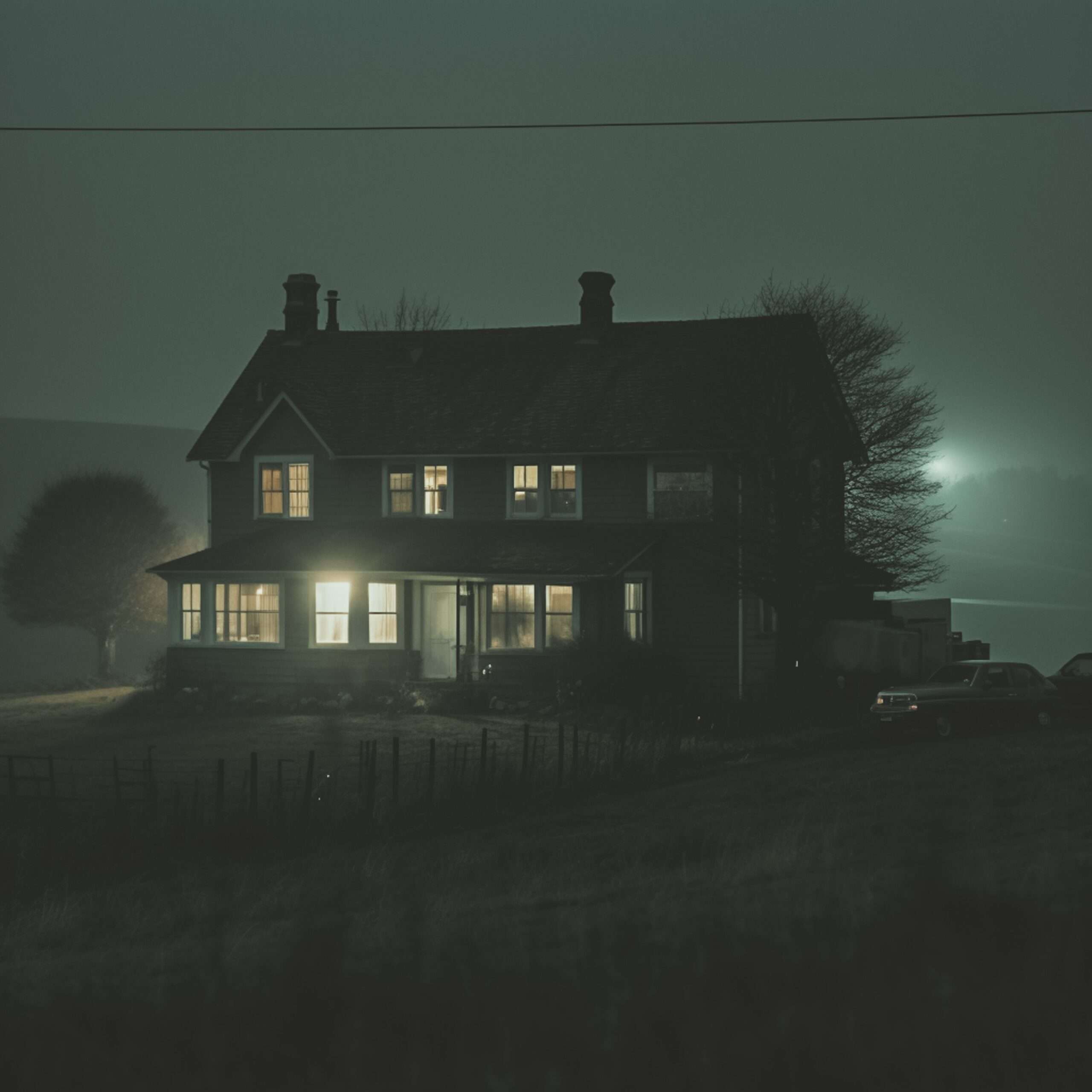
Mobile writer Elizabeth Parker has spent years tracking down the city’s ghost stories, and this fall her research is being published in a single volume, “Haunted Mobile,” through The History Press’s national Haunted America series.
The new book combines Parker’s two earlier self-published titles, “Mobile Ghosts: Alabama’s Haunted Port City” and “Mobile Ghosts II: The Waterline,” bringing together under one cover the accounts she gathered from the city’s historic homes, churches, graveyards, and waterfront. The Haunted America series, published by The History Press, covers allegedly haunted sites across the United States and gave Parker’s work a national shelf alongside volumes for cities from Savannah to New Orleans.
Parker said she wrote the original books after growing frustrated that Mobile’s haunted history had gone largely undocumented. Outside of a few mentions in Kathryn Tucker Windham’s books — the celebrated Alabama folklorist whose “13 Alabama Ghosts and Jeffrey” collection made her a household name across the state — no one had put together a dedicated collection of the city’s ghost lore, despite shelves of similar “true ghost” collections covering other cities around the country and the United Kingdom.
The omission struck her as peculiar for a city of Mobile’s age and character. Founded in 1702 as the colonial capital of French Louisiana, the port city predates the nation itself, and its three centuries of yellow fever epidemics, fires, wars, and shipwrecks left the kind of layered history that ghost-story traditions feed on. Parker believed the stories were out there — told in parlors and passed down through old families — but uncollected on the page.
Parker, whose background is in business and nonfiction writing with some graphic-arts training, said assembling the books was never the hard part. “The publishing end took all the fun out of it,” she said, describing the grind of self-publishing that preceded the History Press’s interest. That changed in January 2009, when The History Press contacted her about folding both books into its Haunted America line, a call that transformed her self-published project into part of a national catalog.
Firsthand encounters
Parker said years of research into the city’s haunted sites have given her a handful of experiences she still can’t fully explain. She described being physically pushed out of a room in the second parlor at the historic Oakleigh mansion, the antebellum house museum in Mobile’s Oakleigh Garden Historic District, and said she was followed home afterward by an unpleasant, lingering odor she couldn’t shake for most of a day.
At a private home, she said, something grabbed her leg, and on another occasion the handles of a tote bag she had set down slowly lifted into the air before lowering again. She recounts the experiences in the matter-of-fact tone of a researcher who has learned to separate her own encounters from the lore she documents — and who reports them without demanding that readers believe them.
Not every local ghost story makes it into her books, though. Parker said she is aware of at least one well-known Mobile ghost story that was deliberately invented, in part to discourage vandalism at the site, and she declined to include it because she only publishes accounts she believes, to the best of her knowledge, describe real events reported by real people. The editorial line has made her books as much an archive of oral tradition as a tour guide to the city’s darker corners.
Her method reflects that archival instinct. Parker tracks down the oldest versions of each story she can find, interviews the people who tell them, and records the details that give the accounts their texture — dates, house names, family connections. Mobile’s ghost lore tends to attach to the city’s grandest surviving architecture: the antebellum and Victorian homes along Government Street and in the historic districts, the churches whose congregations date to the colonial era, and the old waterfront structures tied to the port’s long maritime history.
Mobile’s place in Alabama’s ghost tradition
Windham’s ghost books, which began in 1969 with “13 Alabama Ghosts and Jeffrey,” established the template for Alabama ghost collecting, and her original volume included tales from south Alabama’s coastal region. But Windham’s surveys covered the whole state, leaving room for local collectors to go deeper into their own cities. Parker’s books filled that gap for Mobile, capturing stories that had never appeared in print before she sought them out.
The port city’s particular history gives its hauntings a flavor distinct from the rest of the state. Mobile’s Creole and Catholic heritage, its antebellum merchant wealth, its Union occupation during the Civil War, and its shipping and shipbuilding industries all left stories in their wake — haunted theaters and hotels downtown, spectral figures along the bayous, and waterfront legends tied to the sailors and ships that worked the bay. Parker’s “Waterline” subtitle, from her second collection, pointed at that maritime vein directly.
The Haunted America series that now carries her work has become the country’s most extensive ghost-story catalog, with volumes covering hundreds of towns and cities. The History Press, based in South Carolina, specializes in regional and local titles, and its imprint gave Parker’s collections a lifespan well beyond the limited runs self-publishing allows — meaning the stories she gathered from Mobile’s oldest families will stay in print for readers who may never have heard them otherwise.
For readers, the combined volume arrives at a moment when interest in Mobile’s historic districts is running high. The city’s tourism identity leans heavily on its antebellum architecture, its oak-shaded streets, and its Mardi Gras tradition — the oldest carnival celebration in the country — and ghost tours have grown into a fixture of the downtown evening economy. Parker’s books sit at the intersection of that tourism and the city’s genuine historical record, giving tour guides, history teachers, and curious residents a documented source for tales that had lived mostly by word of mouth.
The book’s fall release also puts it on shelves for the season when ghost stories find their widest audience. October brings the region’s heaviest ghost-tour traffic, with historic districts from Mobile to Pensacola running nighttime walks past the very houses Parker writes about, and local bookstores have long stocked Windham’s collections alongside newer regional titles for readers who want the stories behind the stops.
Parker’s insistence on publishing only accounts she believes to be genuine has earned her work a particular credibility among local historians, who note that ghost collections often mix authentic folklore with invented filler. By excluding the one story she knows was fabricated — even a story invented for the arguably civic-minded purpose of discouraging vandalism — she drew a line that separates her books from the souvenir shelves and anchors them in the city’s real oral tradition.
That standard requires patience. Collecting ghost stories means listening to families who may have guarded a tale for generations, visiting houses whose owners may or may not welcome the attention, and sitting with accounts that cannot be verified in any archive. Parker’s two earlier volumes took years of that work, and the combined edition preserves the result: a portrait of Mobile told through its most persistent stories, gathered house by house from the people who live with them.
For a city that has watched neighboring Savannah and New Orleans build tourism industries partly on their haunted reputations, the arrival of “Haunted Mobile” in a national series offers a reminder that the port city’s three centuries of history hold stories of their own. Parker’s research has now put them on the national shelf — documented, attributed, and finally given the permanent record she set out to write when she found Mobile’s haunted history missing from the map.
Oakleigh itself, the site of Parker’s most memorable encounter, is among Mobile’s best-documented historic properties. The mansion was built in the 1830s for a cotton merchant and now operates as a house museum furnished to reflect the antebellum period, staffed by docents who lead visitors through parlors that have accumulated nearly two centuries of family stories. It is exactly the kind of property where oral tradition accumulates, and Parker’s account of the second parlor joins a longer list of unexplained experiences reported there over the decades.
The writer’s graphic-arts background also shaped the books’ character. Self-published regional titles often suffer from hasty production, but Parker’s training allowed her to control the visual side of her volumes — layouts, cover design, and the presentation of historic photographs that anchor each account in a recognizable place. Readers of the combined edition get the benefit of that craft, with the sort of production quality that regional-history readers have come to expect from The History Press’s catalog.
The transition from self-publisher to national imprint followed a pattern the History Press has repeated in other cities: identify a local author whose self-published regional title has proven itself, and fold it into a national series that gives the work distribution the original could never reach. Parker’s January 2009 call came after her two Mobile Ghosts volumes had established exactly that local track record, and the resulting book joined a series that treats ghost lore as a legitimate branch of regional history.
Mobile’s historic preservation community has watched such books with interest, since the stories serve a practical purpose for the districts that preserve the city’s oldest buildings. Ghost lore keeps attention on historic properties that might otherwise sit unrecognized, brings paying visitors through museum doors, and gives younger residents a reason to learn the architectural and family histories behind each address. Parker’s documentation turns that attention into a durable record the districts can point to.
Whether readers take the accounts as folklore, history, or something harder to classify, the combined volume preserves what Parker found when she went looking: a city whose three centuries have produced ghost stories worthy of standing beside those of any older port in the country. Her years of listening — and her insistence on publishing only what she believes — have given Mobile the dedicated record that was missing when she started, and a place on the national shelf of cities that keep their past close.