University of South Alabama Baldwin County
USA Sets Enrollment Record as Baldwin, Mobile Schools See Big Changes
USA reports record fall enrollment while Baldwin County restructures its staff and Mobile County schools tackle major construction updates this week.
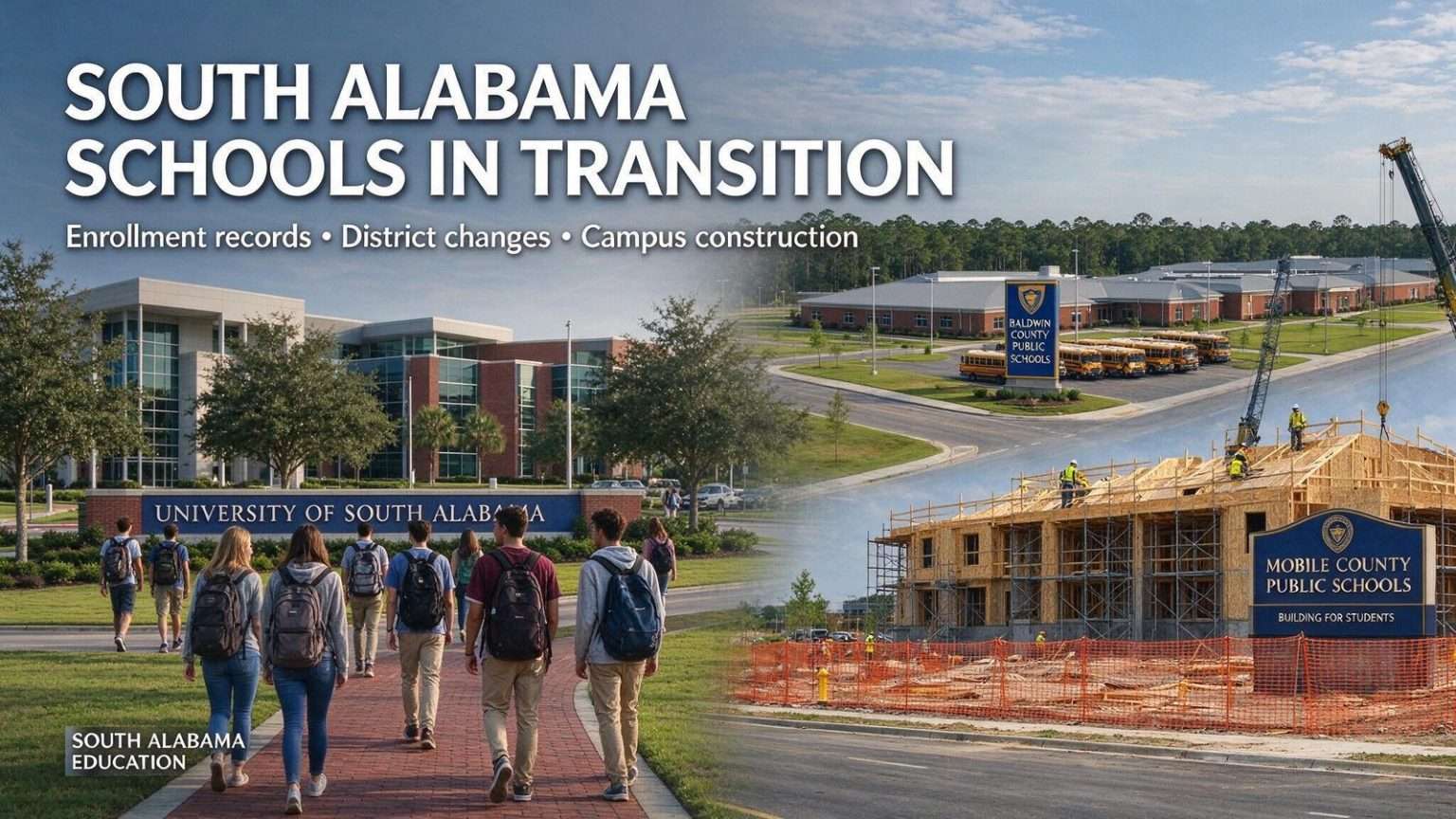
It has been a busy week across South Alabama’s schools and colleges, with a record-setting enrollment announcement, a leadership shakeup in Baldwin County and construction updates in Mobile County all making news as the new academic year gets underway. The stories, taken together, sketch a region whose education landscape is shifting on nearly every front — from college campuses growing faster than anyone projected, to county school districts reorganizing their administrations, to small cities pushing to form their own independent systems.
South Alabama Sets an Enrollment Record
The University of South Alabama reported its largest enrollment ever this fall, with 16,055 students registered for the semester, a jump of nearly 5 percent over last year. University officials pointed to the growth as evidence of increasing interest in the Mobile-based institution among students across the region and beyond, crediting expanded academic programs, scholarship initiatives and the university’s growing reputation as a research and healthcare hub on the central Gulf Coast.
The record head count has practical implications for the Mobile economy. More students mean more demand for housing, dining and services near the campus, and university leaders have tied enrollment growth directly to the metro area’s ability to attract and retain young professionals. South Alabama has long served as the region’s primary four-year public university, and steady growth reinforces its role as an engine for the local workforce, particularly in health care, engineering and business.
The enrollment milestone also reflects broader demographic currents on the Gulf Coast. South Alabama draws heavily from Mobile and Baldwin counties, and the region’s population growth — driven in recent years by aerospace, shipbuilding and port-related employment — has produced more high school graduates seeking degrees close to home. University officials said they expect to build on the record by continuing to expand online offerings and graduate programs aimed at working adults.
Baldwin County Reorganizes Its Leadership
In Baldwin County, the school board approved a reorganization of the district’s administrative structure, proposed by interim superintendent Robbie Owen. The plan adds two assistant superintendent positions, effectively reverting to an organizational setup used before the previous superintendent’s tenure began in 2010. District officials framed the move as a way to strengthen oversight of one of the fastest-growing school systems in Alabama, which has absorbed thousands of new students over the past decade along the Eastern Shore and the Gulf coast corridor.
The reorganization comes at a demanding moment for the Baldwin County system, which has managed a countywide digital device initiative and a rolling program of new school construction as subdivisions multiply across the county. Board members said the additional leadership positions will distribute responsibility for curriculum, operations and personnel across a wider bench of administrators, giving principals more direct access to district-level decision makers.
Separately, the district has launched a phone survey of parents to gather feedback on how to manage rising enrollment, part of an ongoing effort to gauge public support for new school construction funding. Baldwin officials have warned for years that continued growth along the U.S. 98 corridor and in south Baldwin County will require new campuses and additions, and the survey results are expected to inform the board’s decisions about whether to seek voter support for a property tax measure to pay for it.
The growth question is not abstract in Baldwin County. Individual schools in Daphne, Spanish Fort, Fairhope and Foley have operated at or above capacity in recent years, and portable classrooms have become a fixture on many campuses. A failed construction measure several years ago left the district managing growth through zoning and reassignment, and officials hope that a clearer picture of community sentiment will help them craft a funding plan voters will accept.
Mobile County Reviews Bond Projects and Its Leader
Mobile County’s school board used its annual retreat this week to review progress on 17 projects funded through a $100 million construction bond, a portfolio that touches campuses across the county from the city of Mobile to its outlying communities. The bond program has financed new classrooms, renovations and technology upgrades intended to modernize a district that is among the largest in the state by enrollment.
Officials acknowledged that delays in selecting a new site for Citronelle High School will push that project’s completion back to the summer of 2016. The Citronelle project, one of the most closely watched in the bond program, has been complicated by the search for suitable land in the rural northern reaches of the county, and board members said they would rather take the time to secure the right site than rush construction on a location that does not serve the community well.
On a more positive note, Superintendent Martha Peek received top marks for the second consecutive year in her performance evaluation, with the board expected to discuss a possible contract renewal in the spring. Board members cited steady fiscal management and progress on the construction program among the reasons for the strong evaluation, and the renewal discussion will likely draw attention from parents and employees alike as the district continues to navigate budget pressures and enrollment shifts.
Virtual Programs Have Room to Grow
Virtual learning options in both counties still have room to grow, officials say. Mobile County’s online program for grades 6-12 has enrolled 187 of its 250 available seats, while Baldwin County’s virtual high school option has around three dozen students, with officials encouraging more students to add online courses to their schedules. Both districts see virtual instruction as a way to offer advanced coursework, flexible scheduling and credit recovery that traditional campuses cannot always provide.
The relatively modest enrollment in the programs reflects a familiar pattern in Alabama, where virtual schools have grown steadily but still serve a small fraction of students. District leaders say the option appeals most to students juggling jobs or athletics, to homebound students, and to high achievers seeking courses their home campuses do not offer. As course catalogs expand and more students grow comfortable with online learning, both counties expect their programs to fill out in coming years.
Orange Beach Pushes for Its Own District
Down in Orange Beach, roughly 350 residents turned out for a community meeting to discuss the city’s push to break away and form its own independent school system, a move that would separate the beachfront city’s students from the Baldwin County district. Voters will decide the matter in a referendum next month on a proposed 5-mill property tax increase to fund the new district, and the crowd’s strong turnout signaled how much attention the question has drawn in the small coastal community.
Orange Beach leaders have argued that a city-run system could keep local tax dollars supporting local students and tailor programs to the community’s needs, while skeptics have raised questions about startup costs, facilities and whether the city can attract and retain the teachers and administrators a standalone district requires. The referendum will be one of the most closely watched school votes in Alabama, following a wave of city separations from county systems that has reshaped the state’s education map over the past decade.
Elsewhere in Baldwin County, the prospect of a new Orange Beach district adds another variable to the county system’s own planning. If the referendum succeeds, the county district would eventually lose a slice of its tax base and enrollment, complicating the same growth and funding calculations driving the parent survey and the administrative reorganization approved this week.
Satsuma Budgets, Ice Buckets and National Honors
Meanwhile, Satsuma City Schools, now in its third year as an independent system, approved a $13.2 million budget for the coming year, a roughly 6 percent increase, even after trimming six teaching positions to match enrollment. The small Mobile County city was among the first systems to break away from the county district after the state made it easier for municipalities to form their own school boards, and its budget reflects the delicate balance new systems must strike between ambition and enrollment reality.
Satsuma officials have worked to build out the district’s identity since the split, adding programs and improving facilities with a combination of local tax revenue and state support. The decision to reduce teaching positions as enrollment declined underscores the financial discipline small systems must maintain, since state funding follows students and a dip in head count quickly tightens a young district’s budget.
Not all of the week’s news was administrative. Mobile County school employees have embraced the viral ALS Ice Bucket Challenge, raising thousands of dollars for charity in the process. The social media phenomenon, which has swept the country this summer, has seen teachers, coaches and administrators doused on camera and challenged colleagues to do the same or donate, and Mobile County employees have turned the fun into meaningful contributions for ALS research and patient services.
The Alabama School of Math and Science, the Mobile-based residential school for the state’s top high school students, earned recognition as one of the nation’s top high schools in national rankings released this season. The honor adds to the school’s reputation as a destination for gifted students from every county in Alabama, many of whom board on campus for their junior and senior years while taking college-level coursework in mathematics, science and the humanities.
Several district boards, including Chickasaw City Schools, have budget hearings on their calendars in the coming days as the new academic year gets underway. Chickasaw, another small city system that separated from Mobile County, is among the local boards that will hold public hearings on their spending plans, giving residents a chance to weigh in on how their school dollars are used. Between enrollment records, reorganizations, referendums and budget hearings, education is dominating the public agenda across South Alabama, and the weeks ahead promise more milestones as students and their districts settle into the new year.