

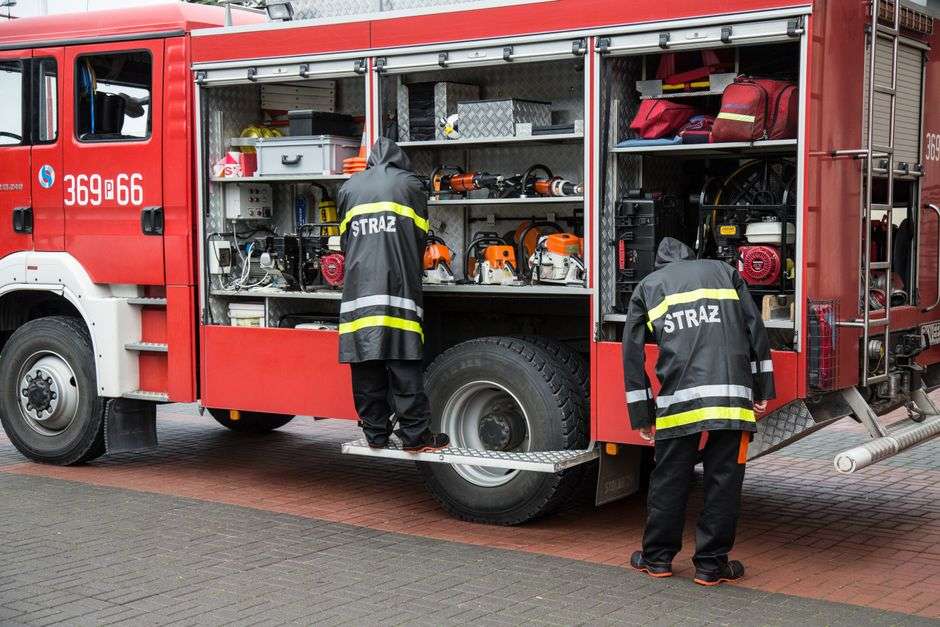
MOBILE, Ala. — Alabama Task Force 1, the urban search and rescue team that includes specialists from Mobile Fire-Rescue, has wrapped up its mission in Texas and is returning home after nine days helping communities recover from severe flooding. The team, known as AL-TF1, was demobilized and began its trip back to Alabama after the State of Texas formally recognized the work Alabama’s task forces contributed during the deployment.
Nine days is a long deployment for a state task force, and it speaks to the scale of the flooding that pulled teams from across the country into Texas. Search and rescue work after major flooding means moving through neighborhoods where water has receded just enough to reveal the damage: houses that must be cleared room by room, vehicles that have to be marked and searched, and residents who have scattered to shelters and family homes across a county. The pace is grinding, the hours are long, and the work is done in the same mud and heat that made the flood dangerous in the first place.
According to the organization, the mission gave AL-TF1 members a chance to strengthen relationships with other Alabama-based teams, provide emergency response support, take part in specialized training and assist Texas communities directly affected by flooding. What began as an operation centered in Crystal City, Texas, eventually expanded across the southeastern part of the state, with AL-TF1 personnel supporting efforts in Laredo, Rio Bravo, Austin and San Antonio before the mission concluded.
That spread of assignments tells its own story. Crystal City sits in the brush country of South Texas, while Laredo and Rio Bravo line the border on the Rio Grande, and Austin and San Antonio anchor the flood-prone corridor of Central Texas. Moving personnel across that much territory means convoying equipment hundreds of miles and coordinating with local emergency managers in each jurisdiction, exactly the kind of experience a task force cannot replicate in training alone.
The deployment in detail
The Alabama contingent operated under the state’s emergency mutual aid framework, which allows governors to dispatch trained teams when another state’s capacity is exceeded. Deployments of this kind are typically triggered through the Emergency Management Assistance Compact, the interstate system that formalizes how personnel, equipment and costs move between states during a disaster. Under that structure, Alabama’s teams answered Texas’s request and operated under the incident command of the affected jurisdictions while remaining accountable to state emergency management back home.
Flood response differs from the hurricane and tornado work that Gulf Coast teams know best, but the fundamentals carry over. Water rescues, door-to-door searches, damage assessment and support for displaced residents all demand the same combination of discipline and adaptability, and the nine-day schedule meant rotating through assignments as conditions evolved across the region.
The return home
“As our team returns, we will regroup, service equipment, and prepare for the next mission,” the organization said in a statement posted to its Facebook page. The routine that follows a deployment is substantial: boats, vehicles, rescue gear and electronics have to be inspected, cleaned, repaired or replaced, and the logistics specialists who keep the task force ready treat the post-mission reset as seriously as the mission itself.
AL-TF1 credited Mobile Fire-Rescue leadership, Mobile Mayor Spiro Cheriogotis, the city’s executive leadership team, the Alabama Emergency Management Agency, Gov. Kay Ivey and the state’s federal and state legislators for supporting the deployment. “Without the State’s continuous support, this mission would not be possible,” the team said.
The public thanks reflects how a state task force actually functions. Its members are full-time firefighters, engineers and medical personnel who remain employees of their home departments, so a nine-day deployment requires Mobile Fire-Rescue and other agencies to absorb the absence of their specialists while the state covers the mission’s costs. Elected leaders who back that arrangement make it possible for Alabama to answer another state’s call without leaving its own communities short-handed.
What a Type 1 task force is
Alabama Task Force 1 is the state’s Type 1 State Urban Search & Rescue team, formed in October 2001 to bolster disaster readiness along the Gulf Coast. The timing is not a coincidence: the task force was created in the months when the nation was rethinking disaster response after 9/11, and the Gulf Coast’s own history of hurricanes made a standing, fully equipped rescue team a necessity rather than a luxury.
The team is sponsored by the Mobile Fire-Rescue Department and the State of Alabama, with funding through the Office of Domestic Preparedness and State Homeland Security. Base it in Mobile and the state gains a rescue capability positioned near the coast, the port and the interstates that carry relief convoys in a hurricane’s aftermath.
Its ranks include search and rescue specialists, K-9 teams, structural engineers, trauma physicians and nurses, equipment operators, logistics specialists and command and support personnel drawn from departments across Alabama. That breadth is what separates a Type 1 task force from a local rescue squad: the engineers can assess whether a flood-weakened structure is safe to enter, the physicians can treat victims and team members on site, and the K-9 handlers can clear a debris field faster than human searchers alone.
Why Texas called for help
Flash flooding is among the deadliest disasters Texas faces, particularly in the hill country and the coastal plains where rivers rise faster than warnings can spread. When floodwater sweeps through populated areas, the rescue workload quickly overwhelms local departments, which is why states maintain mutual aid arrangements that let governors request teams from across the country. A deployed task force arrives self-sufficient, carrying its own boats, food, water, generators and communications gear so that it adds capability to a devastated area without draining it.
For the communities AL-TF1 visited, the value of the team is measured in the searches completed and the residents accounted for. Flood aftermath work also has a human dimension that does not appear in after-action reports: task force members spend days listening to survivors, marking homes where someone is still missing, and giving local officials the information they need to account for every resident.
Training that travels home
The mission’s training value matters as much for Alabama as for Texas. Every deployment tests skills that the Gulf Coast will eventually need at home, from swiftwater operations to multi-jurisdiction coordination, and the lessons return with the team. Mobile and south Alabama remember well what hurricanes can do to a coastline, and the region’s readiness depends on members who have worked real disasters, not just exercises.
The cooperation among Alabama’s own teams during the deployment also strengthens the state’s internal response network. Task forces that deploy together build the working relationships, radio interoperability and trust that make the next joint response, whether in another state or at home, smoother from the first hour.
The people behind the deployment
Behind the statement and the statistics are the individual members: Mobile firefighters who left their own stations for more than a week, K-9 handlers whose dogs worked the same flooded ground as their handlers, and physicians and nurses who traded clinic shifts for flood-zone aid. Their families absorb the absence, and their home departments cover the shifts, which is why the task force’s public thanks ran to so many names.
The K-9 component deserves its own note. Search dogs trained for disaster work can cover a collapsed or flooded structure in a fraction of the time a human team needs, and their handlers maintain year-round training schedules to keep the certification current. A deployment like Texas is the ultimate test of that training, with real victims, real terrain and none of the rehearsal of a practice rubble pile.
For Mobile, the successful deployment is also a point of civic standing. The city’s fire department sponsors one of the nation’s state-level urban search and rescue teams, and every completed mission demonstrates the depth of that investment. When the next hurricane threatens the Gulf Coast, Alabama will send help and Alabama will need help, and teams like AL-TF1 are what make both directions of that exchange possible.
The nine-day deployment ended the way the task force hopes they all do: with the communities it served safer, with its members accounted for, and with the equipment on the road home to Alabama. The regrouping, servicing and preparation that begins now is the quiet work that keeps the team ready for whatever comes next, whether the next call comes from another state or from the Alabama coast itself. It is unglamorous work, and it is the reason a call to Texas could be answered within hours of the request.
As the convoy headed east, the organization’s message to the communities of South and Central Texas was the same one it carries home: Alabama stands ready, and Alabama Task Force 1 will be ready with it.