

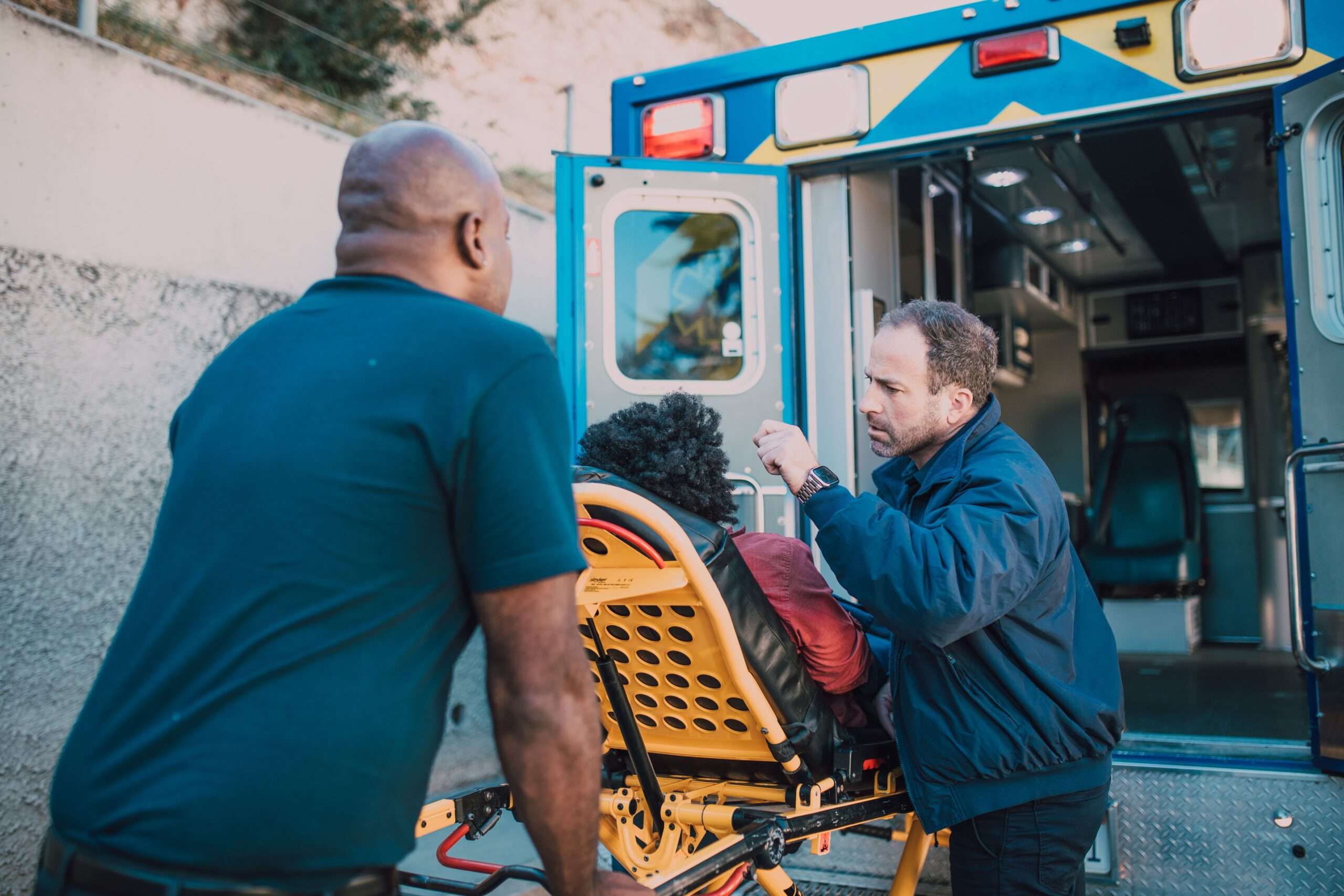
Four Mobile-area medical professionals are back home after weeks of humanitarian work in Haiti following the catastrophic magnitude-7.0 earthquake that struck near Port-au-Prince on January 12, 2010.
Randy, Philip, Kelly and Connie were among the local members of AL-3, a federal Disaster Medical Assistance Team (DMAT) based in the Mobile area, who deployed to help treat the injured and support overwhelmed local hospitals in the earthquake’s aftermath.
What Disaster Medical Assistance Teams Do
Disaster Medical Assistance Teams like AL-3 are part of the National Disaster Medical System, a federally coordinated network of volunteer doctors, nurses, paramedics and support personnel who can be activated on short notice to respond to major disasters, both domestically and internationally. Team members typically leave their regular jobs and families to deploy for days or weeks at a time, setting up field medical care, triaging patients and assisting local health systems that have been knocked out or overwhelmed.
The system exists because catastrophes overwhelm local capacity in ways no single hospital can absorb. A DMAT arrives as a self-contained unit: physicians, nurses and paramedics who normally staff emergency rooms and ambulance services by day, trained to set up field clinics with portable equipment wherever infrastructure has failed. In a domestic hurricane response, that might mean staffing a shelter or a field hospital in a parking lot; in an international deployment like Haiti’s, it means working alongside other nations’ teams in whatever conditions the disaster leaves behind. Employers are obligated to hold their jobs, and the federal system reimburses and protects them, but the sacrifice is real — weeks away from families, practices and paychecks that rarely match.
The Haiti earthquake killed an estimated tens of thousands of people and injured many more, destroying hospitals and clinics across the capital region and leaving survivors with severe, often untreated injuries. International medical teams, including DMAT units like AL-3, were deployed in the weeks after the quake to help fill the gap left by Haiti’s devastated health care infrastructure.
The scale of the need in Port-au-Prince and its surroundings tested every team that deployed. Hospitals that survived the shaking were unsafe to enter; those that remained operational were buried under casualties far beyond their beds. Injured survivors with crush injuries, fractures and infected wounds filled the streets and the fields where aid agencies improvised. Field teams worked long shifts in heat, aftershocks and the constant pressure of more patients than they could see, making triage decisions of a kind American clinicians rarely face outside war zones.
A Local Team’s Return
For the four Mobile-area responders, the return home marks the end of a demanding deployment far from South Alabama, carried out under difficult conditions with limited resources and enormous need. Team members and organizers with AL-3 DMAT expressed gratitude for their service, recognizing the sacrifice involved in leaving home to provide emergency medical care in a disaster zone.
Coming home from a deployment of this kind is itself an adjustment. Clinicians return to well-supplied hospitals and routine shifts after weeks of improvising care with what fit on a pallet. The gap between what they witnessed and what their coworkers and neighbors know is a familiar weight for disaster responders, and the debriefings and reunions that follow a return are part of how the experience is processed. For the families of Randy, Philip, Kelly and Connie, the homecoming closed weeks of worry during which contact from the disaster zone was sporadic at best.
The gratitude expressed by AL-3’s organizers reflected more than ceremony. A DMAT functions only because its members answer when called — leaving at short notice for an uncertain duration — and every deployment completed strengthens the team’s experience base for the next one. The four returning members brought back field medicine skills that cannot be learned in a stateside classroom: mass-casualty triage, care under austere conditions and the coordination of a multinational relief effort.
Haiti’s earthquake, briefly
The January 12, 2010, earthquake struck about 16 miles west of Port-au-Prince at a shallow depth, magnifying its destruction across a dense capital region of roughly three million people. Buildings that would have survived elsewhere collapsed wholesale — including, famously, much of Haiti’s government infrastructure and its National Palace — and the death toll estimates have ranged into the hundreds of thousands, with “tens of thousands” being a conservative floor. It was, by deaths, among the deadliest disasters in modern history for a single country.
The medical response became one of the largest international mobilizations in memory. Field hospitals sprang up on hospital grounds, soccer fields and the airport tarmac; aid agencies and military units from dozens of countries worked alongside the American teams flowing in under the National Disaster Medical System. The amputation rate alone told the story of the challenge: crush injuries reaching care too late for limbs to be saved. In the weeks that followed, the focus shifted from emergency surgery to wound care, infection control and the beginning of a recovery that would take years.
The Gulf Coast’s stake in the system
AL-3 DMAT is one of several such teams nationwide that stand ready to respond when disaster strikes, whether from hurricanes along the Gulf Coast or earthquakes overseas. More information about the team and its work is available through AL-3 DMAT’s own channels.
For south Alabama, the team’s existence is a two-way arrangement. Members deployed to Haiti carry experience that benefits the region directly, because the Gulf Coast lives with its own catastrophic-risk profile: hurricanes Ivan, Katrina and later storms have repeatedly tested the area’s medical infrastructure, and a major hurricane striking Mobile or Baldwin County would require exactly the kind of field medical capability AL-3 provides. The same people who treated earthquake survivors in Port-au-Prince are the region’s reserve capacity for its own next disaster.
The system also gives local medical professionals a structured way to serve. Rather than ad hoc volunteer trips, NDMS deployment is federally organized, with logistics, supply and legal protection handled by the government — a framework that allows clinicians to commit to disaster service while keeping their careers at home intact. AL-3’s roster draws from hospitals and EMS services across the Mobile area, making the team a quiet institutional asset of the region’s medical community.
The four responders who returned from Haiti — Randy, Philip, Kelly and Connie — came home to that community having spent weeks inside one of the worst disasters of the modern era. Their deployment is over; the team’s readiness is not. Somewhere ahead, the next call will come, and the Mobile-area members of AL-3 will go.
Life inside the deployment
A DMAT deployment is organized less like a medical mission and more like a military field operation. Team members live where they work — in tents beside their field clinic — carrying their own food, water purification, generators and communications gear. Twelve-hour shifts run around the clock, and the team’s logistics section negotiates daily for supplies in an environment where a truck of IV fluid can matter more than anything arriving by air that week. Security, sanitation and the weather all become clinical concerns: an unsanitary field hospital in the tropics can convert survivable injuries into fatal infections within days.
For the Mobile-area members of AL-3, the daily reality in Haiti was working medicine with what they had carried in. Diagnostic imaging was limited to what portable machines could provide; laboratory work was minimal; specialties were whatever the roster included. Team physicians routinely performed procedures that stateside would have been done by surgical specialists, and nurses managed wards of patients whose charts, in many cases, consisted of markings on their dressings. The experience reshapes a clinician permanently — many DMAT veterans describe the Haiti deployment as the most demanding and most meaningful work of their careers.
The local connection also ran through the care itself. Mobile’s historic ties to Haiti — through the port, the Catholic diocese’s long-running missions and the Haitian diaspora communities along the Gulf Coast — meant that some team members encountered patients with connections back to the region, and that the Haitian community in Mobile followed the deployment closely while relatives’ fates remained unknown.
What the deployment leaves behind
The weeks AL-3 spent in Haiti contributed to a response that, whatever its limits, saved lives on a scale hard to comprehend. Field teams stabilized injuries that would otherwise have killed; performed surgeries in tents; delivered babies amid rubble; and staffed the evacuation pipeline that moved the most critical patients to hospital ships and to care in the United States. When international teams rotated home in waves through the spring of 2010, the medical landscape they left behind — though fragile — was functioning in a way that seemed impossible in the quake’s first days.
For the four returning Mobile-area professionals, the deployment also added a chapter to a regional story. AL-3 has answered the government’s call before and since, from Gulf hurricanes to other international emergencies, and each deployment weaves the Mobile area further into the national disaster-response network. The team’s members are the neighbors of the people they will one day be dispatched to help — a fact that gives the local medical community a stake in their training, their readiness and their safe return, in Haiti as in every mission to come.