

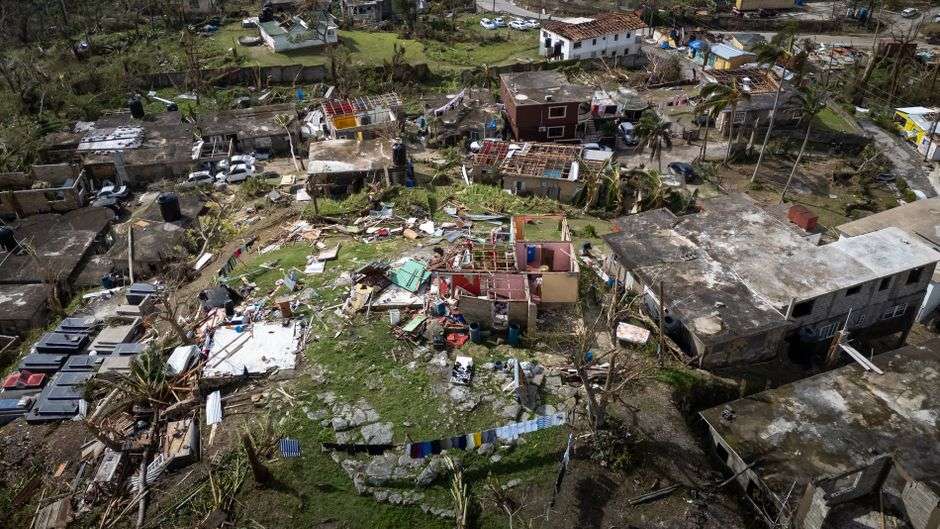
State officials with the Alabama Department of Economic and Community Affairs met with local leaders this week to gather input on how more than $500 million in long-term disaster recovery funding should be spent across four south Alabama counties still dealing with the aftermath of Hurricanes Sally and Zeta. The session marked one of the most significant steps yet in moving the federal award from an agreement on paper to actual projects in communities that are still repairing homes, roads and public buildings more than a year after the storms.
The listening session drew representatives from Mobile, Baldwin, Clarke and Escambia counties, who came to learn more about the grant dispersal process and to ask questions about which local projects would qualify for the federal aid. Attendees included municipal clerks, county administrators, public works officials and grant writers, many of whom will be responsible for preparing the applications that determine whether their communities see a share of the money. For smaller towns in Clarke and Escambia counties in particular, the meeting was a chance to hear the rules directly from the state agency that will administer the program rather than second-hand.
ADECA Director Kenneth Boswell said afterward that he was pleased with the level of interest shown by municipal and county officials who attended. “I was very hopeful for a great turnout,” Boswell said. “That is a very important way for us to gauge so that we can see what interest there was. So it was very enlightening and encouraging to see all the municipalities and county officials that came out today.”
For the state, the turnout matters because the recovery program is built on local participation. Unlike emergency response funding, which flows quickly through agencies such as FEMA in the weeks after a storm, long-term community development block grant recovery money is allocated largely through projects proposed and sponsored by local governments. If a town does not apply, or applies late, it generally does not receive funding. That structure puts a premium on the kind of face-to-face guidance ADECA offered at the session.
Storms that set the recovery in motion
Hurricane Sally made landfall near Gulf Shores in September 2020 as a slow-moving Category 2 storm, and its crawling pace turned what might otherwise have been a glancing blow into a prolonged pounding of wind and rain. Roofs, signs, docks and power infrastructure across Baldwin and Mobile counties took heavy damage, and flooding reached well inland. Weeks later, Hurricane Zeta cut across the northern Gulf Coast in late October, adding another layer of damage to a region that had not finished cleaning up from the first storm.
The cumulative effect is why the recovery money covers four counties rather than just the two that made national headlines. Clarke and Escambia counties, farther inland, absorbed tree damage, flooding and extended power outages of their own. For rural communities there, the loss of a single water line, volunteer fire station or community building can be a genuine fiscal event, and recovery costs linger for years in small budgets.
ADECA, the state agency now overseeing the program, has long served as Alabama’s administrator of federal community development and energy grant programs, which makes it the natural conduit between the U.S. Department of Housing and Urban Development in Washington and city halls and courthouses across south Alabama. The department’s staff will review applications, enforce federal rules, and disburse payments as projects are completed, a role that will keep the agency involved in the four-county region for years.
Much of the discussion from local officials at the listening session centered on infrastructure repairs, but ADECA representatives emphasized that the majority of the funding is expected to go toward housing needs, with the remainder split between economic revitalization and infrastructure improvements. The emphasis reflects federal priorities for this type of award, which put rebuilding and hardening homes ahead of most other uses.
How the money is required to be spent
Under the terms of the federal award, at least $401,001,600 — roughly 80 percent of the money approved by the U.S. Department of Housing and Urban Development — must be spent within the four affected counties, with a portion of that total required to fund projects aimed at reducing the impact of future natural disasters. The remainder of the award may be used elsewhere in the state, but the four-county south Alabama recovery zone is where the overwhelming share of the dollars is destined to land, and officials made clear that projects there will drive the program.
The mitigation set-aside is a defining feature of the award. Rather than simply rebuilding what the storms destroyed, the state is required to direct a portion of the money toward work that lessens damage the next time a hurricane threatens the coast — the kind of investment that federal disaster officials have increasingly pressed on Gulf Coast states after repeated rounds of rebuilding after repeated storms.
Housing tops the eligible list
On the housing side, eligible uses include homeowner rehabilitation, property buyouts and acquisitions, rehabilitation of public housing, and the construction of affordable single- and multi-family housing. Those categories map directly onto the most common problems left behind by Sally and Zeta: storm-damaged roofs and interiors that owners never fully repaired, homes in flood-prone locations that make sense to acquire rather than rebuild, and a rental market that was tight long before the storms arrived.
Homeowner rehabilitation programs of this type typically assist residents whose damage was too extensive for ordinary repairs but who do not have the insurance proceeds or savings to complete the work. Buyout and acquisition programs, meanwhile, are generally aimed at properties that have flooded repeatedly, with the land converted to open space after the structures come down so that the same houses do not have to be rescued again in the next storm.
Infrastructure and economic revitalization
Infrastructure dollars could go toward FEMA and Alabama Management and Grants Program matching funds, along with repairs to streets, sewer systems, public facilities, and parks and recreation amenities. That matching-fund use is significant for small towns, because federal disaster assistance often arrives with a local match requirement that small municipalities struggle to cover; recovery grant dollars that can satisfy a FEMA match can unlock repairs that would otherwise sit unfunded on a wish list.
Economic revitalization funding, meanwhile, may support small business grants and loans, business technology assistance, facade and streetscape improvements, infrastructure tied to economic development projects, small business incubators and workforce training programs, depending on the specific proposal. Those uses give commercial districts in communities such as Bay Minette, Grove Hill and Jackson in Clarke County, and the municipalities of Escambia County a path to fund improvements that ordinary budgets rarely accommodate.
Officials stressed, however, that every proposed use must fit within the federal rules attached to the award, and that the eligible list is not a menu from which local governments may pick freely. Applications will need to document need, tie each request to storm impact or the priorities of the program, and demonstrate the capacity to complete the work on federal timelines — requirements that have tripped up applicants in other states’ recovery programs.
For residents, the practical takeaway is that the fastest route to assistance will likely run through their local government rather than through a direct state application. Housing assistance in particular is expected to be administered through programs that individuals apply into once the state’s plan is approved, but the projects a county or city championed in its action plan will shape what those programs look like on the ground.
A tight timeline for local governments
Local governments seeking a share of the money face a tight early timeline. An action plan detailing how the funds would be used is due to ADECA by November 20, with state approval expected by January. The action plan is the central document of the entire program: it must identify the community’s remaining recovery needs, describe the projects chosen to meet them, and commit to the federal spending and reporting rules that accompany the award. Preparing one requires staff work that many small towns do not have on hand, which is why ADECA’s guidance sessions are aimed squarely at the officials who will sign those plans.
Officials cautioned attendees that the funding has not yet reached the state, and that the earliest disbursements are not expected until March 2023. That gap between announcement and actual money is typical of federally funded disaster recovery, where environmental reviews, procurement rules and plan approvals all have to be satisfied before the first invoice can be paid. Local leaders were urged to plan projects now so they are ready to move when the dollars finally arrive, rather than starting the design work after the funds land.
ADECA representatives also outlined restrictions tied to the money, including a rule against duplication of benefits. Property owners who already received FEMA payments for a specific type of damage or need cannot use the HUD-backed funds to cover that same expense a second time. The prohibition is a standing feature of federal recovery programs, and it means applicants will need to document what assistance they have already received and for what purpose before any new award is calculated.
Other ineligible uses include direct income payments, forced mortgage payoffs, private utility costs, political activities and general government expenses, according to guidance shared during the session. The list is meant to keep recovery dollars tied to identifiable disaster needs rather than allowing them to substitute for routine spending, and officials encouraged attendees to ask questions early if they were unsure whether a proposed project would clear the bar.
The clock is already ticking on the spending timeline. Under federal rules, all of the HUD recovery money must be spent within six years of the initial disbursement, putting the final deadline at around February 2029. That horizon sounds distant, but experience in other Gulf Coast recovery programs shows that large housing and infrastructure projects routinely consume years between design, bidding, construction and closeout, leaving little room for a slow start.
More chances for the public to weigh in
Residents will have additional opportunities to weigh in before the state finalizes its plan. A public hearing is tentatively scheduled for 10 a.m. on September 11 in Bay Minette, followed by a second session on September 12 at 2 p.m. in Prichard, though officials noted both dates remain subject to change. The two venues place the hearings in the population centers of Baldwin and Mobile counties, the two hardest-hit of the four counties, and they give individual homeowners as well as organizational stakeholders a formal chance to put needs on the record.
Public comment at hearings of this kind feeds directly into the state’s action plan, which must be published for review before it is submitted to HUD. Comments that document unmet needs — damage that insurance and FEMA did not cover, renters priced out of a damaged housing market, infrastructure that remains unrepaired — can influence how the state weights its program priorities, which is why recovery officials consistently encourage residents to participate rather than assume the process belongs only to governments.
County and municipal leaders across the four-county recovery zone are encouraged to stay in contact with ADECA in the coming months as the action plan takes shape, since the framework adopted early next year will determine how billions in remaining recovery needs are addressed over the next several years. For communities still carrying visible scars from Sally and Zeta, the months between now and state approval will decide which of those scars get attention and which remain for another budget cycle.
Officials closed the session by reminding attendees that the program’s success will be measured not in meetings held or plans filed but in homes repaired and rebuilt across Mobile, Baldwin, Clarke and Escambia counties. The listening session was the first formal step in that direction, and both state and local leaders described it as a productive start to a process that will unfold through the rest of the year and well beyond.