

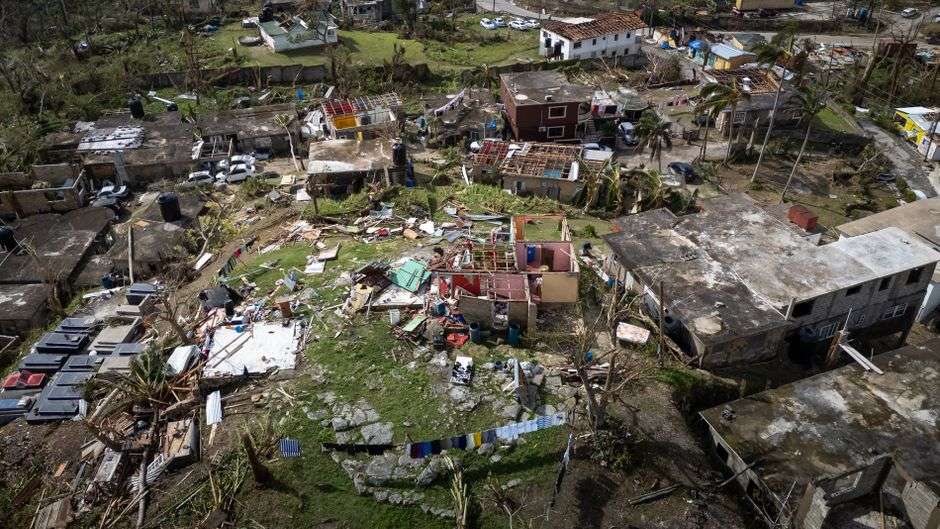
Alabama officials will hold two public hearings next month to gather resident input on how more than $500 million in federal disaster recovery money should be spent across four south Alabama counties still dealing with the aftermath of Hurricanes Sally and Zeta. The Alabama Department of Economic and Community Affairs, the state agency that administers federal community development funds, is drafting an action plan that will guide how the money is distributed once it wins approval from the U.S. Department of Housing and Urban Development.
The agency said the plan needs public comment before it can be finalized and submitted, with the first installment of funding expected to reach the state as early as March 2023. The hearings are the formal mechanism by which residents can influence a document that will govern, in fine detail, who can apply for help, what kinds of projects qualify, and which communities get priority when the applications outnumber the dollars.
The size of the allocation places it among the largest single federal recovery investments ever directed at south Alabama. Congress funds disaster recovery through the Community Development Block Grant – Disaster Recovery program after major storms, with HUD allocating the money to states based on the severity and distribution of damage. Unlike emergency assistance, which arrives in the days and weeks after landfall, CDBG-DR money is designed for the long unmet-needs phase — the repairs and rebuilds that insurance, FEMA and charitable aid did not cover.
The storms behind the money
Mobile, Baldwin, Escambia and Clarke counties were all declared eligible for the recovery funds after the two storms battered the Gulf Coast in quick succession. Hurricane Sally made landfall near Gulf Shores in September 2020 as a Category 2 storm, dumping torrential rain and causing widespread flooding across Baldwin and Mobile counties.
Sally’s slow crawl toward the coast stretched its rainfall over hours rather than minutes, and the water damage proved as destructive as the wind. Roofs failed under sustained winds that lingered far longer than residents of inland counties are used to, and neighborhoods from the Eastern Shore to west Mobile spent months on repairs, some much longer. Zeta followed about six weeks later, cutting a path through the region with damaging winds that knocked out power to hundreds of thousands of residents and downed trees and power lines from the coast well into the interior.
The one-two sequence mattered for the recovery math. Households and local governments that had stretched to absorb Sally’s damage had no time to recover before Zeta arrived, and damage that overlapped — the roof weakened in September that finally gave way in October — complicated insurance claims. Two federal disaster declarations in six weeks left thousands of families with needs that the faster programs never reached, which is the gap this allocation is intended to close.
Escambia County, on the Florida line with communities such as Atmore and Flomaton, and Clarke County, north of Mobile Bay with its seat at Grove Hill, were included even though Sally’s center came ashore south of them; the storms’ wind fields and flooding reached well inland, and rural counties typically have the thinnest local resources to absorb disaster costs on their own.
What the money is for
State officials say the recovery dollars are intended to address a broad range of unmet needs left in the storms’ wake, including housing repair and replacement, infrastructure and mitigation projects designed to reduce damage from future storms, and economic and community development initiatives. A portion of the funding is also expected to be targeted toward vulnerable populations, including low-income residents, the elderly and people with disabilities who often face the greatest hurdles recovering after a major disaster.
Housing is where unmet need is most visible after a hurricane, and it is typically where CDBG-DR plans put the largest share. Repair programs in past recoveries have covered owner-occupied homes whose damage fell below insurance thresholds or above policy limits, replacement of homes damaged beyond repair, and, in some allocations, rental rebuilding that expands affordable stock. The targeting rule matters: federal recovery law requires that the money principally benefit low- and moderate-income residents, which is why the vulnerable-populations set-aside is a feature rather than an afterthought.
Infrastructure and mitigation dollars operate on a longer horizon. Elevation of flood-prone structures, drainage improvements, hardened utilities and shelter projects all qualify, and every dollar spent reducing future damage is understood to save multiple dollars in the next storm. For small towns in Escambia and Clarke counties, where a single drainage or water-system project can exceed the town’s entire annual budget, the mitigation stream can be transformative in a way that routine grant programs rarely are.
Where and when to speak
Residents, business owners and local officials will have two opportunities to weigh in before the plan is finalized. The first hearing is scheduled for Monday, Sept. 12, at 10 a.m. at the John F. Rhodes Civic Center in Bay Minette, giving Baldwin County residents a chance to speak directly to how the funds should be prioritized in their communities. Bay Minette, the county seat, sits north of the resort communities at the county’s southern tip, and its selection as the Baldwin venue puts the hearing within reach of residents in the county’s smaller inland towns as well as those on the coast.
A second hearing will follow the next day, Tuesday, Sept. 13, at 2 p.m. at the A.J. Cooper Municipal Complex in Prichard, offering a similar opportunity for residents on the Mobile County side of the affected region. Prichard, one of Mobile County’s older cities, has faced some of the region’s most persistent housing and infrastructure challenges, and its inclusion as a hearing site signals that the state wants input from communities where recovery pressures run deepest, not only from the coastline.
Speakers at hearings of this kind typically range from mayors and county commissioners to homeowners describing repairs they have been unable to complete for two years. The comments become part of the record the state must address in its final plan, and experience from past recoveries shows that organized public input — a chamber of commerce asking for a specific program, a town requesting drainage funding — can genuinely shape how allocations are structured.
A long process ahead
Federal disaster recovery grants of this scale typically take months to work through public comment, environmental review and approval processes before any money reaches local governments or homeowners, and officials have cautioned that the hearings mark an early step in what is expected to be a multi-year recovery effort.
The sequence is set by federal rules. The state drafts its action plan, publishes it for comment, submits it to HUD, and answers federal questions until the plan is approved. Only then can programs be designed in detail, applications opened and — after environmental and historical review requirements are satisfied on each project — contracts signed and work begun. In past recoveries in other states, that pipeline has taken a year or more between landfall and the first homeowner repair, which is why state officials are pressing to move the plan through its early stages quickly.
Input gathered at both sessions will be used to help shape the final version of the action plan submitted to federal housing officials for approval. Local leaders in both Baldwin and Mobile counties have pushed for a significant share of the funding to go toward housing repair, given the number of homes across the region that sustained roof, water and wind damage during the two storms.
Community and economic development advocates are also expected to raise the need for infrastructure improvements and flood mitigation projects that could soften the impact of future hurricanes on vulnerable neighborhoods. The tension between those priorities — housing now versus mitigation that pays off later — is a standing feature of recovery planning, and the public comment process exists in part so that the state can weigh them with the region’s own voices on the record rather than deciding in a vacuum.
Residents unable to attend either hearing in person are typically able to submit written comments during the public comment period, though the state has not yet detailed the exact deadline or submission process for this round of input. Written comments carry the same formal weight as testimony delivered in the room, and officials have encouraged residents who work daytime hours — a schedule the Prichard session’s 2 p.m. start will exclude — to use that channel.
Additional details on the hearings and the broader action plan are expected to be released by the state in the coming weeks. For the four eligible counties, the hearings are the first practical step in turning a $500 million federal allocation into roofs, roads and restored neighborhoods — and the last chance most residents will have to influence the plan before it is locked in for federal review.