Carnival, City of Mobile Near Deal to Bring Cruise Ship Back to Port
Mobile's mayor announced the city is finalizing a deal with Carnival Cruise Line to bring a cruise ship back to the Alabama Cruise Terminal.
Mobile officials announced that the city is in the final stages of negotiating an agreement with Carnival Cruise Line to bring a vessel back to the Port City, ending a years-long gap since the company pulled out of the market.
Mobile’s mayor told reporters at a news conference at Mobile Regional Airport that the Miami-based cruise line was expected to visit the city within the month to announce specifics of the arrangement. Any resulting contract would still need approval from the Mobile City Council, a vote also expected before the month was out.
“It’s imperative when we welcome a cruise ship back to Mobile, we welcome back the passengers with enthusiasm and an enhanced experience,” the mayor said, while declining to share details about the contract terms or the type of ship under discussion. He said Carnival representatives would lay out specifics themselves once the visit takes place, adding that he did not expect residents to be disappointed with the eventual agreement.
Carnival Cruise Line confirmed in a statement that company representatives met with Mobile’s mayor in Miami and that the two sides were in the final stages of contract negotiations for future cruises departing from the port, with the process expected to wrap up by the end of the month.
Seasonal Service or Year-Round?
A source familiar with the discussions indicated Carnival was more likely to schedule seasonal cruise excursions, typically spanning four to six months out of the year, rather than committing to year-round sailings from Mobile. City officials declined to confirm that detail or say whether the council would need to approve economic incentives as part of the deal.
The distinction matters for the city’s bottom line. Year-round homeporting means a ship crewed, provisioned and maintained locally, with passengers boarding in Mobile week after week and spending money downtown before and after each sailing. Seasonal service — the model many northern-tier and secondary ports have adopted — concentrates the traffic into the most desirable sailing months, often winter and early spring for Gulf Coast departures, and gives the cruise line flexibility to redeploy the vessel when demand shifts. For a city that has been burned by fixed costs before, seasonal terms may be the price of getting a ship back at all.
The announcement marks the first public sign of progress toward returning cruise service to Mobile since Carnival ended its operations at the port in October 2011. That departure left the city’s cruise terminal largely empty, costing taxpayers roughly $1.8 million a year in debt service with little revenue to offset it.
In the years since, only two Carnival ships have docked at the terminal, and both visits were the result of unplanned emergency situations rather than scheduled service.
Those emergency calls — technical diversions that landed ships in Mobile for safety reasons — offered brief glimpses of what the facility could still do. Passengers offloaded and re-embarked through the terminal’s halls, local vendors supplied the ships, and crews found the downtown district a short walk from the gangway. Terminal staff have used the intervening years to keep certifications and equipment current, so that a resumption of service would not require a scramble to bring the building back to operating condition.
The negotiations that produced the current agreement followed months of quiet contact between the mayor’s office and the cruise line, according to officials familiar with the process. Mobile’s pitch has emphasized what the port can offer a cruise operator: an uncongested terminal a short drive from Interstate 10, a catchment of potential passengers across south Alabama and the Florida panhandle, and a downtown that has grown livelier with each year of the ship’s absence.
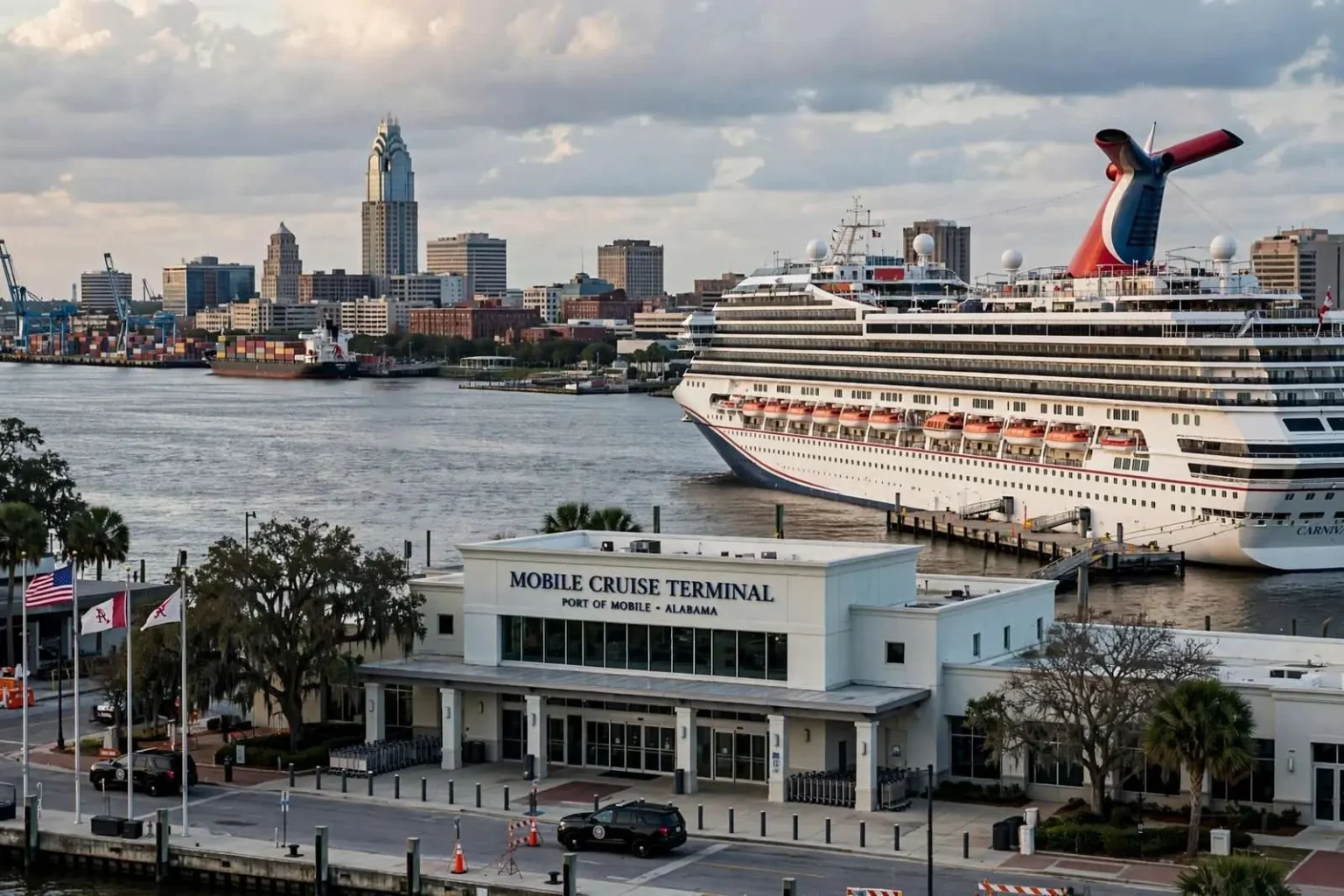
The terminal itself sits on the Mobile River downtown, within sight of the city skyline and the decks of the cargo ships that make the Port of Mobile one of the busiest on the Gulf. Built to process thousands of embarking passengers a week, it has sat mostly idle for the cruising seasons since Carnival’s exit, its parking garage and embarkation halls awaiting a tenant while the city paid the debt it was built on.
What the Departure Cost
Carnival’s 2011 withdrawal followed the broader collapse in cruise demand and the industry’s reshuffling after the recession, with the company consolidating its fleet toward larger, established homeports that could fill bigger ships year-round. Mobile, with a smaller population base and a market that overlapped with New Orleans to the west, could not sustain the arrangement. The city had invested in the terminal on the strength of projected passenger counts that never fully materialized, and when the last homeported ship left, the projections left with it.
Since then, city leaders and terminal officials have worked to keep the facility cruise-ready, maintaining the building while marketing the port to other lines. A return by Carnival — the industry’s largest brand and the line Mobile passengers knew best — would restore a consumer product that local travel agents say residents have continued to ask about ever since, driving customers to New Orleans and Florida ports to sail.
The Economic Stakes
City leaders and terminal officials have long viewed the return of regular cruise service as a key economic opportunity for downtown Mobile, and the announcement was seen locally as a significant step toward putting the terminal back into active use.
Each embarking passenger represents hotel nights, restaurant meals, parking fees and taxi fares downtown, and port cities along the Gulf — from Galveston to Tampa — have built visible service economies around their cruise terminals. Mobile’s downtown has changed considerably since the terminal went dark: new bars and restaurants have opened within walking distance, and the city has poured investment into the riverfront district. Those assets, officials have argued, are exactly what a returning ship’s passengers would find when they step off the gangway.
Travel industry leaders in Mobile have made the same case from the customer side. South Alabama residents who want a cruise currently drive to New Orleans — often adding a hotel night and a border crossing’s worth of logistics — or fly out of Gulf Coast airports toward Florida’s ports. A homeported or seasonally based ship in Mobile converts that spending from other cities’ economies into local ones, and every sailing brings hundreds of visitors who did not plan a Mobile trip but find themselves with a night on the town before boarding.
The jobs question follows the passengers. A regularly sailing ship means dockworkers, line handlers, provisioning trucks, shuttle drivers, terminal security and housekeeping staff — many of them union port jobs that evaporated when the last ship left. Port officials have noted that the Alabama State Port Authority’s cargo business has grown robustly in the cruise terminal’s absence, but the two operations employ different workforces, and cruise days would layer new shifts onto the riverfront’s schedule.
There are practical hurdles as well. Cruise ships require customs and border protection staffing, tender and pilot services on the river, and careful scheduling around the cargo traffic that shares the channel. Port pilots and the state dock authority would coordinate with the cruise line on arrival windows, and the city’s emergency services would plan for the mass movements of passengers that embarkation days bring — none of it unusual for a port of Mobile’s size, but all of it requiring the inter-agency choreography that regular sailings restore through repetition.
The council vote to come will determine the terms — whether incentives are attached, what the city’s revenue share looks like, and how long the agreement runs. Council members have previously expressed support for reactivating the terminal but caution about any deal that repeats the fixed-cost exposure of the original arrangement, and the month’s scheduled vote will test whether the negotiated terms answer those concerns.
City officials have pointed to the way the negotiation itself differs from the original era: rather than the city building and the line sailing, the current talks began with the cruise line assessing Mobile’s market and the city weighing what it can sustain. The $1.8 million annual debt service on the terminal remains the fixed benchmark every proposed deal is measured against — any contract that offsets it with passenger fees and terminal revenue represents, in the city’s arithmetic, an immediate improvement over an empty building.
Residents will get their say in the coming weeks, first through the council’s public vote and then, if the deal clears, through the ticket sales that follow the cruise line’s announcement. The mayor’s airport news conference was staged to make one point unmistakable: the city intends to greet the returning ship as if the years in between never happened — and to make sure the passengers who walk down the gangway find a port ready for them.
For now, city hall and Carnival’s Miami headquarters have signed off on the same message: an announcement is imminent, the details will come from the cruise line, and Mobile’s decade-long wait for a cruise ship of its own is close to ending.