Mobile County Animal Shelter Full, Urges Adoptions of Dogs and Cats
The Mobile County Animal Shelter says it is at capacity and is encouraging residents to consider adopting a dog or cat this weekend.
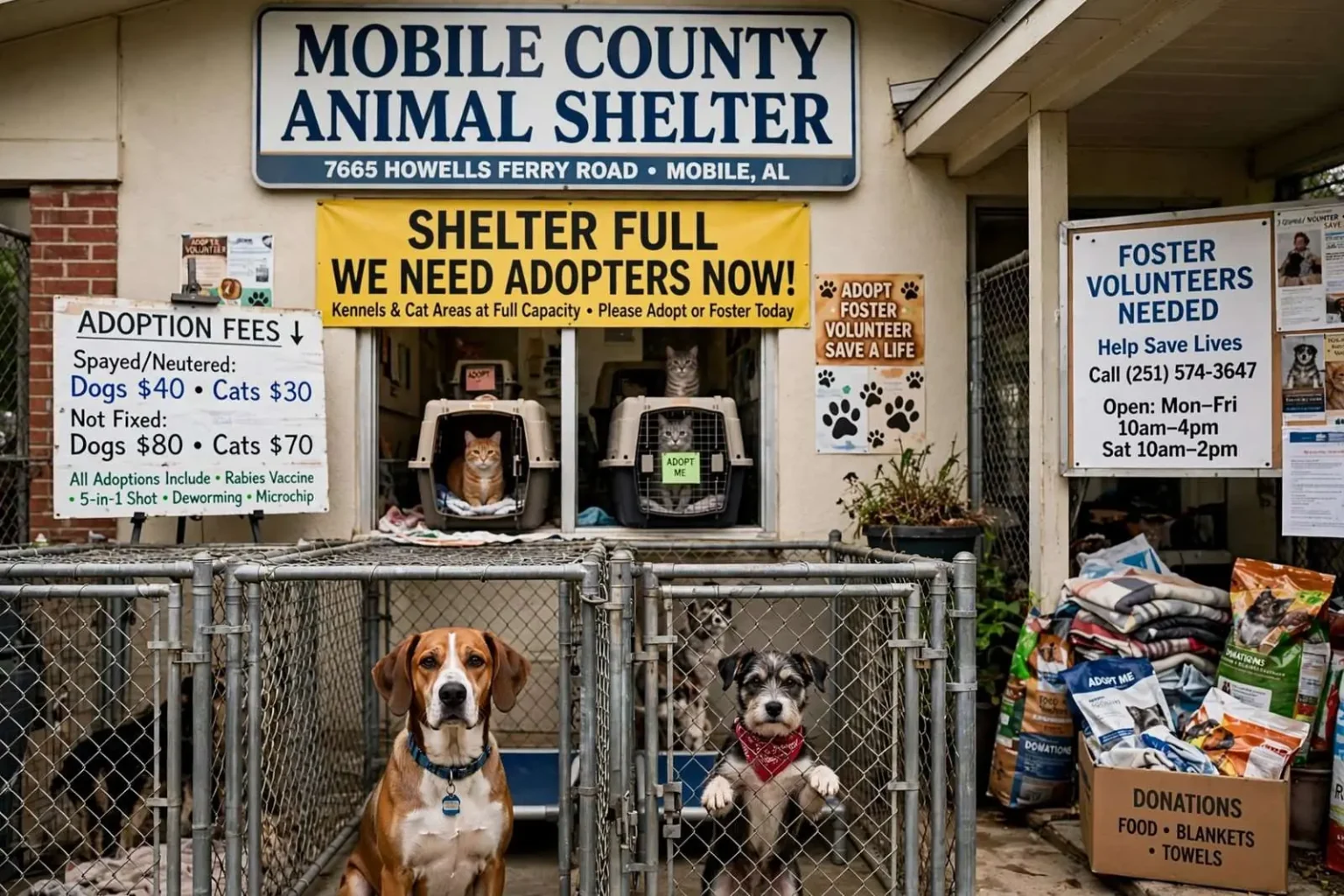
The Mobile County Animal Shelter is asking residents to open their homes to a pet, saying the facility on Howells Ferry Road is currently full based on available staffing. Office manager Kathy Belcher said the shelter’s kennels and cat areas are packed with animals waiting for adoption, and the timing couldn’t be better for anyone considering a new family member. Like municipal shelters across the Gulf Coast, the Mobile County facility operates at the mercy of intake numbers — strays picked up by animal control, animals surrendered by owners who can no longer care for them, and litters born to pets that were never spayed or neutered. When kennel space runs out, every additional animal that arrives puts more pressure on staff, and adoptions are the single most effective way for residents to relieve that pressure.
Adoption Fees Designed to Encourage Fixing
Adoption fees at the shelter are structured to encourage spaying and neutering. Dogs and puppies that have not yet been fixed cost $80 to adopt, while cats and kittens in the same condition run $70. For animals that are already spayed or neutered, the fee drops significantly to $40 for dogs and $30 for cats. The pricing gap is deliberate policy: spayed and neutered animals cost the shelter less to prepare for adoption, and the lower fee rewards adopters who choose an animal that cannot contribute to the next generation of unwanted litters.
The fee structure also reflects the economics of the spay-neuter push across South Alabama. Every unaltered animal adopted today has the potential to produce litters within a year, and those litters too often end up back at the shelter or on the street. By making the fixed-animal fee less than half the price, the county gives adopters a financial nudge toward the outcome animal-welfare advocates have long sought. Residents who adopt an unaltered animal are typically required to have the procedure done, and the higher fee helps offset the cost of that obligation.
Every adoption includes a rabies vaccination, the standard 5-in-1 combination shot, and deworming treatment, giving new pet owners a head start on basic veterinary care. That package alone represents real value — a new pet owner taking home a dog or cat would pay substantially more for the same services at a private veterinary clinic. The 5-in-1 shot protects against the core canine diseases, including distemper, parvovirus and hepatitis, and the included rabies vaccination satisfies the vaccination requirement Alabama law places on all dogs, cats and ferrets.
Hours and How to Visit
The shelter, located at 7665 Howells Ferry Road in Mobile, keeps regular weekday hours from 10 a.m. to 4 p.m. Monday through Friday. Weekend hours had briefly been limited to just the fourth Saturday of each month, a cutback that made visiting difficult for working families, but Mobile County spokeswoman Nancy Johnson confirmed the shelter has since returned to being open every Saturday from 10 a.m. to 2 p.m., giving working families more flexibility to visit and meet available animals in person.
The restored Saturday schedule matters more than it might appear. For many families, weekends are the only realistic time to bring children to meet a potential pet, and shelter staff know that the meet-and-greet — the chance to see how a dog responds to the kids or how a cat reacts in person — is often what turns a browsing visitor into an adopter. Weekend hours also let out-of-town visitors from across Baldwin County and south Mississippi include the shelter in a Mobile day trip.
Browsing Online Before You Go
Residents who can’t make it to the shelter in person can still browse many of the available dogs and cats online through Petfinder’s listings, which the shelter uses to showcase adoptable animals to a wider audience. The listings typically include photographs, descriptions of each animal’s temperament and history, and the shelter’s contact information, letting prospective adopters narrow their search before they ever leave home. Online adoption platforms have become an essential tool for municipal shelters, extending their reach far beyond the people who happen to drive past the facility on Howells Ferry Road.
Anyone with questions about a specific animal, the adoption process, or shelter hours can call the facility directly at (251) 574-3647. Staff can confirm whether a particular dog or cat is still available, explain the paperwork involved in adopting, and help match families with animals suited to their living situation — an important step, since the right match is what keeps an animal in its new home for life.
The Seasonal Squeeze
Local shelters across South Alabama regularly see spikes in intake during the summer months, when strays and surrendered pets can overwhelm available kennel space. The pattern is familiar to shelter operators everywhere along the Gulf Coast: spring litters arrive as young animals in early summer, vacation season leads some owners to give up pets they can’t take along, and storms — a fact of life in the northern Gulf — scatter animals and separate them from their families. When intake rises and adoptions stall, kennels fill, and shelters must get creative, using foster homes, adoption events and community partnerships to keep moving animals out the front door.
Community adoptions and fosters play a critical role in relieving that pressure, and Mobile County officials say every animal adopted opens space for another in need. Fostering — taking an animal home temporarily until it can be adopted — is an option for residents who aren’t ready for a permanent commitment but still want to help. Foster homes are especially valuable for puppies and kittens too young for adoption, animals recovering from medical procedures, and dogs that struggle with the stress of kennel life. Every animal placed in a foster home frees a kennel run at the shelter for the next arrival.
Why Spay and Neuter Still Matters
Shelter officials and animal-welfare groups repeat the same message year after year because the math never changes: a single unspayed female cat and her offspring can produce dozens of descendants in just a few years, and dogs are little different. Municipal shelters like Mobile County’s absorb the results of that arithmetic, which is why the county’s tiered adoption fees, and the included veterinary services with every adoption, are aimed squarely at breaking the cycle. Residents who have their own pets spayed or neutered are doing as much for the shelter as any adoption — they are preventing the intake spike before it starts.
Low-cost spay and neuter options exist across the Mobile area for families who find private clinic prices prohibitive, and shelter staff can often point callers in the right direction. The cost of fixing a pet is almost always far less than the cost of caring for a single litter, let alone the medical bills that can come with an unvaccinated animal’s illness.
Making the Right Match
Shelter staff encourage prospective adopters to think honestly about their household before falling for the first face behind the glass. An energetic young dog needs space and daily exercise; a senior cat may suit a quieter home far better than a kitten; families with small children should ask which animals in the kennels have lived successfully with kids. The shelter’s team knows the animals in its care — their temperaments, their histories, their quirks — and that knowledge is the best resource available for finding a pet whose personality fits the family taking it home.
For residents of Mobile County and the surrounding communities, the message from the full kennels on Howells Ferry Road is straightforward: the animals are waiting now, the fees are lower than a private adoption would ever be, and every cage that empties makes room for the next dog or cat that needs a place. Whether it’s a walk through the kennels on a Saturday morning or a quiet scroll through Petfinder on a weeknight, the first step toward a new family member — and toward giving one more shelter animal a chance — is easier than most people think.
What to Know Before You Adopt
A few practical notes make any shelter visit smoother. Bring a valid photo ID, since adopters sign a contract and pay the fee on site, and be prepared to spend real time with an animal before deciding — the shelter staff would much rather answer twenty questions on the spot than process an adoption that ends in a return. Renters should confirm pet policies with landlords before arriving, and families should agree in advance on who is responsible for the daily work a new pet brings, because the animals that come back to shelters are almost never returned for health reasons. They come back because the match was rushed.
New adopters should also plan the first week carefully. A calm introduction to the home — a quiet room, a consistent routine, a slow meeting with any existing pets — sets the stage for a lifelong bond, and the shelter’s included veterinary starter package covers the first round of protection while the new pet settles in. A follow-up visit with a family veterinarian within the first weeks is the recommended next step, both to complete the vaccination series and to establish the medical baseline that keeps a pet healthy for years.
For residents who cannot adopt or foster right now, the shelter’s needs do not end at the front door. Donations of towels, blankets, unopened pet food and cleaning supplies are always useful, volunteers help socialize animals and keep kennels clean, and simply spreading the word about the full facility — among neighbors, church groups and coworkers — connects the shelter with adopters it would never otherwise reach. A community shelter is exactly what its name implies: a resource that runs on the participation of the community it serves, one adopted animal at a time.