New Baldwin County Commissioner Brings Fresh Tone to First Meetings
Days into the job, Baldwin County's newest commissioner is already drawing praise from colleagues for a calmer, more cooperative meeting atmosphere.
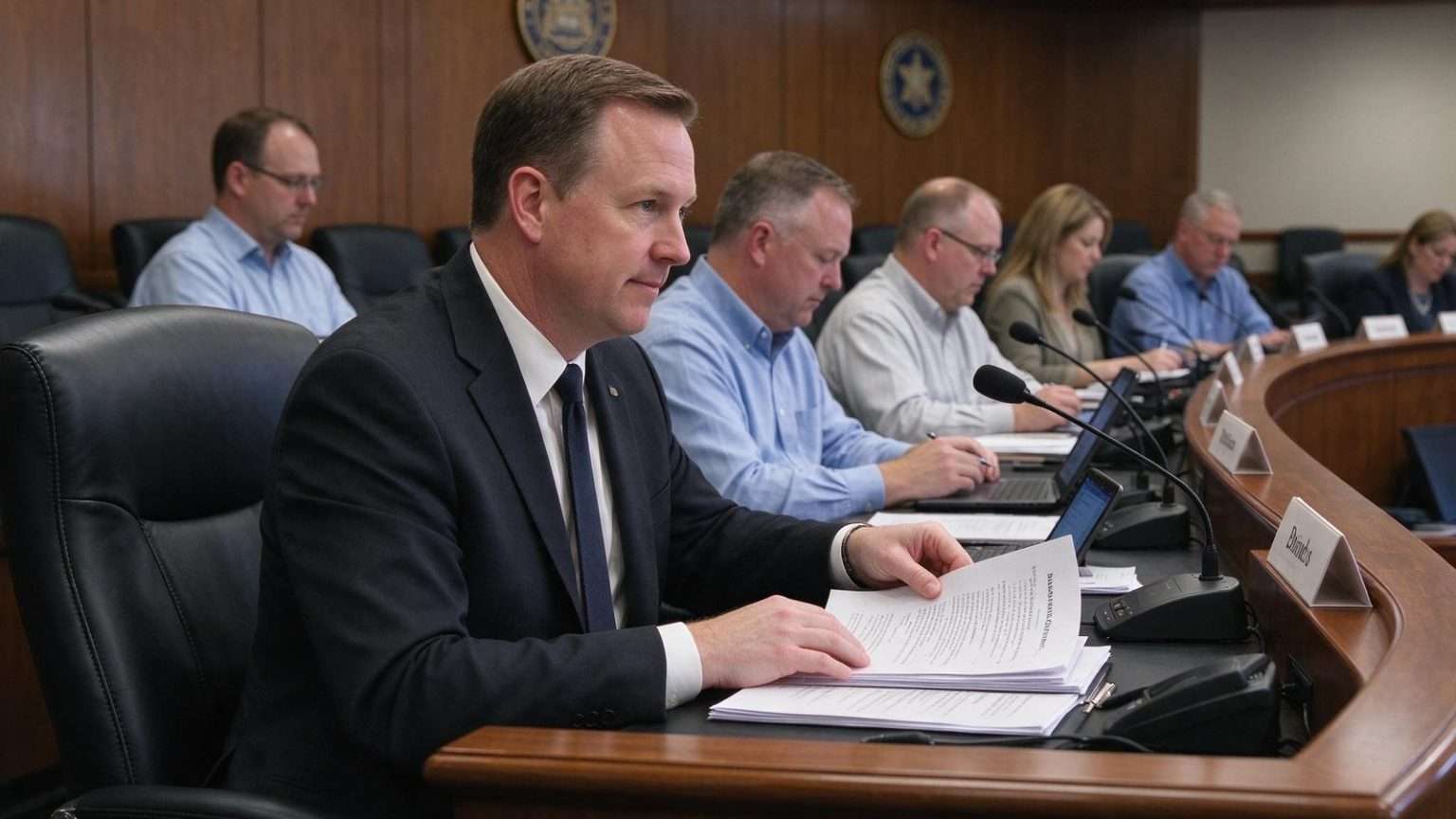
Barely a week into the job, Baldwin County’s newest commissioner is already earning compliments from his fellow board members for how smoothly he has settled into the role. Chris Elliott took part in his first commission work session this week in Robertsdale, and colleagues said the shift in atmosphere was noticeable almost immediately — a new face moving through complicated county business with the confidence of someone who had been preparing for the seat long before he raised his right hand.
One fellow commissioner said it was reassuring to see the new commissioner paying close attention to the issues in front of the board and working in the county’s best interest, adding that the two found themselves aligned on several matters discussed during the session and that he was looking forward to continuing to work alongside him. For a board that governs Alabama’s fastest-growing county, an early sense of chemistry matters: road programs, zoning questions and sewer expansions on the agenda affect hundreds of thousands of residents from Spanish Fort to Gulf Shores.
Elliott’s arrival came through an unusual path. Governor Robert Bentley appointed him last week to fill out the remainder of a term left vacant when the previous commissioner resigned, a term that technically doesn’t expire until November. The resignation came just two days after Elliott had defeated the outgoing commissioner in a runoff election, effectively fast-tracking Elliott into the seat months earlier than expected. What would normally have been a leisurely transition — election in the summer, swearing-in in the fall — instead became an immediate handoff, with the winner of the runoff assuming the duties while the calendar caught up to the voters’ decision.
The mechanics of that handoff are worth understanding. County commission seats are four-year terms, and a mid-term resignation leaves the remainder of the term to be filled by appointment. Because Elliott had already won the party’s nomination in the runoff and faces no opposition in the general election this fall, the governor’s appointment simply accelerated the inevitable — Elliott would be sitting in the chair either way, and the appointment ensured the district would not go months without a vote on the board.
A First Session of Contrasts
The contrast in style was visible even in how commissioners dressed for the work session. Elliott arrived in a full suit and tie, while his colleagues wore more casual open-collar shirts, typically saving formal attire for the televised commission meetings where official votes are taken. The detail struck observers as symbolic of the transition moment: the new commissioner arriving in the dress of election night while the incumbents settled into the working uniform of daily county government.
Elliott, who hadn’t yet been issued a county laptop, worked from a stack of printed documents while the rest of the board reviewed material electronically. The small logistical gap — paperwork versus screens — is the kind of thing that resolves itself in a new employee’s first month, but it underscored how fresh his arrival was. Within days of the appointment he was expected to weigh in on agenda items that had been in motion for weeks, using whatever materials he could get his hands on.
An Early Question of Leadership
Most of the session’s agenda passed without disagreement. The one topic that generated real discussion also produced the meeting’s most intriguing storyline: the outgoing commissioner also stepped down as chairman of the region’s area-wide planning commission, and one of Elliott’s new colleagues floated the idea of Elliott taking over that role as well, though Elliott said he wanted to talk it through before committing to anything.
The planning chairmanship is not a ceremonial prize. Area-wide planning bodies coordinate transportation and land-use decisions across municipal boundaries in Baldwin County, where cities along the Eastern Shore and the coast often have competing visions for growth corridors, and the county commission’s alignment with municipal planning boards shapes everything from highway projects to sewer service areas. Handing that role to the newest commissioner would immediately put him at the center of the county’s growth debates — flattering, perhaps, but also demanding for someone still learning the county’s files.
Elliott’s caution suggests a deliberate approach to the first weeks. Rather than stacking roles before understanding the workload, he told colleagues he wanted to talk through the commitment — a measured answer that matches the impression colleagues reported from the session itself: attentive, prepared and cautious about overreaching.
What the County’s New Commissioner Inherited
Whoever holds the seat inherits a workload defined by Baldwin County’s breakneck growth. The county’s population has boomed for decades, fed by the Gulf Coast economy, retirees drawn to the beaches and families commuting to Mobile across the Bayway. Growth of that kind translates directly into commission business: new school construction coordination, road and bridge projects to relieve corridors choked with traffic, water and sewer extensions to serve subdivisions that didn’t exist a decade ago, and the constant balancing of development pressure against the coastal environment that draws residents in the first place.
The commission’s work sessions are where that business gets aired before the formal, televised meetings where votes are cast. Work sessions give commissioners room to question staff, debate priorities and negotiate compromises without the formality of a voting meeting — and they are where a new member’s style becomes visible to colleagues. By that measure, Elliott’s first session did what first sessions are supposed to do: established that he had done the reading, understood the items and could engage on the merits.
His colleagues’ early reviews, by all accounts, were favorable. The commissioner who praised his attention to the issues and his focus on the county’s interest framed the appointment as a success before the new member had even served two weeks — a rare bit of political harmony in a transition that began, after all, with one commissioner defeating another at the ballot box.
The Unusual Path to the Seat
The sequence that put Elliott in office deserves a second look, because it is genuinely rare in county politics. A commissioner resigned two days after losing a runoff to his challenger — a defeat that, under normal timing, would have left the incumbent serving through the end of the term. The resignation converted an election loss into an immediate vacancy, opening the door for the governor to appoint the very challenger who had just won, months before the term would have changed hands anyway.
The practical effect spared the county an interim period under an appointed caretaker with no electoral mandate. Instead of a placeholder serving until November, voters’ chosen candidate took the seat immediately, preserving continuity in the district’s representation. The outgoing commissioner’s departure also cleared the way for a clean start on the board, unburdened by the awkwardness of a defeated member serving out the calendar alongside the man who replaced him.
With no opposition in the general election this fall, Elliott’s path forward is unusually clear. He will run in November essentially unopposed, winning the term in his own right after serving months of the unexpired portion by appointment — the reverse of the usual order. That arrangement gives him a runway no freshman commissioner typically gets: months of on-the-job experience, established relationships with his fellow commissioners and county staff, and a voting record of his own before the term officially begins.
Looking Ahead
The decisions ahead for the new commissioner will come quickly. County budgets, road programs and the growth-management questions that flow through the area-wide planning commission will all demand attention in the coming months, and Elliott’s answer on the planning chairmanship — still pending as of his first week — will signal how centrally he intends to position himself in the county’s development debates from the outset.
For Baldwin County residents, the transition offered a small civics lesson in how county government actually works: elections decide who will serve, but resignations, appointments and unexpired terms determine when. This time, the machinery moved quickly enough that the county’s fastest-growing district got its chosen representative early, and a board known for its shared GOP ticket gained a member his colleagues already describe as aligned with their priorities.
Elliott, for his part, has kept the tone measured. The suit and the printed documents of his first work session will give way to county-issued equipment and the working dress of the dais soon enough. What colleagues will be watching for is whether the preparation he showed in week one holds through the budget season — and whether the newest commissioner decides, after talking it through, to add the planning commission gavel to his new county laptop bag.
County government watchers will get their next look at the board’s chemistry at the coming televised meeting, where official votes resume and the new commissioner’s first formal record begins.