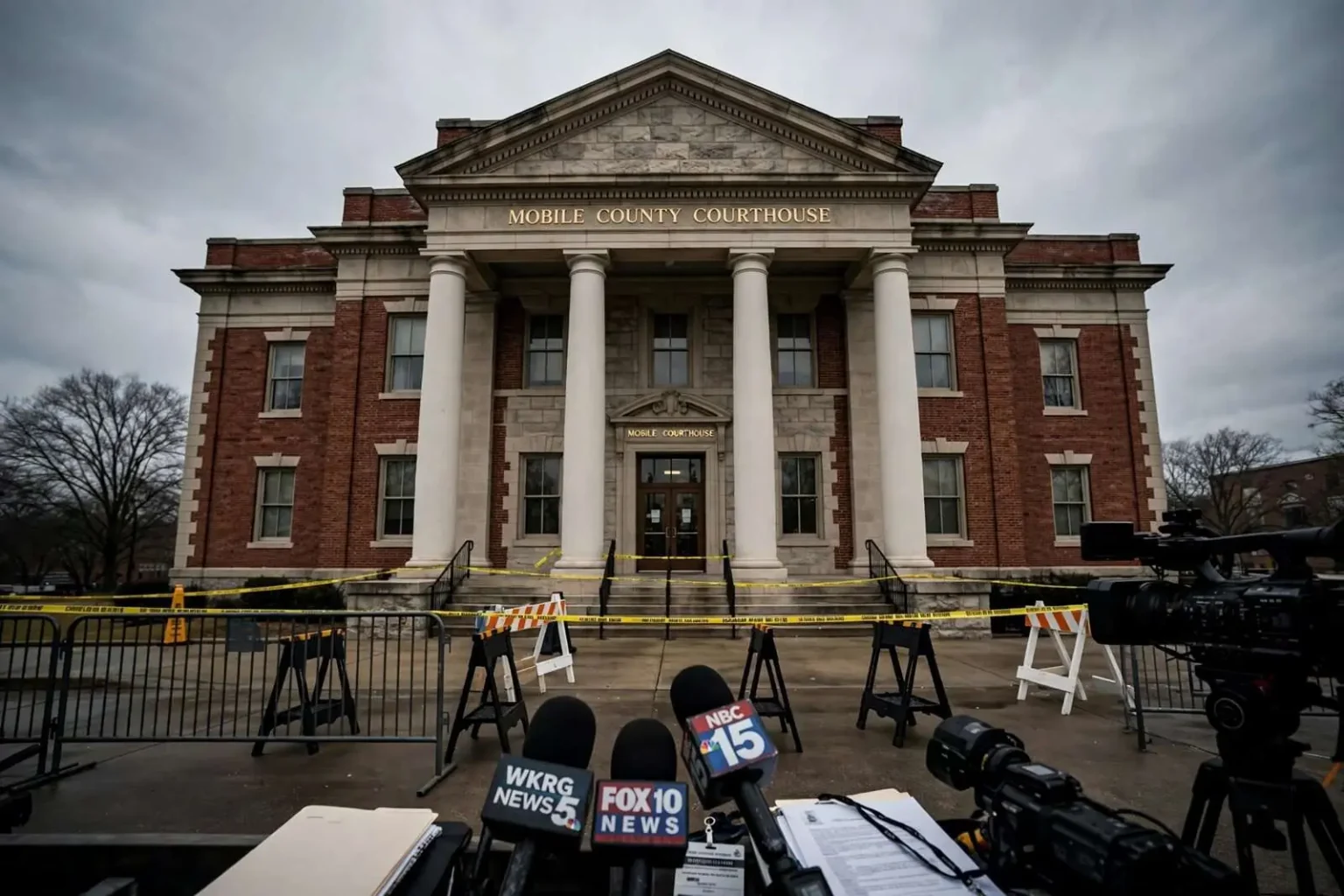
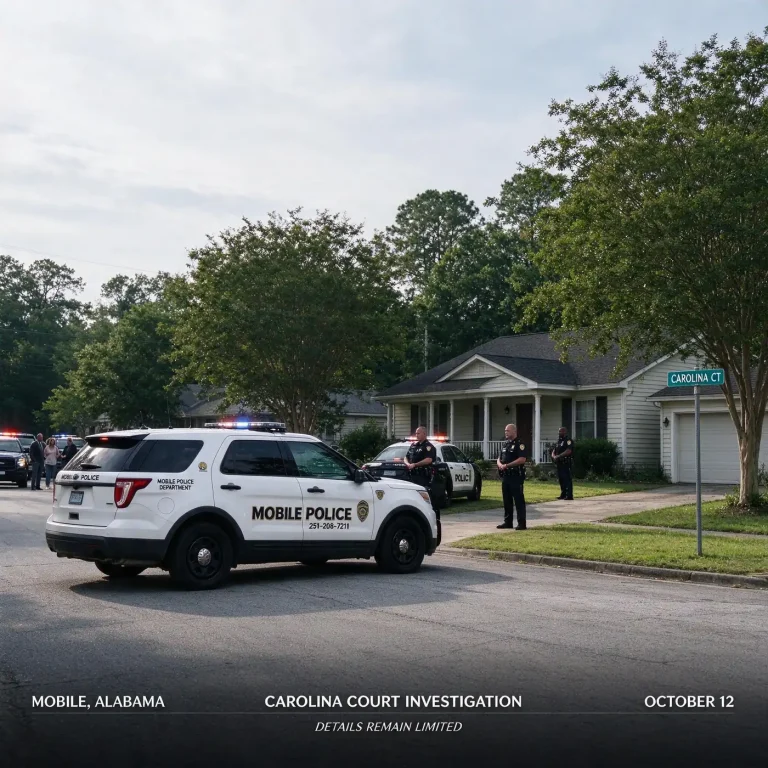
Four years after two young siblings were killed and their bodies left along rural roads in Mobile and neighboring Jackson County, Mississippi, their father is set to stand trial on capital murder charges this week, closing out a legal process marked by years of delay.
Jury selection was expected to take about a week in the case, which has drawn intense local attention since the children went missing in late 2010. Prosecutors say the defendant and his common-law wife tortured the two children, a young girl and her younger brother, over a period of months before killing them with antifreeze. The couple later relocated to Kentucky, where the woman is accused of alerting police to the children’s deaths only after attempting to seek a restraining order against him.
The case has been delayed repeatedly, largely over the appointment of a new defense team and the need for mitigation specialists required in cases where prosecutors may seek the death penalty. The defendant initially entered a plea of not guilty by reason of insanity or mental illness, though it remains unclear whether that will remain his defense strategy heading into trial.
Both the prosecution and defense have been under a standing gag order from the presiding circuit judge, limiting public comment on the case. Mobile County’s district attorney has previously accused earlier defense attorneys of delaying proceedings and running up costs associated with transporting witnesses from around the country. A defense request for a change of venue was denied in 2013, though the judge has said the trial could still be relocated if jury selection fails to yield an adequate pool.
According to court records and statements from investigators, the final months of the children’s lives involved severe abuse. Family members reportedly had not seen the children for close to a year before they were reported missing; their mother said she had not seen them since late 2009, as their father held custody. She described her daughter as full of laughter and her son as an outgoing “lady’s man.”
Court documents allege one child was bound with duct tape, gagged and locked inside a suitcase in a closet for roughly 12 hours during one instance of abuse. In another episode, according to the same documents, the boy was restrained upright against a broom with duct tape and gagged while the adults slept. Investigators say the father later told them he buried his son’s remains in Mississippi in the spring, and disposed of his daughter’s body in Alabama that summer.
Both defendants were arrested in December 2010, days after the woman is said to have first disclosed the children’s deaths to police in Kentucky. The children’s remains were discovered separately, in wooded areas near the Mississippi coast and in a rural part of Mobile County, following extensive searches.
The father faces three counts of capital murder. His common-law wife, who also faces two counts of aggravated child abuse, is scheduled to be tried separately next year. Both defendants remain held without bail as the case moves forward this week in Mobile County.
Mobile is the county seat of Mobile County in southwest Alabama and the state’s only saltwater port. Situated where the Mobile River meets Mobile Bay near the northern Gulf of Mexico, the city has long served as a commercial and cultural gateway between Alabama and the wider Gulf Coast. Founded in 1702 as Fort Louis de la Louisiane and ruled in turn by France, Britain, and Spain before joining the United States in 1813, Mobile carries a layered heritage distinct from the rest of the state.
Today Mobile anchors a metropolitan area spanning Mobile County and neighboring Baldwin County, and it remains a center for shipping, aerospace, healthcare, and higher education in the region. Its downtown and waterfront have seen sustained revitalization, while historic neighborhoods preserve architecture from its colonial and antebellum past. The city’s identity is shaped as much by its working port and industrial base as by its festivals and food culture, making it a frequent focal point for news about growth and change in southern Alabama.
Alabama is a state in the southeastern United States bordered by Tennessee, Georgia, Florida, the Gulf of Mexico, and Mississippi. Often called the Heart of Dixie, it spans Appalachian foothills in the north and flat coastal plains in the south. Its largest cities include Birmingham, Montgomery, Huntsville, and Mobile.
Alabama’s history encompasses Indigenous roots, Spanish and French colonial settlement, a cotton-plantation economy, the Civil War and Reconstruction, and the Civil Rights Movement of the 1950s and 1960s, followed by a shift toward manufacturing, aerospace, and technology. Local news across the state frequently reflects this mix of tradition and change.
Local law enforcement across South Alabama is carried out by municipal police departments, county sheriff’s offices, and state agencies that together cover a mix of urban, suburban, and rural territory. City departments handle policing within municipal limits, while sheriff’s offices provide courthouse security, jail operations, and patrol in unincorporated areas.
Cooperation among these agencies, and with federal partners, is central to tackling problems that cross jurisdictional lines, from drug trafficking to violent crime. Joint task forces that pair federal agents with local officers have become a standard mechanism for sharing information and concentrating resources on threats that no single agency could address alone.
Public-safety agencies in the region also contend with staffing, training, and community-relations challenges common to departments nationwide. How they allocate patrols, respond to calls, and engage neighborhoods is a regular subject of local oversight and news coverage, particularly where residents expect both accountability and visible protection.
Local government in the Mobile area operates through a combination of mayor-council or commission structures at the municipal level and a county commission in Mobile County, with elected officials handling budgets, public safety, infrastructure, and zoning. Baldwin County has its own commission and a collection of incorporated municipalities.
Decisions made in council chambers and commission meetings affect roads, school funding, economic development, and quality of life, which is why coverage of local government is a staple of regional journalism. The interplay between city, county, and state authorities often determines how effectively the area can address shared challenges.
Because many services residents rely on are delivered at the local level, the choices of elected officials have direct, everyday consequences. Budget priorities, in particular, reveal a community’s values and shape the trajectory of growth and public welfare for years to come.
Probate courts in Alabama handle matters distinct from the trial courts that hear criminal and civil cases, including wills, estates, guardianships, and involuntary commitments for mental-health treatment. In Mobile County the probate judge is an elected official with broad administrative and judicial duties.
Cases involving involuntary psychiatric commitment require the court to balance an individual’s liberty interests against concerns for their safety and the safety of others, a sensitive legal threshold that has drawn scrutiny in many jurisdictions. The procedures governing such hearings, including who must appear and testify, are set by state law and local rule.
Disputes over those procedures often surface tensions between healthcare providers, the court, and advocates for patients. Because the stakes involve both liberty and wellbeing, courts and clinicians alike face pressure to honor the law while ensuring that people in crisis receive timely and appropriate care.
The economy of the Mobile region is diversified across shipping and logistics, aerospace and shipbuilding, healthcare, tourism, and manufacturing. The Port of Mobile is one of the nation’s busiest seaports and a cornerstone of the local and state economy.
Major employers in aviation and defense contribute to a skilled workforce, while economic-development organizations aim to attract investment and jobs through incentives and infrastructure improvements. Small businesses, from restaurants to professional services, form the backbone of neighborhood commerce.
The health of the regional economy is a frequent subject of public discussion and reporting. Workforce development, recruitment of industry, and the fortunes of local retailers all feed into a broader picture of how the Gulf Coast competes and adapts in a changing national economy.
Behavioral-health care on the Gulf Coast is provided by a mix of community mental-health organizations, hospital systems, and private practitioners. Community centers play an especially important role in serving patients who might otherwise lack access to care, often coordinating with courts, jails, and social services.
Demand for these services has grown alongside heightened public awareness of mental illness and the lasting effects of disasters such as hurricanes. Workforce shortages of psychiatrists and other clinicians are a persistent challenge nationwide, and they shape how providers allocate limited staff time between direct patient care and the administrative and legal obligations that accompany treatment.
The intersection of mental health and the justice system is a national concern as well as a local one. Communities across the country have debated how best to divert people in crisis away from jails and toward treatment, a conversation that informs how courts, clinicians, and advocates approach commitment hearings and related proceedings.
Collegiate athletics are a major part of life in southern Alabama, where the University of South Alabama in Mobile fields the Jaguars across a range of sports. The university’s football program, which began competition in the 2000s, has become a rallying point for students, alumni, and residents and a source of regional pride.