

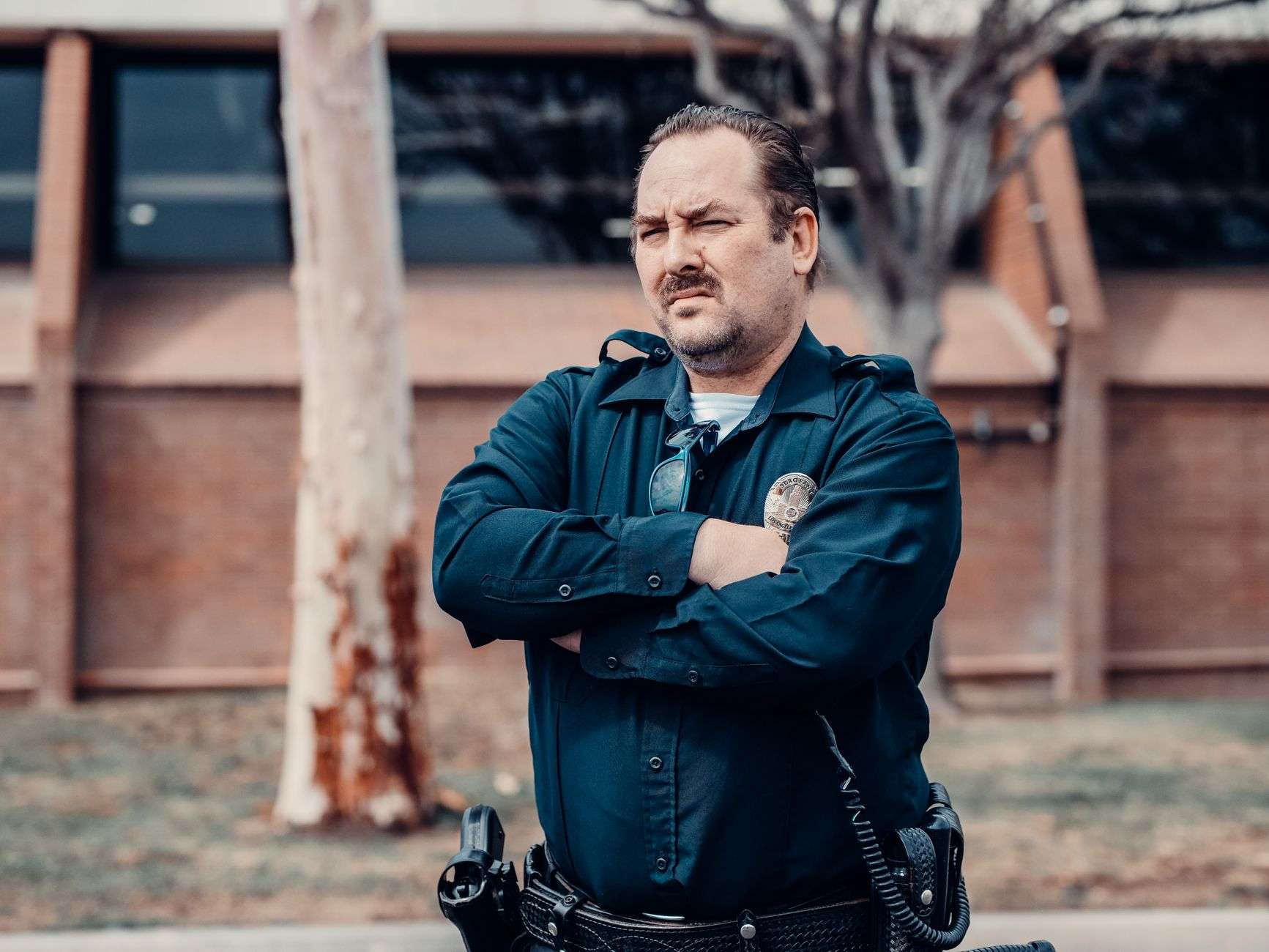
A Mobile County Sheriff’s Office deputy voluntarily resigned last week while an internal investigation into his conduct was pending, according to the agency. Deputy Terry Sexton, an investigator assigned to the sheriff’s office’s SORNA unit, submitted his resignation while the internal affairs review was still underway, MCSO spokesperson Lori Myles confirmed in a phone interview Friday.
Myles said she could not release additional details because the matter is a personnel issue, but she said Sexton’s resignation left the internal investigation inconclusive, and it closed with no formal findings against him. The sheriff’s office has not disclosed the nature of the investigation, and the closure without findings means there is no official determination — favorable or unfavorable — about the allegations that prompted it.
How Sexton’s career unfolded
According to online resumes, Sexton spent nine years as a firefighter with Mobile Fire-Rescue before joining the Mobile Police Department in 2018. He moved to the Mobile County Sheriff’s Office in 2022 and was assigned to the agency’s narcotics/vice unit through 2025 before his move to the SORNA unit, which handles compliance under Alabama’s Sex Offender Registration and Community Notification Act.
That career path — first responder, city police officer, county investigator — is a familiar one in Mobile County law enforcement, where agencies share personnel and skills across jurisdictions. Investigators who move between narcotics work and compliance units carry experience with surveillance, documentation and case-building that transfers across assignments, and the SORNA unit’s work depends on exactly those investigative habits.
What the SORNA unit does
Alabama’s Sex Offender Registration and Community Notification Act requires individuals convicted of certain offenses to register with law enforcement and keep their information current, and the sheriff’s office is responsible for tracking compliance among offenders who live in the county outside the city limits of Mobile. SORNA investigators verify addresses, process registrations and updates, and build cases against offenders who fail to register or falsify their information. The unit’s work is largely administrative and investigative — checking registrations, conducting address verifications and preparing cases for prosecution when the law is violated.
Compliance units like this one operate with less public attention than narcotics or patrol divisions, but they carry significant responsibility for community safety monitoring. The caseload is defined by statute: registration intervals, verification requirements and penalty provisions spelled out in state law, with the investigator’s job being to keep the county’s records accurate and to act when they are not.
How internal affairs reviews work
Internal affairs reviews at law enforcement agencies are typically opened to examine allegations of policy violations or misconduct by an officer, and they can end in several ways: with discipline, with an officer cleared of wrongdoing, or, as in this case, without a formal conclusion if the employee leaves the agency before the review is finished. Because Sexton resigned before investigators completed their work, the sheriff’s office says no findings were made in his case.
The inconclusive ending is a known gap in law enforcement accountability systems. A resignation closes the agency’s leverage — there is no job left to suspend or terminate — and the file is archived without a determination. Some agencies refer serious matters to state certification authorities even after a resignation, but routine policy matters typically end when the employment does.
Why personnel matters stay quiet
The sheriff’s office’s refusal to elaborate on the case reflects the legal architecture around public employee discipline in Alabama. State law treats much of a public employee’s personnel file as confidential, and agencies that disclose details of an open or even closed internal review risk violating those protections and exposing themselves to legal claims from former employees. Spokespeople like Myles therefore typically confirm only the fact of an investigation and its outcome — in this case, a resignation and an inconclusive close.
That confidentiality serves employees who are ultimately cleared, but it leaves the public with an incomplete record. Residents learn that a deputy is gone and that no findings were made, without knowing what triggered the review or how far it progressed. The sheriff’s office confirmed only what it was legally positioned to confirm, and the rest remains inside the personnel file.
Resignations under review: a recurring pattern
The case is an example of a pattern that plays out in agencies of every size: an employee under internal investigation resigns, and the review ends without resolution. For the agency, the departure resolves a staffing question but not a factual one; the allegations are neither sustained nor disproven. For the employee, a resignation preserves a clean separation from the standpoint of any future employment that does not require a formal disciplinary record.
Accountability researchers have long noted that this pattern limits the usefulness of internal affairs records in screening future hires. A deputy who applies at another agency carries only the record his former employer can legally share, and an inconclusive file often translates into a neutral reference. Some states have moved toward broader disclosure requirements or decertification processes for officers who resign under investigation, though practices vary widely and Alabama’s system has its own rules governing law enforcement certification.
The SORNA assignment and its significance
Sexton’s most recent assignment placed him in one of the sheriff’s office’s compliance-focused units, and the editor’s note attached to the original reporting underscored the importance of getting such details right. The SORNA unit’s work involves sensitive information — offender registrations, addresses and compliance status — and accuracy about who works in the unit matters both to the agency and to the public’s understanding of how that monitoring is staffed.
The unit continues its work regardless of personnel changes. Registrations, verifications and enforcement cases proceed on statutory schedules, and the sheriff’s office fills the departed investigator’s caseload as staffing allows. For registered offenders in Mobile County, the practical operations of the unit — check-ins, address verifications, paperwork deadlines — carry on unchanged, which is the point of a compliance function built to survive individual transitions.
What remains unknown
The public record in this case ends where the sheriff’s office says the law draws it: a deputy assigned to the SORNA unit resigned while under internal review, and the review closed without findings. No allegations have been substantiated, no charges were announced, and the nature of the inquiry has never been disclosed. Those facts frame the story as one of process rather than conclusion — an account of how an internal review ends when an officer walks out the door before it is finished, in an agency that says personnel law keeps the rest out of view.
Mobile County’s law enforcement landscape
The Mobile County Sheriff’s Office operates alongside the Mobile Police Department and a handful of municipal departments across Alabama’s second-most-populous county. The sheriff’s office has primary law enforcement responsibility for the unincorporated county and provides court security, jail operations and warrant service, with investigative units covering narcotics, vice and compliance functions among others. Deputies who move between agencies within the county, as Sexton did from MPD to MCSO, take with them knowledge of the same courts, the same prosecutors and the same geography — one reason such moves are common in both directions.
The office’s spokesperson function, which Lori Myles carries, is the public’s primary window into personnel matters like this one. Spokespeople balance statutory confidentiality requirements against the public’s interest in knowing how their sheriff’s office polices itself, and in cases that end without findings, the confirmed facts are usually few by design.
Fire service roots
Sexton’s nine years with Mobile Fire-Rescue preceded his police career, and that background is worth noting for what it says about the region’s public safety career paths. Firefighters and police officers cross over more often than the public realizes, drawn by the same impulse toward public safety work but seeking a different kind of job — investigative rather than response-oriented, with different schedules and a different career arc. A decade in the fire service builds habits of documentation, procedure and calm under pressure that agencies value in investigator roles.
His 2018 move to the Mobile Police Department placed him in Alabama’s fourth-largest city department, and the 2022 lateral move to the sheriff’s office followed the standard path of a certified officer transferring between agencies. Lateral hires skip the academy and arrive with field experience, which is why agencies actively recruit from one another’s rosters — and why a resignation at one agency can raise questions about what the next employer was told.
Accountability without findings
The unresolved ending of this case illustrates a structural question that follows law enforcement everywhere: what does accountability mean when an investigation produces no verdict? The sheriff’s office followed its process — it opened a review when concerns arose and closed it when the subject resigned — and by the office’s account, nothing in the file establishes wrongdoing. At the same time, nothing in it clears the deputy’s name either, and the community is left with the ambiguity that both sides in such cases tend to find unsatisfying.
For the sheriff’s office, the administrative chapter is closed. The SORNA unit continues its statutory work, the personnel file holds whatever it holds, and the public record contains a resignation, an inconclusive review and no findings — the full extent of what the law and the agency have made public about how Deputy Terry Sexton’s career at the Mobile County Sheriff’s Office came to its end.