Mobile Musician’s Oil Spill Song Takes On New Meaning Years Later
A Mobile musician's instrumental written after the Deepwater Horizon spill has taken on new personal meaning following his brother's death, years later.
Five years after the Deepwater Horizon disaster fouled the Gulf of Mexico with oil, a haunting instrumental written by a Mobile musician in the days after the spill still resonates with the people who heard it — and it carries a second, unexpected layer of meaning today.
David Hughes grew up spending summers at his grandfather’s cottage near Weeks Bay in Baldwin County, fishing, swimming and water-skiing with his older brother, John. The bay and the beaches that rim it were the landscape of his childhood, the place where summers were measured in catches and swims rather than calendar pages.
When tar balls began washing ashore in 2010, Hughes — then a percussionist with the Mobile-based Celtic group Mithril — found himself gripped by a specific fear: that his own children might never get to experience the bays and coastline the way he and his brother had.
The fear was shared along the entire Gulf Coast that spring. The Deepwater Horizon rig had exploded on April 20, 2010, killing 11 workers and setting off the largest marine oil spill in American history, and for three months the well leaked into waters that feed Mobile Bay, Weeks Bay and the fishing grounds that stretch from Dauphin Island to the Florida line. Communities from Bayou La Batre to Gulf Shores watched the weather reports and the surface forecasts the way coastal families watch hurricane tracks, knowing the damage would arrive in the water they loved.
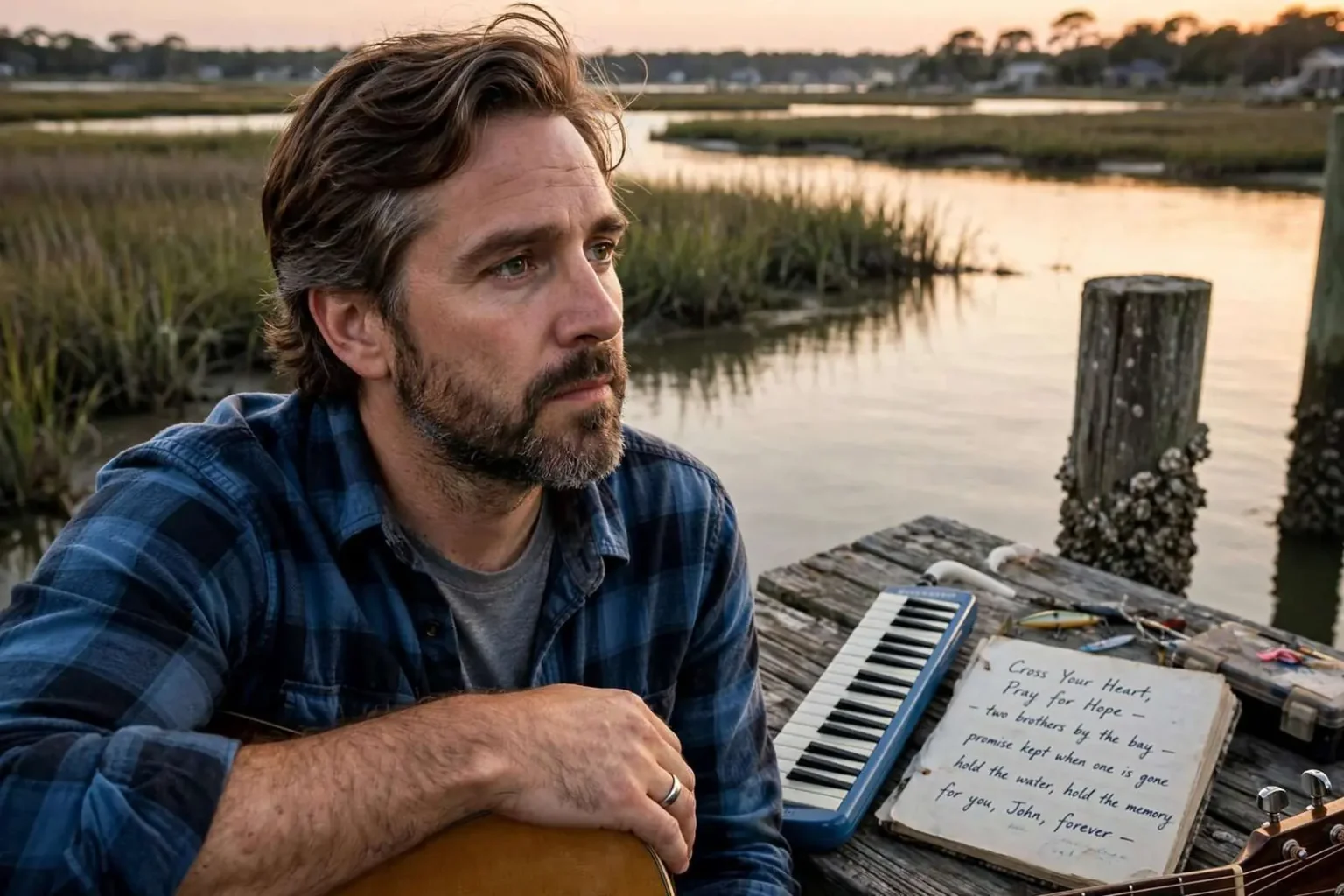
The idea for a song came from his mother, Stephanie Hughes, who suggested during a phone call that Mithril dedicate a piece of music to the families and wildlife affected by the spill. After hanging up, Hughes picked up a melodica and worked out a simple, flowing melody, then found the chords on an old guitar.
Within an hour he brought it to band rehearsal, where the rest of Mithril built it out with violin, guitar and penny whistle. The arrangement stayed deliberately gentle — a folk instrumental rather than a protest song — and the band gave it a place in their sets almost immediately, the way musicians do with pieces that feel like they arrived rather than ones they constructed.
A Song That Moved Audiences
The instrumental became a fixture of the band’s live sets that year, including an opening slot for guitarist Billy McLaughlin at Mobile’s Saenger Theatre. The historic theater downtown, restored as a performing venue for downtown Mobile, gave the piece an audience far beyond the Celtic music circles where Mithril built its following.
Audience members repeatedly told Hughes the piece moved them to tears, stirring memories of growing up on the water. Along the Gulf Coast, nearly everyone has a place like Weeks Bay — a family camp, a fishing pier, a stretch of sand known since childhood — and the oil spill had put all of them under threat at once. A quiet melody about the water gave listeners a way to grieve something that was still unfolding.
A family friend later described the performance as laying out “the brightest orange ocean-level boom — a life raft for our spirits,” a phrase that stuck with the band. The image drew on the floating containment boom that lined the coastline that summer, turning the machinery of the cleanup into a metaphor for what the music was doing for the people who heard it.
After recording the track in Hughes’ home studio and posting it to his blog, it was downloaded 1,500 times within days. For an instrumental by a regional band, released without a label or a promotion budget, that was a striking response — and it tracked with the moment. The Gulf Coast was saturated with news coverage of the spill, but there was little art being made about it yet, and people were hungry for something that expressed the feeling without a press release attached.
The title — “Cross Your Heart, Pray for Hope” — came from two suggestions offered by his daughter and a bandmate’s son, which Hughes combined. Children were much on his mind that summer, and the phrase carries exactly the kind of earnest, half-sacred weight a child gives to a wish.
He has described the song as an attempt to process the spill through the eyes of a child confused about why he could no longer play in the water. Beaches were closed, swimming advisories appeared along the coast, and children who had spent every summer in the surf were kept out of it by tar balls and health warnings. To a child, the closures made no sense — and that confusion, Hughes felt, captured the spill’s strangeness better than adult anger could.
Life After the Band
Not long after that period, Hughes left Mithril after roughly a decade with the group and stepped away from music entirely following the birth of his third child, who has significant health needs. He went on to work as a webmaster at a Mobile school.
The transition is a familiar one for working musicians: when a family’s needs expand, the rehearsals, gigs and late nights are the first things to go. Hughes spent his days in the practical, unglamorous work of keeping a school’s web presence running, and the melodica and guitar that had produced a song thousands of people heard sat quiet through the years that followed.
The years passed the way they do on the Gulf Coast — hurricane seasons, shrimp seasons, summer trips back to the water — and the song settled into the band’s back catalog, a piece of the 2010 spill’s local record preserved in a recording most of its listeners had long since stopped playing.
Lyrics Found, and a Loss
Recently, while sorting through old papers, Hughes came across lyrics he had written for the melody years earlier and had since forgotten entirely. Reading them again brought him to tears: the words told the story of two brothers who grew up playing by the bay, one of whom eventually dies, leaving the younger brother to carry forward a promise of loyalty and hope.
He had written the lyrics from imagination — a story shaped around the two brothers at the heart of his own childhood summers at Weeks Bay, but invented, a folk tale of the coast. The melody had been built for them, then set aside when the instrumental proved powerful enough to stand on its own.
The lyrics took on new weight after Hughes’ own brother, John, died unexpectedly at age 42 just over a year ago. Finding words that seemed to foreshadow his family’s loss left Hughes shaken, but he said the song — originally written to offer hope to Gulf Coast residents grieving the spill’s damage — has since become a source of comfort for him personally.
Writers describe moments like this one with a kind of wary awe: a thing made years ago from imagination turns out, without the maker intending it, to have been written for the future. The two brothers in the song were fiction; the grief that arrived to match them was not. What had been a piece of crisis art about an oil spill became, by accident of timing, a memorial.
Returning to Music
Hughes now says he is preparing to return to music, picking the acoustic guitar back up and planning a handful of local performances around Mobile in the coming months, five years after the spill first inspired the tune.
The return is modest by design — a few local dates rather than a reunion tour — but for a musician who left the stage entirely, the first performances back carry their own weight. The song that opens the door is the one that started it all, and audiences who heard “Cross Your Heart, Pray for Hope” in 2010 will hear it again carrying a meaning its composer never planned.
The story of the song tracks the story of the coast itself across those five years. The spill’s most visible damage faded: beaches reopened, the tar balls stopped coming ashore, and the restaurants and charter boats of the Alabama Gulf Coast worked their way back. But the long-term questions — the health of the fisheries, the oyster reefs, the deep-sea ecosystems far offshore — continued to play out in studies and courtrooms long after the beaches looked clean.
What the spill left behind, for people like Hughes, was not only environmental. It was the memory of a spring when the water everyone took for granted was suddenly off-limits, and the understanding that the coast’s ordinary gifts — a summer swim at Weeks Bay, a child playing in the surf — are the things worth protecting.
Art made in response to disaster rarely announces itself as lasting work. It is written quickly, out of necessity, for an audience living through the same event. Most of it disappears with the news cycle. A small number of pieces survive because they turn out to be about something larger than the event that produced them — and when a song written to comfort a grieving coast ends up comforting its own composer through a private loss, it has crossed that line.
“Cross Your Heart, Pray for Hope” began as a mother’s suggestion over the phone, took shape on a melodica within an hour, and became a life raft for the people who heard it on a theater stage in downtown Mobile. Five years on, it has become something else again: a promise kept, by a younger brother, for the brother who taught him how to fish.