

William Crawford Gorgas, the physician whose public-health work helped change the fight against yellow fever, was born in Toulminville near Mobile on October 3, 1854. His career connected a Mobile childhood to some of the most consequential disease-control campaigns of the early twentieth century.
Gorgas’s story begins in a settlement that is now part of the city of Mobile. Toulminville, in the city’s northern reaches, was in the mid-nineteenth century a separate community, and it was there that the future surgeon general spent his earliest years. His family’s Alabama roots ran deep, and his path from a Mobile-area boyhood to the front ranks of American medicine traced the arc of a nation professionalizing its public health. His father, Josiah Gorgas, would serve as chief of ordnance for the Confederacy and later as president of the University of Alabama, placing the family at the center of nineteenth-century Southern public life.
Education carried him north for a time, including studies at the University of the South in Sewanee, Tennessee, and at Bellevue Hospital Medical College in New York, where he took his medical degree. A brief stint in the New York City public schools’ health service preceded the army commission that would define the rest of his life.
After earning a medical degree and joining the U.S. Army Medical Corps, Gorgas worked in places where yellow fever and malaria were persistent threats. Army posts in the South and along the Gulf placed him in the heart of the yellow fever zone — the band of territory where the disease struck in terrifying summer epidemics and where “fever season” shaped commerce, quarantine and daily life.
A Scientific Revolution in Understanding
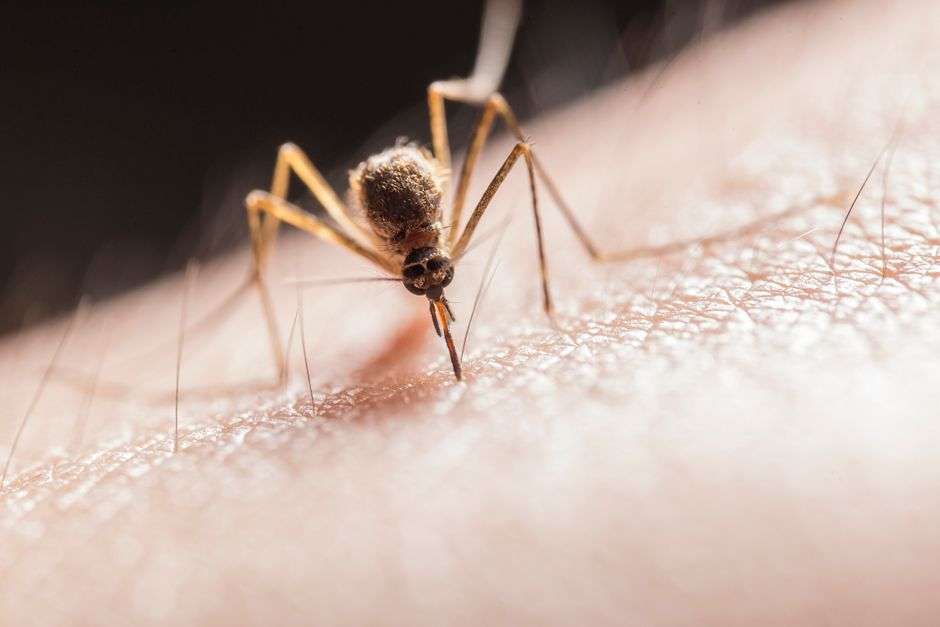
His later work came as scientists established that mosquitoes, rather than foul air or ordinary person-to-person contact, were central to the spread of yellow fever. The discovery overturned centuries of belief. The name “yellow fever” itself outlived the era of miasma theory — the idea that the disease traveled through bad air — but for most of the nineteenth century, cities fought outbreaks with quarantines and street cleaning aimed at smells and filth rather than the true carrier.
The mosquito’s role was established by the Walter Reed Commission in 1901, building on the Cuban physician Carlos Finlay’s long-argued hypothesis that a mosquito species carried the disease. The commission’s experiments in Havana confirmed it, and preventive campaigns then relied on organized sanitation, mosquito control and disease surveillance.
The confirmation changed everything for places where the fever struck. A disease that had emptied cities each summer was suddenly understood as a problem with a practical solution: eliminate the breeding places of the mosquito, and the epidemic could be stopped. Turning that insight into working programs was the challenge Gorgas would take up first in Cuba, then in Panama. The idea met resistance from skeptics who still blamed filth and climate, and proving it in the field would take an organizer’s discipline as much as a scientist’s knowledge.
Havana: Putting the Science to Work
As sanitation officer in Havana, Gorgas put mosquito-control measures into practice after the discovery of the disease’s vector. The approach included attacking breeding sites and reducing exposure to infected mosquitoes. His teams screened, oiled and drained the water sources where the insects bred, and the results were dramatic: yellow fever, a recurring scourge of the Cuban capital, was driven out of the city.
The Havana campaign made Gorgas’s reputation. American forces had taken control of Cuba after the Spanish-American War, and the occupation’s capital city became the proving ground for the new mosquito doctrine. What had been theoretical became operational — a demonstration that organized public health could accomplish what generations of quarantine had not. The work was exacting: teams traced every water source in the city, treated or drained it, and repeated the cycle relentlessly to break the chain between mosquito and human.
The success in Havana carried a message that extended far beyond Cuba. Cities and armies around the world had treated yellow fever as an unavoidable fact of life in the tropics; Havana proved the opposite. The campaign became the reference point that Gorgas would carry into his next, larger assignment — one where the stakes included the fate of the greatest engineering project of the age.
Panama: The Achievement That Built a Canal
The Encyclopedia of Alabama credits his work in eliminating yellow fever in Panama as a key factor that made construction of the Panama Canal possible. The French effort to build the canal had collapsed in part under the weight of disease: yellow fever and malaria had killed workers by the thousands and gutted morale in the canal zone. When the United States took up the project, its engineers faced the same enemy before any earth could be moved.
Gorgas was sent to apply in Panama what he had proven in Havana. The campaign against the mosquito there had to operate at a scale beyond anything previously attempted — drainage projects, larviciding operations, screened buildings, medical screening and sanitation infrastructure spread across a tropical work zone the length of the canal route. Malaria remained a stubborn adversary even as yellow fever was eliminated, but the fever that had broken the French effort was conquered. The canal zone’s hospitals and sanitation divisions became a model of their own, and the workers who built the waterway labored in conditions transformed from the nightmare that had doomed their French predecessors.
That achievement should be understood as part of a larger scientific and public-health effort. Gorgas’s contribution was to apply those lessons on a large scale — to take laboratory knowledge and administrative will and fuse them into working programs that saved lives and made an impossible engineering project possible. The canal’s completion in 1914, with disease rates that would have been unimaginable to the French builders a generation earlier, stands as the monument to that application.
Surgeon General and a Mobile Legacy
Gorgas later served as U.S. Army surgeon general, the profession’s highest post, and was promoted to major general. His tenure carried the lessons of Havana and Panama into the broader organization of American military medicine, and his international standing made him a figure in the global sanitary movement of the early twentieth century. He died in 1920 while on a public-health mission in London, closing a career that had carried him from the Gulf Coast to the Isthmus of Panama.
His connection to Mobile remains central to his story. The city claims him in its history and its memory — the boy from Toulminville whose work helped free the tropics of a disease that had once reached into the Gulf Coast itself. Yellow fever epidemics had struck Mobile repeatedly in the nineteenth century, emptying the city in outbreak summers, and the state’s ports knew the fear the disease carried as well as any in the hemisphere. Ships from the Caribbean brought the fever north each warm season, and the quarantines that followed disrupted the commerce on which the port city lived.
His career offers a local link to the transition from nineteenth-century epidemic uncertainty to more evidence-based public-health practice. In Gorgas’s lifetime, medicine moved from quarantining against bad air to eliminating a disease by targeting the insect that carried it — and a Mobilian stood at the center of that shift.
What Gorgas’s Work Left Behind
The methods Gorgas deployed in Havana and Panama became the template for mosquito-control programs across the Gulf South and the tropics worldwide. Coastal communities from Alabama to Brazil adopted the same logic: surveillance of breeding sites, systematic treatment of standing water, and organized sanitation services staffed by trained personnel. The public-health district, the mosquito-control board and the sanitation campaign all trace their lineage to the campaigns he ran.
His wartime service extended the same thinking to military medicine. When the United States entered the First World War, Gorgas was near the end of his tenure as surgeon general, overseeing an army medical establishment that had learned his lessons — the value of sanitation, mosquito control and preventive discipline in protecting troops in tropical theaters.
In Alabama, his name endures in institutions and memorials — a hospital at the University of Alabama bore his name, and Mobile keeps the memory of its native son in local history. For a state whose Gulf location once made yellow fever an annual dread, the story of the Mobile-born physician who tamed the disease carries a particular resonance.
The broader lesson of his career is the one that modern public health still teaches: discoveries in the laboratory matter only when they are organized into programs that reach real populations. Gorgas’s genius was administrative as much as medical — the ability to build and run the machine that turned a scientific insight into the elimination of a scourge.
Editor’s note: This archival report summarizes historical public-health work and is not current medical guidance.