Mobile Teen Drowns After Falling From Boat in Mobile Bay Near Point Clear
An 18-year-old from Mobile died after falling from a boat and never resurfacing in Mobile Bay near Point Clear on July 18. Search crews recovered the teen's body the following morning.
POINT CLEAR, Ala. — An 18-year-old from Mobile has died after entering the water from a boat in Mobile Bay near Point Clear and never resurfacing, according to the Alabama Law Enforcement Agency. The drowning, which unfolded on a July evening in full view of the bay’s crowded summer waters, ended with a recovery operation the following morning and left investigators working to determine how a routine evening on the water turned fatal.
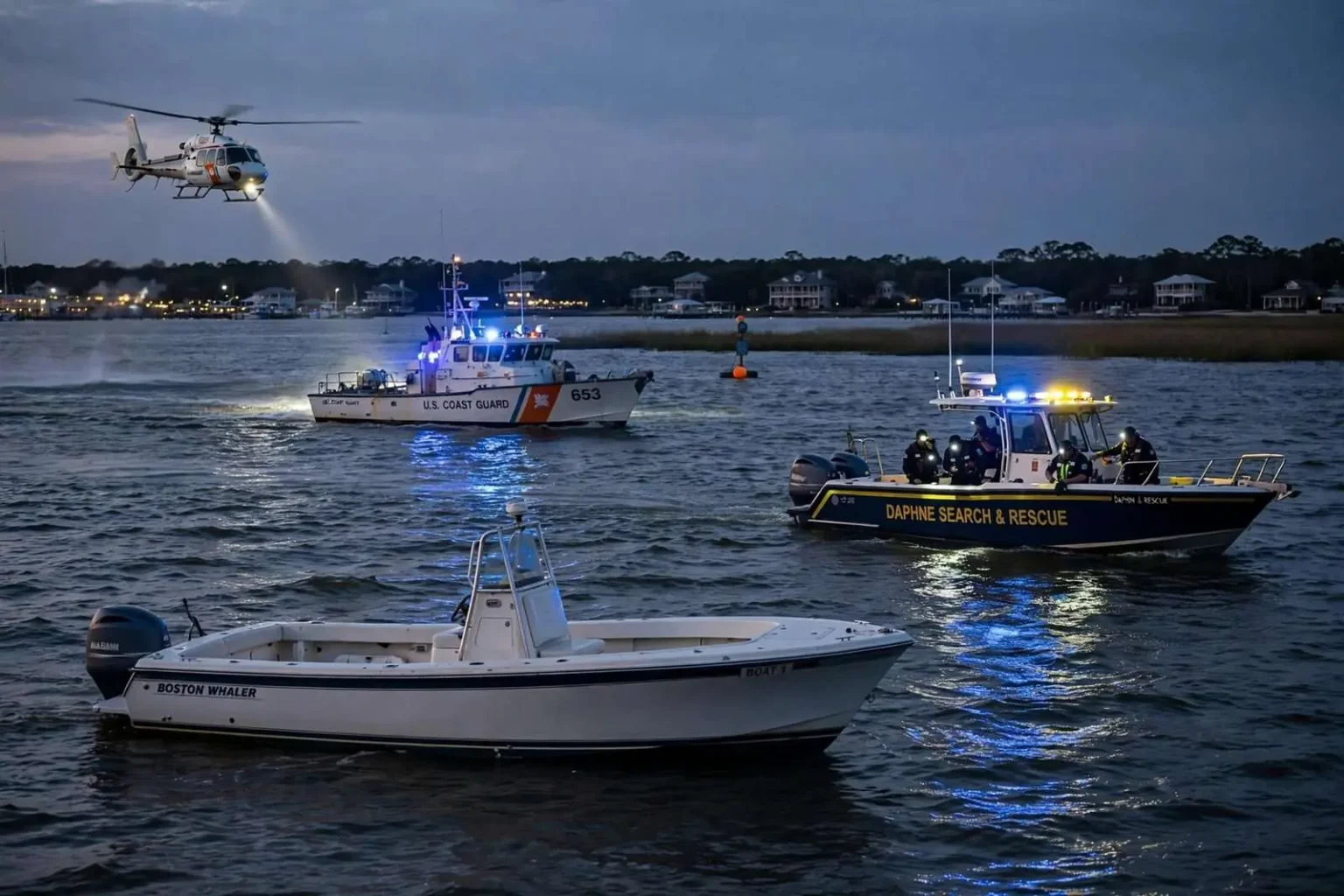
ALEA said the teen was operating a 22-foot 2007 Boston Whaler when the single-vessel incident occurred in Baldwin County on the evening of July 18. The agency has not released the teen’s name, citing the ongoing investigation and standard practice following a fatal incident involving a young victim. Boston Whalers of that size are common sights on Mobile Bay, favored by families and anglers for their stability and their reputation for seaworthiness in the bay’s often choppy afternoon conditions.
According to ALEA, the teen left the vessel and entered the water at approximately 7:55 p.m. but never resurfaced. The evening hour matters in incidents like this one: by late July, sunset approaches 8 p.m. along the Alabama coast, meaning visibility on the water was already fading when the teen went in. Passengers aboard the boat immediately took control of the vessel and attempted to locate the teen before a broader search and rescue effort got underway, marking positions and watching the surface in the diminishing light.
Multiple agencies joined the search, a mobilization that reflects both the scale of Mobile Bay and the region’s well-practiced maritime response network. The U.S. Coast Guard’s Air Station Mobile brought aircraft capable of sweeping the bay from above, while Daphne Search and Rescue launched from the Eastern Shore. The Mobile County Sheriff’s Office and its Flotilla unit joined from the west, along with the Alabama Department of Conservation and Natural Resources’ Marine Resources Division and ALEA’s own Aviation Unit and Marine Patrol Division.
A Bay That Demands Respect
Mobile Bay covers roughly 413 square miles where the Mobile, Tensaw, Apalachee and Blakeley rivers meet the Gulf of Mexico, and its conditions can change quickly on a summer evening. Prevailing south winds push chop against the eastern shore in the afternoons, currents around the ship channel run strong, and water temperatures in July draw thousands of boaters, swimmers and anglers into waters that can be deceptively demanding. Boating safety officials have long emphasized that even strong swimmers tire quickly in open bay water, where currents, chop and boat traffic compound the difficulty.
Point Clear, the quiet resort community on the bay’s eastern shore in Baldwin County, sits along a stretch of waterfront known for its historic homes, marinas and the grand lawns of its bayside hotels. The area is popular with boaters making the crossing from Mobile and the western shore, and on summer weekends the water between Point Clear and Fairhope carries a steady procession of runabouts, center consoles and sailboats much like the one involved in this incident.
The search continued through the night before the teen’s body was located around 9 a.m. Sunday, July 19, prompting a dive team to begin recovery operations. The body was recovered at approximately 9:59 a.m. — nearly fourteen hours after the teen entered the water. Recovery operations in the bay are complicated by depth, visibility and currents, and search teams typically work in coordinated grids until sonar or divers locate the missing person.
How the Response Works
The multi-agency response that converged on the bay illustrates how water emergencies are handled along the Alabama coast. The Coast Guard’s Air Station Mobile, based at the Mobile downtown airport, fields helicopters and crews trained in search patterns over open water. County-level organizations like Daphne Search and Rescue provide divers and surface boats with local knowledge of the bay’s bottom and currents. State resources — the Marine Resources Division’s patrol vessels and ALEA’s Marine Patrol and Aviation units — fill in enforcement and aerial coverage, and sheriff’s flotillas contribute volunteer manpower familiar with the waterway.
When someone goes missing in the bay, the first hours are spent on search and rescue, with hopes focused on finding a person alive in the water. When that window passes, the effort shifts to recovery, often overnight and into the next day, with sonar-equipped vessels mapping the search area and dive teams standing by. The transition is a somber one that responders along the Gulf Coast have repeated many times, and it depends on accurate information about where the person was last seen — one reason officials urge boaters who witness a man-overboard event to mark the location immediately with a GPS waypoint or floating marker.
Boating safety experts stress a handful of lessons that apply to incidents like this one. Life jackets worn at all times on open water dramatically improve survival odds; a person who leaves a boat in bay water without one faces currents, chop and fatigue within minutes. Passengers should know how to operate the vessel and call for help, as the passengers aboard the Boston Whaler did when they took control and began searching. And a Mayday call or VHF radio hail reaches the Coast Guard faster than a mobile phone call, broadcasting position to every vessel in range.
Investigation Continues
ALEA’s Marine Patrol Division continues to investigate the incident and said no further information was immediately available. Marine Patrol investigators typically examine vessel operation, safety equipment, weather and water conditions, toxicology and witness accounts before issuing findings in a fatal boating incident, a process that can take weeks. The agency’s report will determine whether any violations contributed to the drowning and whether the case is referred for further review.
For the family and the passengers who spent that Friday night watching the surface of Mobile Bay, the investigation’s findings will come long after the search ended. For the agencies involved, the incident was another entry in a summer log of water rescues and recoveries — and another reminder, delivered at the height of boating season, that Mobile Bay’s inviting waters demand the same precautions on the calmest evenings as they do in the worst weather.
Boating on Mobile Bay in Summer
Summer weekends on Mobile Bay are a defining part of life along the Alabama coast. Boaters launch from ramps in Daphne, Fairhope, Spanish Fort and Mobile, run across the bay to waterfront restaurants, anchor in the shallow flats near the causeway and raft up with friends in the protected coves along the eastern shore. The Boston Whaler involved in the incident is exactly the kind of boat that defines this culture — a brand long marketed on its unsinkable hull design, sized small enough for a family to trailer and large enough to handle the bay’s open stretches.
Operating a vessel on Alabama waters requires attention to a framework of state boating laws designed for scenarios just like this one. Alabama requires boater certification for operators, mandates life jackets for children and requires vessels to carry throwable flotation devices, and law enforcement patrols — including ALEA’s Marine Patrol and the Marine Resources Division — check for compliance throughout the summer. Officials repeat the same central message in every safety campaign: most boating fatalities involve people who were not wearing a life jacket when they ended up in the water.
The July 18 incident occurred during one of the busiest periods of the boating calendar, when long daylight hours and warm water draw the largest crowds of the year. Yet the same conditions that make summer boating attractive create their own hazards. Afternoon thunderstorms build over the bay with little warning, afternoon winds kick up steep chop on the open water, and alcohol is a factor in a significant share of boating accidents nationwide — risks that safety officials emphasize as boating season reaches its peak.
When the Search Becomes a Recovery
The difference between rescue and recovery is measured in minutes on open water, and responders along the bay train constantly for the transition. Hypothermia is rarely the danger in July; the threats are drowning, exhaustion, currents pulling a swimmer away from the point where they entered the water, and the difficulty of spotting a person at the surface from a moving boat — particularly as darkness falls, as it was on the night of this incident. Search patterns flown by the Coast Guard’s aviation units and run by surface vessels are calculated to cover the area where the person was last seen, adjusted for current and wind drift.
Point Clear residents and the wider bay boating community followed the search’s progress through the night, a familiar and dreaded ritual in a community where the water is never far away. The recovery the next morning closed the search but opened the longer questions that Marine Patrol investigators will now work to answer — questions about what led an 18-year-old from Mobile to leave the helm of a drifting Whaler on a July evening, and whether anything could have changed the outcome.
Until those findings are released, the incident stands as the kind of loss that boating safety officers describe when they talk about the bay: a young life ended in water that hundreds of people crossed safely that same evening, in a vessel known for its durability, within sight of one of the most heavily patrolled waterways on the Gulf Coast. The bay gives and takes, and the lessons of July 18 will echo through the safety briefings that every agency involved gives before the next summer weekend begins.