

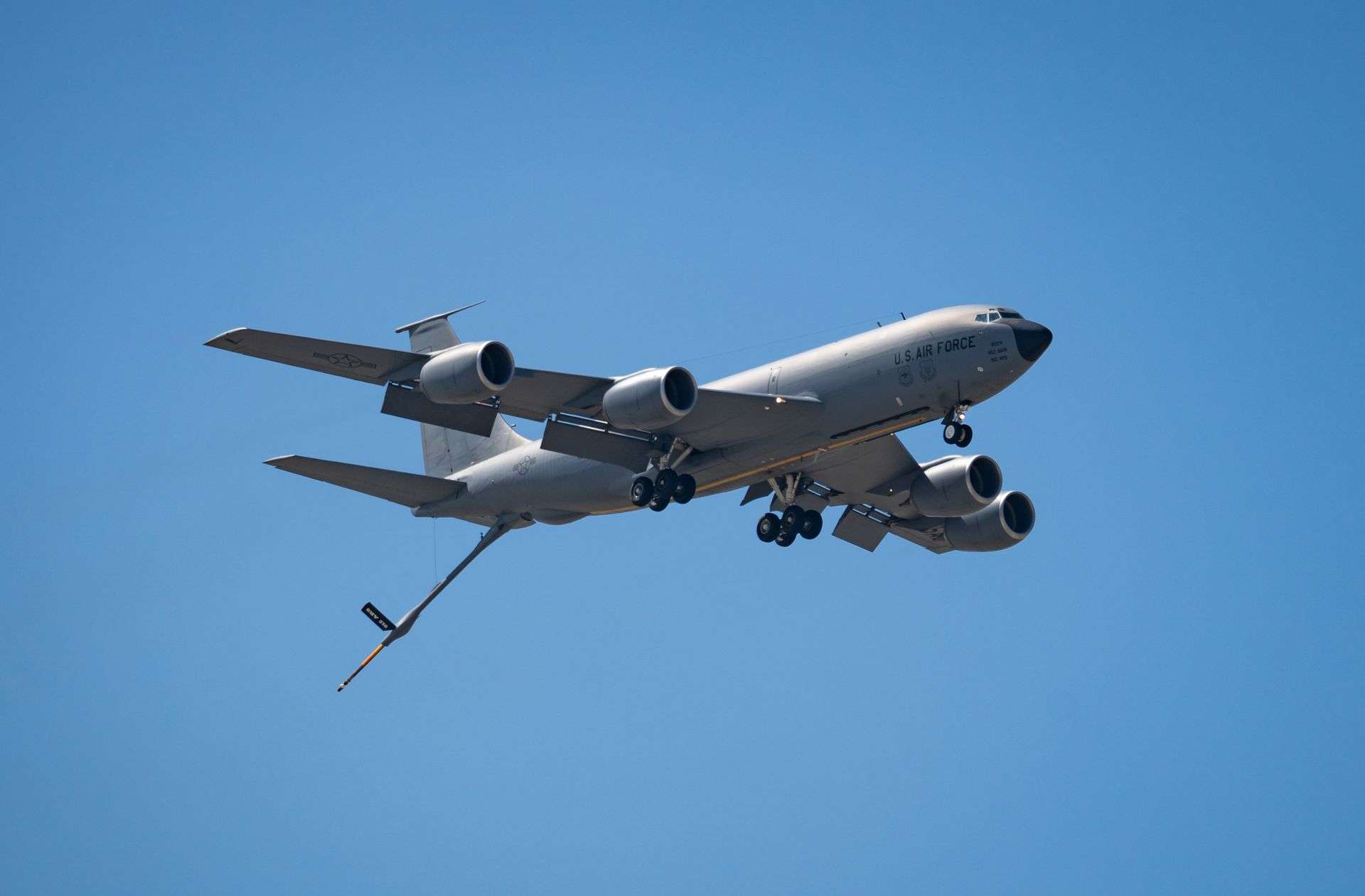
In the first days of January 2010, with Mobile in the midst of one of the most consequential economic development pursuits in its modern history, a Mobile woman publicly called for weekly prayer meetings aimed at securing the multibillion-dollar Air Force refueling tanker contract for the city. According to her message, a divine warning had been attached to the request: hold the prayer meetings, and the tanker contract long sought by Mobile would be awarded to the city. Refuse, and “the water in the rivers will come up and flood the city.”
The claim, delivered as a spiritual ultimatum tied to one of the region’s biggest economic prizes, quickly reached Mobile Mayor Sam Jones, who indicated he was already looking into the matter. The episode, small as it was, arrived at a moment when Mobile’s civic identity was deeply entangled with the outcome of a defense competition being fought out in Washington, and it reflected just how high the stakes felt to residents watching from the Gulf Coast.
A City Watching Washington Closely
By early 2010, Mobile had spent several years positioning itself as a potential winner in the U.S. Air Force’s KC-X competition, a program to replace the aging fleet of Boeing-built KC-135 Stratotankers that had been refueling American military aircraft since the Eisenhower era. The competition pitted Boeing against a team built around Northrop Grumman and the European aerospace consortium EADS, the parent company of Airbus, which proposed building a militarized version of the Airbus A330 airliner as the new tanker.
Central to the Northrop Grumman-EADS bid was a promise to build a final assembly line in Mobile, at what was then known as Brookley Field, to convert commercial A330 airframes into refueling tankers for the Air Force. Local and state officials had spent years courting the companies, offering incentives and infrastructure commitments in hopes of landing an aerospace manufacturing foothold that boosters believed could transform Mobile’s economy for a generation. Estimates of the jobs at stake ranged into the thousands, spanning direct manufacturing positions and a broader supply chain of contractors and suppliers.
The contract fight was hardly a quiet or straightforward one. The Pentagon had originally awarded the deal to the Northrop Grumman-EADS team in 2008, only for Boeing to file a formal protest with the Government Accountability Office. The GAO sustained major elements of that protest, forcing the Department of Defense to scrap the initial award and reopen the competition. That reversal set off a new, closely watched round of bidding and lobbying that stretched well into 2010, with each side working congressional delegations, local governments and public opinion in the states where the work might land. For a city like Mobile, the shifting fortunes of the bid were front-page news for years, and residents had ample reason to feel anxious about a decision being made hundreds of miles away.
Faith, Civic Life and Economic Anxiety
Calls for organized prayer around major civic or economic events are a long-standing feature of public life across the Gulf Coast and the broader South, where churches and faith communities have historically played an outsized role in shaping local response to crises, elections and economic campaigns. It is not unusual, in a region shaped by a strong tradition of evangelical and mainline Protestant practice, for community members to frame high-stakes local outcomes in explicitly religious terms, treating prayer as both a spiritual discipline and a form of civic participation alongside more conventional advocacy like lobbying, rallies or public comment periods.
The warning attached to the call for prayer meetings in this case followed a familiar rhetorical pattern found in strands of prophetic religious speech: a conditional promise of blessing paired with a conditional warning of calamity, framed as contingent on the community’s collective response. Such messages are typically delivered by individuals speaking from personal religious conviction rather than through any official denominational or civic body, and they generally carry no institutional weight with city government, even when, as in this case, they are directed pointedly at officials and are taken seriously enough to warrant a public response.
Flooding imagery in particular carries deep resonance in a coastal city like Mobile, which sits at the convergence of five rivers feeding Mobile Bay and has a long, well-documented history of tropical weather, storm surge and heavy-rain flooding events. Mobile’s National Weather Service records show the area receives among the highest annual rainfall totals of any major city in the continental United States, and its river systems, including the Mobile, Tensaw, Spanish, Apalachee and Blakeley rivers, are prone to rising quickly after sustained heavy rain, making flood warnings a recurring and locally understood civic concern independent of any specific prophecy.
Sam Jones and City Hall’s Response
Sam Jones, who served as mayor of Mobile from 2005 to 2013, was the city’s first African American mayor and a longtime figure in local government prior to his election, having previously served on the Mobile County Commission. Throughout his tenure, Jones was heavily involved in the city’s pursuit of the Air Force tanker work, frequently traveling to Washington and meeting with defense contractors and members of Alabama’s congressional delegation to advocate for Mobile’s bid. His administration treated the tanker competition as a top economic development priority, alongside efforts to grow the Alabama State Port Authority’s shipping operations and to diversify the local economy beyond its traditional reliance on shipbuilding, chemical manufacturing and the paper industry.
Given that backdrop, it was consistent with the mayor’s public posture on the tanker bid that he would respond, even briefly, to a resident’s request tied to the contract, regardless of its religious framing. Mayors and city officials in small and mid-sized American cities routinely field a wide range of public appeals connected to high-profile local issues, from formal policy proposals to informal expressions of concern, and acknowledging such appeals — without necessarily endorsing their premise — is a common way for local officials to signal that they are listening to constituents on a matter of widespread public interest.
How Major Economic Development Bids Typically Unfold
Multibillion-dollar competitions like the Air Force tanker program typically involve years of technical evaluation, cost analysis and political maneuvering before a final decision is reached, and outcomes often hinge on factors far removed from any single city’s lobbying efforts, including manufacturing costs, aircraft performance specifications, trade policy considerations and shifting political alliances in Congress. It is common for communities competing for large defense or manufacturing contracts to organize a mix of public and private advocacy during the bidding process, including chamber of commerce campaigns, statements from elected officials, site visits for company executives, and community rallies intended to demonstrate local support and workforce readiness.
Local economic development authorities, such as the Mobile Area Chamber of Commerce and state agencies like the Alabama Department of Commerce, typically coordinate these efforts, working alongside elected officials to prepare incentive packages, secure infrastructure commitments and respond to company inquiries throughout a competitive bidding process. Public prayer gatherings, while less common as an organized economic development tactic, fit within this broader pattern of community members seeking to contribute to a high-stakes local cause through whatever means feel meaningful to them, whether civic, financial or spiritual.
A Recurring Chapter in Mobile’s Aerospace Story
The tanker competition was one of several chapters in Mobile’s decades-long effort to establish itself as a hub for aerospace manufacturing, building on the city’s existing aviation infrastructure and its history as a shipbuilding and industrial center on the Gulf Coast. Brookley Field, the World War II-era airfield south of downtown Mobile where much of the proposed tanker assembly work was slated to occur, had already been redeveloped for industrial and aviation use in the decades after its closure as an active military base, and city and state officials had long viewed it as a strategic asset for attracting aerospace investment.
Local economic development officials frequently point to a region’s existing industrial infrastructure, workforce training programs and transportation access, including deep-water port facilities and interstate connections, when courting major manufacturers, and Mobile’s pitch for the tanker program relied heavily on these same assets. The competition for the tanker contract, regardless of any single event connected to it, underscored just how much economic weight the region’s leaders and residents placed on a decision made far away in the Pentagon and on Capitol Hill, and how deeply that anticipation could work its way into the texture of everyday civic and religious life in the city.
For residents who watched the tanker saga unfold across the late 2000s, the call for weekly prayer meetings was one more expression of a community’s hope that its years of courting a major manufacturer would finally pay off, delivered in the idiom of faith that has long shaped public life along the Alabama Gulf Coast.
The Tanker Competition’s Broader Trajectory
The tanker competition that so animated Mobile in early 2010 continued to shift in the months that followed. In March 2010, Northrop Grumman announced it was withdrawing from the bidding process altogether, arguing publicly that the Pentagon’s revised bidding terms favored Boeing’s smaller aircraft design. EADS subsequently opted to continue pursuing the contract on its own, without Northrop Grumman as its prime U.S. partner, keeping alive the possibility that an Airbus-based tanker, and the Mobile assembly work tied to it, could still win out. The Air Force ultimately awarded the contract, worth tens of billions of dollars over its life, to Boeing in February 2011 for what became the KC-46 Pegasus tanker, built on the Boeing 767 airframe.
Mobile’s broader aerospace ambitions did not end with that decision. In 2012, Airbus separately announced it would build its first United States final assembly line, for commercial single-aisle jetliners rather than military tankers, at the Brookley Aeroplex site in Mobile, a decision widely covered by regional and national outlets and one that state and local officials at the time linked to years of relationship-building with the company that had begun during the tanker pursuit. That commercial investment was a distinct corporate decision from the earlier military contract fight, but it reflected the same long-running civic effort that had drawn a Mobile woman to call for prayer meetings on the tanker contract’s behalf back in January 2010.