

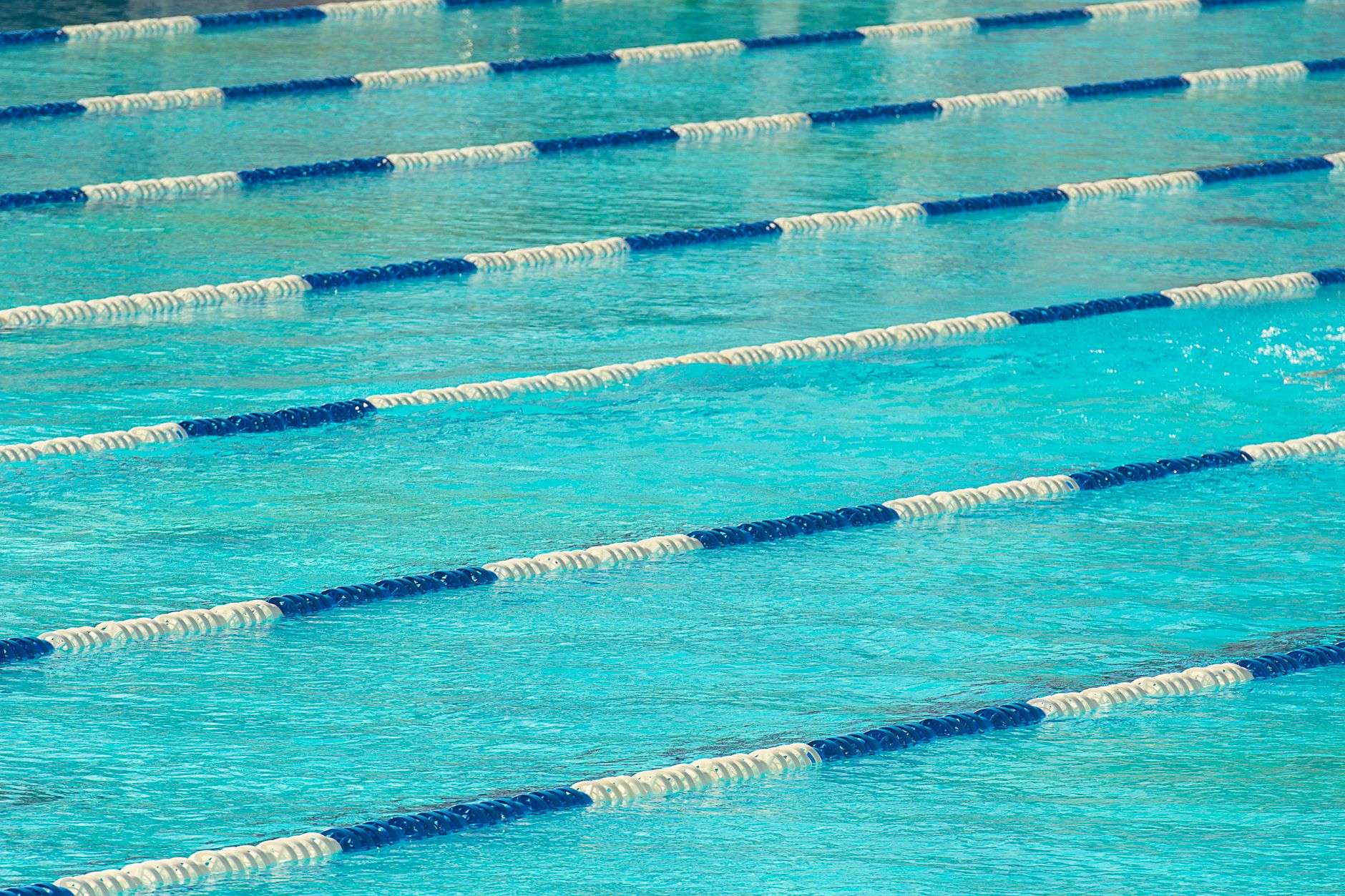
A new outdoor and indoor pool complex off Hall Mills Road is on track to open at the start of fall, giving Mobile County competitive and recreational swimmers a long-awaited home after nearly two decades of planning. The Mobile County Aquatics Center will feature a 50-meter by 25-yard outdoor pool with 20 lanes for competition and lap swimming, along with a separate six-lane, 25-yard indoor instructional pool. The facility is roughly 90% complete, and crews recently finished filling both pools with water.
“We have a 50 meter by 25 yard outdoor pool and a 25 yard, six line indoor pool. The outdoor pool being 20 lanes, for competition and lap swim, and then the indoor pool is six lanes, and that’s an instructional pool,” said Tyler Kerns, head coach of the City of Mobile Swim Association. Remaining work includes the bathrooms, locker rooms and indoor pool area, where crews will move into the plaster treatment process and finish the pump room.
A Two-Decade Effort
The project has faced delays from weather and supply chain issues that pushed the original early spring completion date back. “We’ve really been on this project for close to two decades now, just thinking about the need for a facility like this. In 2024, we kind of got the final funding,” Kerns said. “With rain weather days and then just supply chain stuff, sometimes stuff takes longer to get to you than you would hope for.” The supply chain disruptions that plagued construction projects nationwide in recent years hit specialized pool equipment particularly hard, from filtration systems to competition-grade timing and starting-block hardware that often comes from a small number of manufacturers.
Mobile County District 2 Commissioner Connie Hudson said finishing on schedule matters because hundreds of swimmers are already counting on the facility for the fall season. “We want it finished by the end of August, because in September we’ve got about 600 swimmers coming,” Hudson said. District 2, which Hudson represents on the Mobile County Commission, takes in west Mobile and the Hall Mills Road corridor where the center sits, placing the facility within a reasonable drive of a large share of the county’s swim community.
What the Center Will Host
The $22.5 million project will support competitive swimming and diving, youth and high school programs, masters swim clubs, recreational swimming, aquatic exercise classes and instructional programs. A 20-lane competition pool of 50-meter length is the standard configuration for major meets, allowing the facility to host regional and state-level competitions that local teams currently travel out of town to attend. Meet hosting carries economic benefits as well — traveling swim families fill hotels and restaurants for weekend invitationals, and communities that own such facilities compete actively for the meets that bring them.
The indoor instructional pool fills a different need. Year-round swim lessons, water-safety classes and therapeutic programming require heated, weather-protected water, and south Alabama’s climate makes outdoor lessons seasonal at best. Drowning prevention has been a persistent concern in the Gulf Coast region, and an indoor instructional pool gives schools, day programs and parents a reliable venue for teaching children to swim regardless of the season. Water aerobics and arthritis-foundation exercise classes, staples of public aquatics programming, can also run year-round for the county’s older residents.
It will also give local robotics teams a dedicated space to practice and compete with underwater remotely operated vehicles. Underwater ROV competitions challenge students to design and pilot tethered robots that complete tasks such as retrieving objects, navigating obstacles and simulating underwater repair work, and the Gulf Coast’s maritime and offshore industries have invested in such programs as a pipeline for marine technology careers. Pool access has been the limiting factor for many teams, which practice where they can find water deep and clear enough, and a dedicated aquatics venue removes that barrier for schools across Mobile County.
The new center will replace the City of Mobile Swim Association’s longtime home at the Bishop State pool, which the club has used since 1983. “The Bishop State Pool we’re at right now is about 45 years old,” Kerns said. Four decades of continuous use have taken their toll on the old facility, which lacks the lane count, deck space and modern filtration that contemporary swim programs need. The club’s teams have persevered in the older pool out of loyalty and necessity, but coaches describe the move as transformational for training quality — longer practices, more lanes per swimmer and the ability to host meets at home.
Still to Come
Even after the facility opens this fall, construction will continue on additional features, including an indoor competition pool, spectator seating, offices and concessions. The phased approach lets the county put the outdoor competition pool and indoor instructional pool into service for the fall season while the remaining components are finished, a common strategy for large public facilities that avoids letting a completed pool sit idle while adjacent construction wraps up. The indoor competition pool, when finished, will make the complex fully weather-proof for championship meets in winter, when outdoor facilities across the region go dormant.
The spectator seating and concessions components support the facility’s ambitions as a meet host as well. Swim meets draw crowds of families who spend entire weekends on the deck, and venues that offer seating, food and adequate parking retain the region’s invitationals. Mobile County’s investment positions the aquatics center to compete for regional meets against facilities in the Florida Panhandle and elsewhere in Alabama, and the addition of diving programs gives the county’s high schools a home for a discipline that many local swimmers currently practice out of town.
For the swimmers themselves, the opening ends a long wait. The roughly 600 athletes expected in September — club swimmers, high school teams and masters swimmers among them — will finally train in a facility designed for the sport rather than adapting to a pool built for another era. Coaches plan to move practices to the new facility as soon as the county hands it over, and the City of Mobile Swim Association, which has produced decades of Gulf Coast competitive swimmers since 1983, will write its next chapter in a building that took nearly twenty years of planning, advocacy and funding to bring to Hall Mills Road.
The aquatics center’s location off Hall Mills Road places it in the growing western tier of Mobile County, accessible from the congested corridors that serve the county’s fastest-growing residential areas. Public aquatics infrastructure in the county has lagged population growth for years, with most serious training water concentrated inside the city of Mobile at aging pools. County leaders have framed the project as a quality-of-life investment that finally matches the county’s resources to its residents’ needs, and the fall opening timeline was set deliberately so that the facility’s first full season would align with the school-year swim calendar.
Scheduling coordination will be the next challenge once the doors open. A 20-lane competition pool serving 600 swimmers, high school programs, masters clubs and public lap swimmers requires a master schedule that balances early-morning club practices, after-school training, weekend meets and public hours. Facilities that manage this well become community anchors, with lifeguards, instructors and coaches working shifts from dawn into the evening. The county’s parks and aquatics staff will take on that task as the phased construction continues around active programming, and coaches say the capability of the new pool itself — deeper water, better filtration, true competition dimensions — will make the adjustment worthwhile for every group on the schedule.
The underwater robotics programs illustrate the facility’s reach beyond swimming alone. Teams from Mobile County middle and high schools have competed in regional ROV contests in recent years, building vehicles that must maneuver underwater to complete timed missions, and mentors from the region’s maritime industry have coached students in engineering, electronics and teamwork. With dedicated pool time at the new center, teams can practice weekly instead of scraping together sessions before competitions, and the county hopes the venue can eventually host regional ROV events itself, bringing visiting teams and their families to west Mobile.
County officials have pointed to the center as an example of how pooled investment — county capital funds, coordinated planning and persistence through a difficult construction climate — delivers facilities that a single municipality could not build alone. The $22.5 million price tag covers not just the pools but the mechanical infrastructure that keeps them operating: pumps, filtration, chemical treatment and heating systems sized for year-round demand from the day the doors open. Staff hiring, lifeguard certification and programming schedules are being finalized now so that the September arrival of roughly 600 swimmers goes smoothly, and residents can expect announcements about public swim hours, lesson registration and rental availability as the fall opening approaches.