

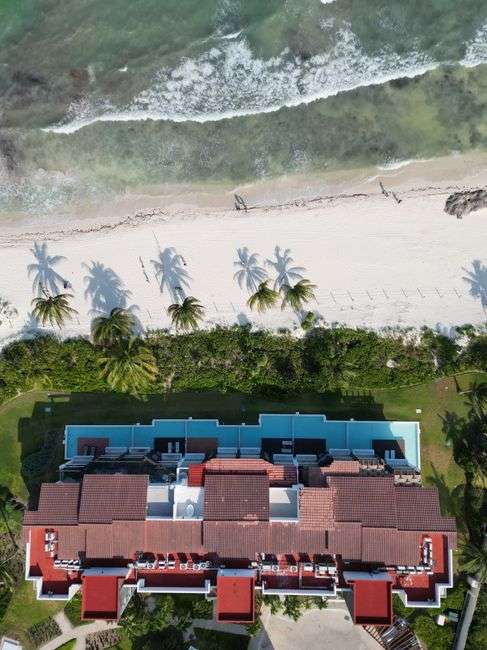
ORANGE BEACH, Ala. — Alabama’s Gulf Coast is no stranger to iconic beachfront bars that have become destinations in their own right, from the Flora-Bama on the Alabama-Florida line to The Hangout and the Pink Pony in Gulf Shores and newer draws like Coastal Orange Beach and The Gulf. But one amenity common in cities nationwide has yet to arrive on Alabama’s beaches: a rooftop bar.
That is about to change. The AC Hotel Orange Beach, a six-story, 100-room Marriott property, is expected to feature a 3,500-square-foot rooftop lounge when the project opens in the second quarter of 2028. The lounge will be open to both hotel guests and the general public.
The rooftop concept has been a staple of hotel development in destinations from Miami to Destin, where elevated bars capitalize on sunset views and premium pricing, but developers along the Alabama beaches have historically focused on ground-level tiki bars and deck restaurants. The AC Hotel’s design would be the first to put that format on the Alabama coast, adding a new tier to a beachfront dining scene that has grown steadily more upscale as the barrier-island towns have matured from family cottage destinations into resort markets.
Zach Hoyt, president of Gulf Shores-based A&R Development, which is building the Marriott-branded hotel, said the rooftop space is designed to be the property’s signature draw. He called it “an experience that doesn’t exist anywhere in the market today.”
“Orange Beach has grown into one of the premier destinations in the Southeast, and it deserves a hotel that matches that,” Hoyt said.
City Support, With Conditions
The Orange Beach City Council appears ready to sign off on changes to the project’s planned unit development that would allow the rooftop lounge at 23370 Perdido Beach Blvd. Council members expressed support for the concept during a recent meeting, provided the venue operates within limits on hours and noise.
“It won’t affect anyone negatively to open it up for the public,” Orange Beach Mayor Tony Kennon said. “It’s a nice place to go on a Friday or Saturday night. No loud music or bands. We talked with the neighbors next door, and they were good with it.”
The PUD amendment process is a familiar step in Orange Beach, where the city has used planned unit development agreements to shape projects along Perdido Beach Boulevard since the post-Hurricane Ivan rebuilding era. The corridor’s mix of condominium towers, hotels and residential streets makes density and noise questions a recurring part of the review, and the council’s insistence on operating limits reflects years of experience balancing the beach road’s nightlife economy against the residents who live alongside it.
Hoyt told council members the venue is meant to function as a lounge rather than a bar, connecting to eight of the hotel’s guest rooms with a maximum occupancy of 100 people. He said it is far from a “raucous or rowdy bar” and is expected to close around 11 p.m., with music played inside rather than through outdoor speakers so as not to disturb neighboring residents. The outdoor patio, which Hoyt described as relatively small, will close around 10 p.m.
“The majority of the bar is inside,” he said.
From Eyesore to Upscale
The hotel will replace a former church building that Kennon described as a longstanding beachfront eyesore. Romar Beach Baptist Church once occupied the site; the building was destroyed by Hurricane Ivan in 2004, rebuilt in 2008, and left with heavy water damage after Hurricane Sally in 2020.
“It was a church and zoned for a church, and the church left, and it’s become a significant eyesore,” Kennon said. “Unfortunately, there is no other church that can buy that property, tear it down and make it work. We had a developer come in who was willing to repurpose it. We had to allow them a greater density zoning than we would have normally for any other situation. But the bottom line, it is an eyesore that’s going to be replaced by an upscale hotel and a unique beachfront lounge.”
The site’s history traces the arc of the Alabama coast’s storm era. Hurricane Ivan made landfall near Gulf Shores in September 2004 as a Category 3 storm, flattening beachfront structures across the island, and the rebuilding that followed transformed Perdido Beach Boulevard’s character and elevation standards. Sixteen years later, Hurricane Sally’s slow track across the northern Gulf in September 2020 brought catastrophic flooding and wind damage to the Orange Beach and Gulf Shores shoreline, sidelining structures that had survived earlier storms. The Romar Beach church property, knocked down twice in that span, became one of the corridor’s most visible gaps.
The density allowance the council granted reflects that trade-off: a taller, denser hotel than the city would ordinarily approve, in exchange for removing a storm-battered structure and replacing it with taxable, jobs-producing development on a premium stretch of the beach road. City officials have made similar calculations elsewhere along the corridor as the last of the post-storm gaps are filled.
A Lodging Market Outpacing Rentals
The project arrives as demand for hotel rooms along coastal Alabama continues to outpace vacation rental demand. According to June destination indicators from the local tourism agency, vacation rentals, which typically require longer stays, averaged between 50% and 55% occupancy during the spring months, while hotels averaged between 74% and 77%.
The gap reflects shifting travel patterns along the Gulf Coast. Vacation rentals boomed during and after the pandemic, but rising management fees, cleaning costs and a softening in short-term rental rates have made traditional hotels newly competitive for the weekend and short-stay travelers who once defaulted to condos. Hotel product on the beaches, meanwhile, has been scarce relative to demand, with most new construction in recent years concentrated in Gulf Shores’ west end and Orange Beach’s east end.
Beth Gendler, president and CEO of Gulf Shores & Orange Beach Tourism, called the rooftop lounge an attractive addition to the region’s lodging options.
“Anytime something new comes to our community, we are excited, whether it’s a new lodging option, dining experience or attraction,” Gendler said. “Not only does it bring new options for our visitors, but more employment opportunities to boost the local economy from both sides. Being able to offer visitors another elevated experience along our beaches just makes our destination more attractive and appealing.”
The tourism economy those comments describe is the engine of the dual-city market. Gulf Shores and Orange Beach together draw millions of visitors a year, filling hotels, condominiums and the restaurants of the Wharf, the Hangout corridor and the Flora-Bama, and tourism taxes fund a substantial share of both cities’ budgets. Every new lodging property adds to the bed-tax base that pays for beach renourishment, public safety during peak season and the marketing campaigns that keep the destination in front of travelers across the Southeast.
The AC Hotel brand itself signals the market Orange Beach is courting. Marriott’s AC line targets design-conscious travelers with sleek, urban-styled properties, and its arrival on Perdido Beach Boulevard puts a nationally recognized select-service flag on a corridor long dominated by independents and condo resorts. For visitors booking through loyalty programs — and for the business and group travel those programs bring — the hotel adds inventory the beach has lacked.
Construction on the AC Hotel Orange Beach is expected to begin later this year. When the doors open in 2028, the project will complete a transformation that began with a hurricane-damaged church and ends with Alabama’s first beachfront rooftop lounge — a sign of how far the state’s coastal market has climbed from the days when its bars were known only to those who found them, and how much further the cities intend to go in chasing the premium end of the Gulf Coast travel trade.
What the Rooftop Format Means for the Beach Road
The arrival of a rooftop lounge would nudge Perdido Beach Boulevard’s entertainment scene in a direction its neighbors have watched play out across the Gulf Coast. Destin, Panama City Beach and Pensacola Beach have all added elevated bars to their beachfront hotels in recent years, and those venues have become evening anchors in their own right, drawing visitors who never book a room. In Orange Beach, the general-public access Hoyt described is what turns a hotel amenity into a destination — and it is also what raises the noise and traffic questions the council has attached conditions to.
The operating limits — an 11 p.m. closing, indoor music, a small patio shut down an hour earlier — are designed to prevent the venue from becoming the kind of late-night draw that sparked complaints at larger beachside bars. With a maximum occupancy of 100 people, the lounge is closer in scale to a hotel restaurant than to the thousand-capacity venues down the road, a sizing choice that mirrors the property’s positioning as an upscale, design-forward hotel rather than an entertainment complex.
For the corridor’s existing businesses, the rooftop adds competition and foot traffic in equal measure. Restaurant and bar operators along Perdido Beach Boulevard have long noted that new lodging lifts every boat in the harbor — more guests means more dinners, more morning coffee runs and more shoppers — and the city’s tourism agency has consistently framed new product as additive to the market rather than redistributive.
The timeline from groundbreaking to opening will be watched closely along the beach road, where construction costs and hurricane seasons have shaped every major project of the past two decades. A second-quarter 2028 opening would place the hotel’s debut in the heart of the summer season, the window every Gulf Coast developer aims for and the market the AC Hotel is built to capture: the design-minded traveler, the loyalty-program guest and the Friday-night crowd looking for Alabama’s first rooftop view of the Gulf.