

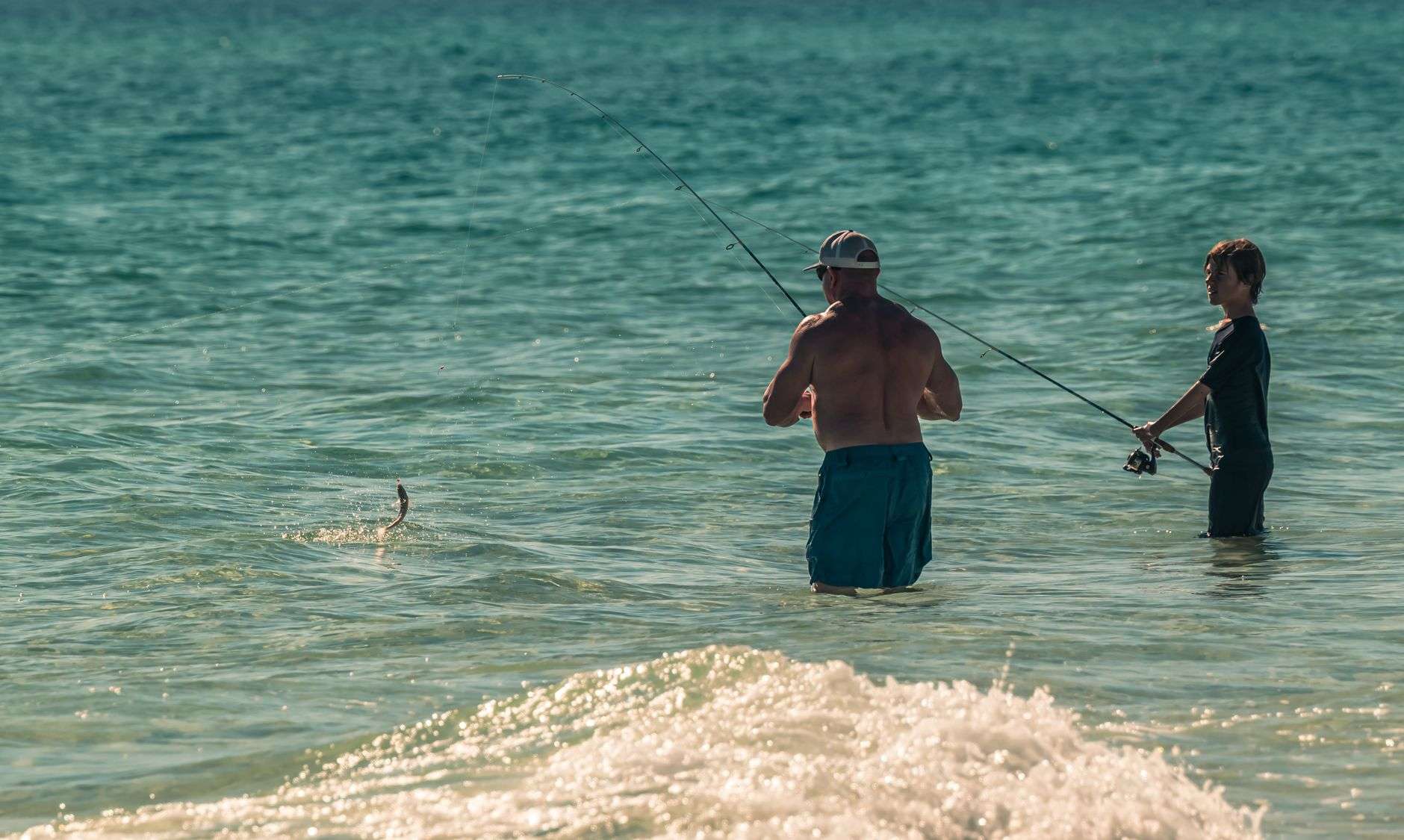
Federal fisheries regulators are asking for public input on a proposal that would reduce how many Gulf Spanish mackerel can be caught each year, a change that could ripple through the recreational and commercial fishing fleets that work out of Mobile and Baldwin county waters. NOAA Fisheries has opened a public comment period on a proposed rule that would lower the annual catch limit for Gulf Spanish mackerel and change the way fishery managers track whether that limit has been exceeded. The proposal is part of Framework Amendment 14 to the Fishery Management Plan for Coastal Migratory Pelagic Resources of the Gulf and Atlantic Region. Spanish mackerel is a staple catch for anglers and commercial operators along the Alabama Gulf Coast, making the outcome of this rulemaking directly relevant to the region’s fishing community.
Under the proposed rule, the annual catch limit for Gulf Spanish mackerel would drop from 11.3 million pounds to 9.63 million pounds, a reduction of roughly 15 percent. The rule would also replace the current in-season closure method of enforcing the limit with a post-season monitoring system, an approach federal officials say is meant to expand fishing opportunities across future fishing years rather than force abrupt closures once the limit is reached. In practical terms, that shift would move the Gulf fishery away from the familiar pattern in which managers shut down a season partway through the year once landings data show the quota has been hit.
What the proposed rule would change
The coastal migratory pelagic fishery, often called the CMP fishery, covers a family of fast-swimming, schooling species that includes Spanish mackerel, king mackerel and cobia. These fish move seasonally along the Gulf and Atlantic coasts, and their management has long been shared between the Gulf of Mexico Fishery Management Council and the South Atlantic Fishery Management Council under the joint fishery management plan. Framework amendments are the tool those councils use to make targeted adjustments to catch limits, allocations and accountability measures without rewriting the entire plan, which is why a single-number change like this one arrives packaged as Framework Amendment 14.
Spanish mackerel occupy a distinctive place in the Alabama fishing scene. The species arrives in force along the Gulf Coast in the warmer months, feeding on small baitfish close to the beaches, and it is a favorite target for pier anglers at spots like the Gulf State Park Pier, for boats running out of Orange Beach and Dauphin Island, and for commercial hook-and-line operators who sell fresh mackerel into local markets. Because the fish is quick to bite, abundant near shore and accessible to anglers without large boats, changes to its catch limit are felt broadly, from family fishing trips to charter businesses that advertise Spanish mackerel as a reliable trip maker during the summer season.
The accountability measure being swapped out matters as much as the number itself. Under an in-season closure system, federal managers track landing reports during the season and order the fishery closed as soon as the annual catch limit is projected to be reached, sometimes with little warning for anglers and dealers. A post-season system instead lets the fishing year play out, compares final landings against the limit after the fact, and applies any consequences to the following year. Federal officials describe the change as a way to spread fishing opportunity more evenly across future years instead of concentrating it in an unpredictable early window, and note that post-season accountability is already used in several other Gulf fisheries.
Why the limit is coming down
NOAA Fisheries officials say the Gulf Spanish mackerel stock is currently healthy, but that adjustments are needed to keep it that way over the long term. “The current catch limit exceeds what the data support for long-term productivity,” the agency said. Officials described the goal of the proposed changes as maintaining the fish population at a level that supports maximum sustainable yield over time, a scientific benchmark that represents the largest average catch a stock can consistently produce without declining. Fishing at or below that level, in theory, allows both the resource and the businesses that depend on it to remain productive year after year.
The proposed adjustments stem from a stock assessment completed in 2023, which was accepted as the best available scientific information on the health of the Gulf Spanish mackerel population. Stock assessments combine decades of landings records, biological sampling and survey data to estimate how many fish are in the water, how quickly the population reproduces, and how much harvest the stock can absorb. When a new assessment replaces an older one, the catch limits built on the previous science frequently move, in either direction, because the underlying estimates of the stock’s productivity have changed. That process is a routine requirement under the federal Magnuson-Stevens Fishery Conservation and Management Act, which requires annual catch limits to be based on the best scientific information available and prevents managers from leaving an outdated, higher limit in place once better data exist.
The Gulf of Mexico Fishery Management Council reviewed the assessment’s findings, accepted its catch-limit recommendations, and asked NOAA Fisheries to carry out those recommendations through this rulemaking process. The council, whose voting members include representatives from Alabama and the other Gulf states, gathers public testimony before making such recommendations, and the framework amendment process gives the public a second formal chance to weigh in now that the proposed rule has been drafted. This layered structure, in which a regional council recommends and the federal agency finalizes, is how all federally managed fisheries in the Gulf operate.
What it means for Mobile and Baldwin county fishermen
For anglers and small commercial operations along the Alabama Gulf Coast, the immediate effect of the proposal would be a smaller overall pool of Gulf Spanish mackerel to be divided among the fleet. Because Spanish mackerel landings in the Gulf are dominated by the recreational side of the fishery, charter captains, pier fishermen and private boaters would feel the change most directly, while dealers and restaurants that feature locally caught mackerel could see shifts in supply as the season unfolds differently under post-season monitoring. The end of abrupt in-season closures, however, could also mean trips planned late in the year are no longer canceled by a sudden federal closure notice, which some operators view as a fair trade for a tighter total limit.
Spanish mackerel are built for the run. The streamlined, fast-swimming fish school in open water near the surface, feed heavily on anchovies, menhaden and other small baitfish, and migrate north and west into Gulf waters as temperatures rise each spring. Along the Alabama coast they typically show up in strength from late spring through early fall, when Spanish mackerel tournaments, pier fish fries and charter boat stringers of “Spanish” are a familiar sight from Fort Morgan to Perdido Pass. That predictable seasonality is part of why the species has endured as a family favorite even as Gulf fisheries have tightened across the board.
Local fishing interests have historically used public comment periods like this one to press practical concerns that do not always show up in the science, such as how landings data are collected, how charter trip reporting works, and whether accountability measures treat recreational and commercial sectors evenly. Comments submitted during the window become part of the administrative record, and agency decision makers are required to review and respond to substantive issues raised before any final rule is published. That record also matters if the rule is later challenged, which is why fishing associations typically encourage their members to file individual comments rather than rely on form letters.
How to weigh in before the deadline
The proposed rule was formally published in the Federal Register on July 22, 2026, as 91 FR 46042. The public comment period opened that same day and will remain open through August 21, 2026. Members of the public who want to weigh in can submit comments electronically through the Federal e-Rulemaking Portal at regulations.gov, referencing docket number NOAA-NMFS-2026-0794. Written comments may also be mailed to Kelli O’Donnell, Southeast Regional Office, NMFS, 263 13th Avenue South, St. Petersburg, FL 33701.
Federal officials note that comments are most useful when they are specific, whether that means describing how a closure affected a business in a past season, raising questions about the 2023 assessment’s data inputs, or asking how the post-season monitoring system would be administered. Anonymous comments are accepted but carry less weight in the administrative record than signed submissions, and attachments such as photographs, landing records or letters from fishing associations can be uploaded through the portal alongside the comment text.
Full details of Framework Amendment 14, including the revised catch limit calculations and the accounting measures that would follow the rule, are available online through the NOAA Fisheries Southeast Regional Office website. Gulf Coast anglers and commercial fishing operators who catch Spanish mackerel are encouraged to review the proposal before the comment window closes, since the final rule that emerges from this process will set the framework for how the fishery is managed in the seasons ahead.
The outcome will also be watched by fishing communities elsewhere on the Gulf Coast, from the Florida Panhandle to Texas, because the Gulf Spanish mackerel limit applies across the entire U.S. Gulf. For the Mobile Bay area, where fishing is woven into the economy of places like Dauphin Island, Bayou La Batre and the Orange Beach marinas, the measure is a reminder that even a familiar, abundant near shore species is subject to the same federal science-and-rulemaking machinery as the region’s better-known quarries like red snapper and king mackerel.