

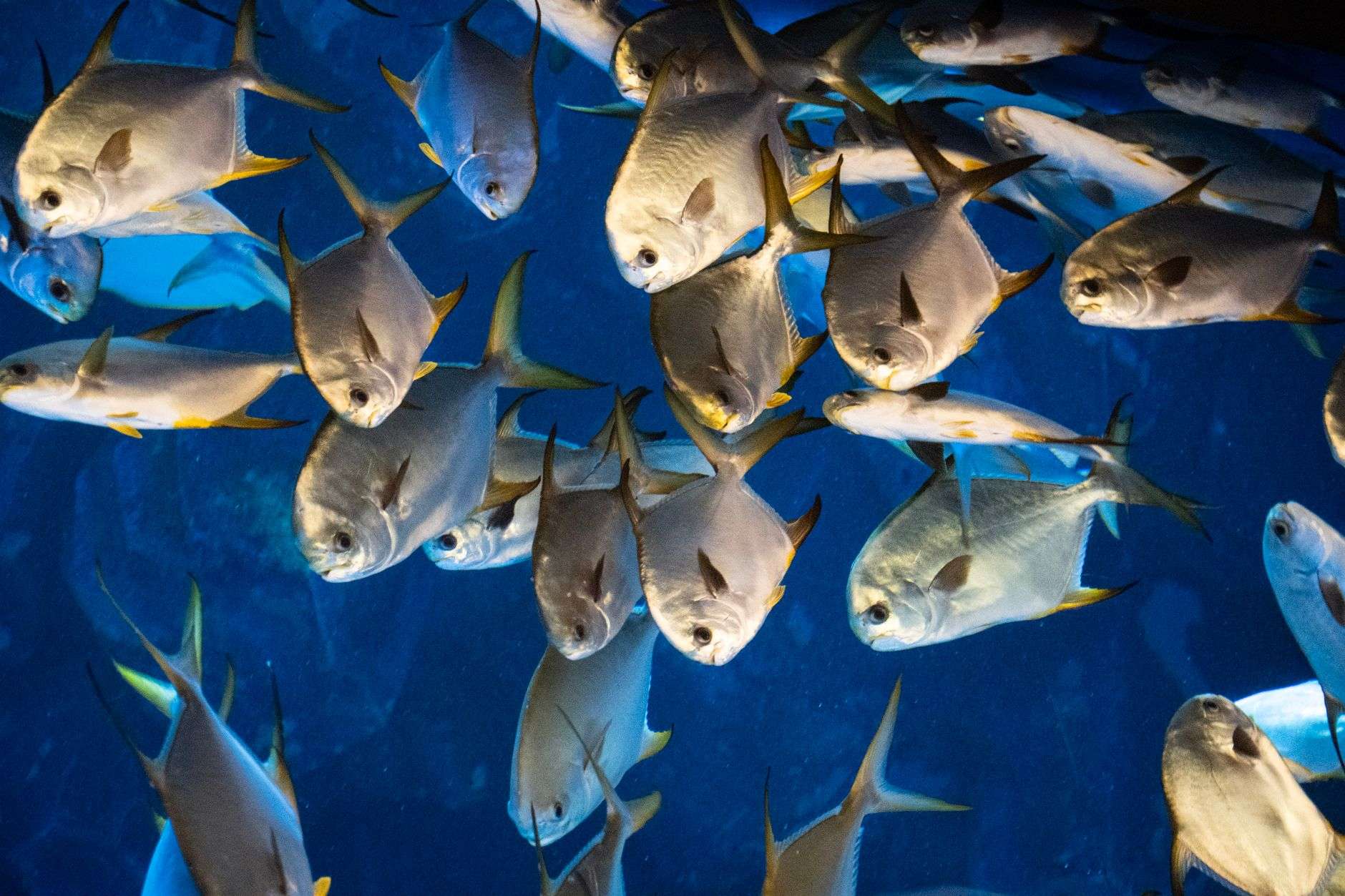
A multi-year, independently funded survey of greater amberjack in the Gulf has turned up roughly twice as many fish as the federal government's official stock assessment, adding fresh momentum to arguments that the long-struggling fishery is healthier than regulators believe. The Greater Amberjack Count, led by Dr. Sean Powers, director of the Stokes School of Marine and Environmental Sciences at the University of South Alabama, used the same fisheries-independent sampling approach that produced eye-opening results for the Great Red Snapper Count a few years ago.
Powers discussed the findings during a break from his judging duties at the Alabama Deep Sea Fishing Rodeo on Dauphin Island, the annual tournament held each year on the third full weekend of July. "For the last four years, we've been working on this project from North Carolina all the way to Texas to get an independent estimate on greater amberjack, similar to what we did for the Great Red Snapper Count," Powers said.
"The reason we focused on greater amberjack, especially in the Gulf, is that it is a stock that has supposedly been overfished, and overfishing has been occurring, for decades. That really never made sense to us." Counting Fish Instead of Counting Catch Congress appropriated $5 million to NOAA Fisheries and another $5 million to the National Sea Grant College Program to fund the study, which drew on a dozen research institutions spanning the South Atlantic and Gulf coasts.
Rather than relying on angler catch reports, the way traditional stock assessments are built, Powers' team set out to directly observe amberjack on the reefs, wrecks and natural hard bottom where they live. "We went out and measured population sizes on different reefs and different habitats where amberjack would occur," Powers said. "We had 11 different institutions involved doing that for two years." In the South Atlantic, stretching from North Carolina to Key West, Florida, the new numbers lined up closely with existing federal estimates: 2.2 million greater amberjack age one and older, compared to the stock assessment's 2.1 million.
But in the Gulf, the gap was stark. NOAA Fisheries' latest assessment puts the Gulf amberjack population at 1.5 million fish. The Greater Amberjack Count found 3.2 million, roughly double. "Our estimates were what was matching up with the fishermen," Powers said. "Fishermen in the South Atlantic really didn't have many concerns, and it was open all year. However, it's a completely different story in the Gulf." No Season Set for 2026 No greater amberjack season has yet been set for 2026 in the Gulf.
Background and Context
Previous seasons were typically scheduled to give anglers something to target while for-hire red snapper season is closed, but they have grown shorter in recent years. The ADSFR hasn't included an amberjack category in more than 15 years. "In the Gulf, we've had shorter and shorter seasons, and the fishermen are asking why are we doing that because they are abundant," Powers said.
"We hope our study will get reconciled with the stock assessment, because we don't even have an amberjack season scheduled yet." Powers said the harvest limit was exceeded last year, which delayed the start of a new season altogether. He's hopeful the Gulf of Mexico Fishery Management Council will act on the new data. "We're hoping the Gulf Council will reconsider it, especially when the fishermen are saying they are abundant," he said.
"I think that's what they're going to look at under an emergency rule." State Officials Call Findings Promising Kevin Anson, director of the Alabama Department of Conservation and Natural Resources' Marine Resources Division, said the results could help reshape how the fishery is managed. "Over the last ten to twelve years there have been significant changes in Gulf of America greater amberjack size and bag limits, commercial daily trip limits and season lengths, but the fishery just hasn't responded as anticipated," Anson said.
"This research may provide managers better information on important biological or behavioral factors that could help with identifying more impactful management options." ADCNR Commissioner Chris Blankenship credited Congress, and Alabama's delegation in particular, for making the study possible. "Congressional support was needed to help us find out more about this species," Blankenship said. "The information may lead to more access to amberjack for Alabama anglers and throughout the Gulf, which would be beneficial to coastal communities." Powers said U.S. Sen. Katie Britt and her predecessor, former Sen.
Richard Shelby, both pushed for the funding after questioning why fisheries managers relied so heavily on assumptions rather than direct observation. "Senator Britt and Senator Shelby before her were intrigued that we had to make so many assumptions and that we just needed to be out there counting fish," Powers said. Cameras Instead of Catch Reports To get those direct counts, researchers deployed underwater video across the clearer waters of the northern Gulf and acoustic cameras, which use sound rather than light, in the murkier waters off Louisiana and Texas.
Background and Context
"As long as you have a sample size, and you do enough samples in enough different areas, then you can produce the estimate," Powers said. "You take the number of fish on an artificial reef multiplied by the number of artificial reefs, plus the number of amberjack on natural hard bottom multiplied by the amount of natural hard bottom.
It's not as simple as that, but I prefer those models because if nobody believes us, we can go back through our videos and recount." Powers said the method is now the model his team wants to apply to other economically important reef species. "If we can do these studies on the important species, the economically viable species like red snapper, amberjack and triggerfish, we can get independent estimates and check that with what the stock assessment is telling us," he said. Different Fish, Different Coasts The research also revealed behavioral differences between amberjack stocks.
Tagging data confirmed that Gulf and South Atlantic amberjack are genetically distinct populations that may occasionally cross paths near Key West but otherwise stay separate. "Amberjack are also pretty migratory," Powers said. "They'll be here, in the northern Gulf, most of the summer around our reefs. One of the really cool other things we've found is that amberjack in our area will stay on a reef for 30, 60 or 90 days, a long time. On the South Atlantic side, those fish are on a site for three or four days." Size varies dramatically by region as well.
Off Alabama and Florida, amberjack caught by anglers are typically modest, often in the 20-to-40-pound range with an occasional larger catch, and rarely much bigger than the 34-inch fork-length legal minimum. Off Louisiana and Texas, where fishing pressure around oil platforms is lighter, amberjack can grow far larger. "It's not unusual for our colleagues to catch amberjack from 60 to 100 pounds," Powers said. "In our neck of the woods, it's more like 20 to 30 pounds with an occasional big one.
I think that is because of less fishing pressure in the western Gulf." Powers said the next step is working with NOAA Fisheries' National Marine Fisheries Service to reconcile the two data sets. "We have two different numbers, especially in the Gulf, and we're working with the National Marine Fisheries Service to try to figure out which parts of each study we can take to produce a better estimate," he said.
"This was two years of fieldwork and four years for the total project." More information on the Greater Amberjack Count, including a copy of the final report, is available at the Gulf Sea Grant reef fish extension website.
Wider Significance for Coastal Alabama
This story is part of a broader set of changes playing out across Mobile, Baldwin and the wider Gulf Coast region. Local residents, businesses and government agencies have been watching developments like this one closely, because decisions made in Mobile and Baldwin counties often ripple outward into neighboring communities across south Alabama, Mississippi and the Florida Panhandle. Public meetings, council work sessions and state legislative hearings have all carried echoes of the underlying concerns, with stakeholders ranging from neighborhood associations to industry groups weighing in on what the outcomes will mean for daily life along the Gulf Coast. Reporters and editors in the region have worked to document how these issues affect ordinary people, from commuters on Interstate 10 to families visiting the public libraries and parks that anchor so many of the Port City’s neighborhoods. The deeper context often emerges over months rather than days, as projects move from announcement to planning to construction, and as the people most directly affected find their voices in the public record. Continued coverage remains important, both for accountability and for the historical record, and the unfolding situation is one that warrants attention from anyone with a stake in the future of south Alabama.
Looking ahead, observers across the region expect the conversation to continue evolving. Local officials have signaled their intent to monitor outcomes closely, and community organizations have indicated they will remain engaged as new information becomes available. The intersection of state policy, local implementation and on-the-ground impact is precisely where stories like this one tend to develop their lasting significance. For Mobile and Baldwin residents, the practical effects will play out over time, in everything from tax bills and utility rates to traffic patterns and the availability of public services. Following the developments requires patience and attention to detail, but it is also a reminder of how civic life in coastal Alabama continues to be shaped by decisions that begin far from the neighborhoods they ultimately touch. Residents who want to stay informed can do so by following local government meetings, attending public hearings when significant issues arise, and reading the regional reporting that tracks how these stories progress from one phase to the next.
Local news organizations continue to follow this story closely, and updates are expected as more details emerge. The developments have generated discussion across the region, with attention from both longtime residents and newcomers who are following the issue for the first time. Community leaders have emphasized the importance of staying engaged with local government and participating in public meetings when significant decisions are being made. As the situation continues to unfold, residents are encouraged to remain informed through reliable local reporting and official city and county communications channels. The story remains active, and additional information is anticipated in the coming days and weeks as the relevant agencies and stakeholders complete their work.