
Overturned 18-wheeler slows traffic on Highway 98 east of Lucedale
An overturned 18-wheeler on Highway 98 near Shipman Road east of Lucedale is slowing traffic in George County, Mississippi, with one lane open.
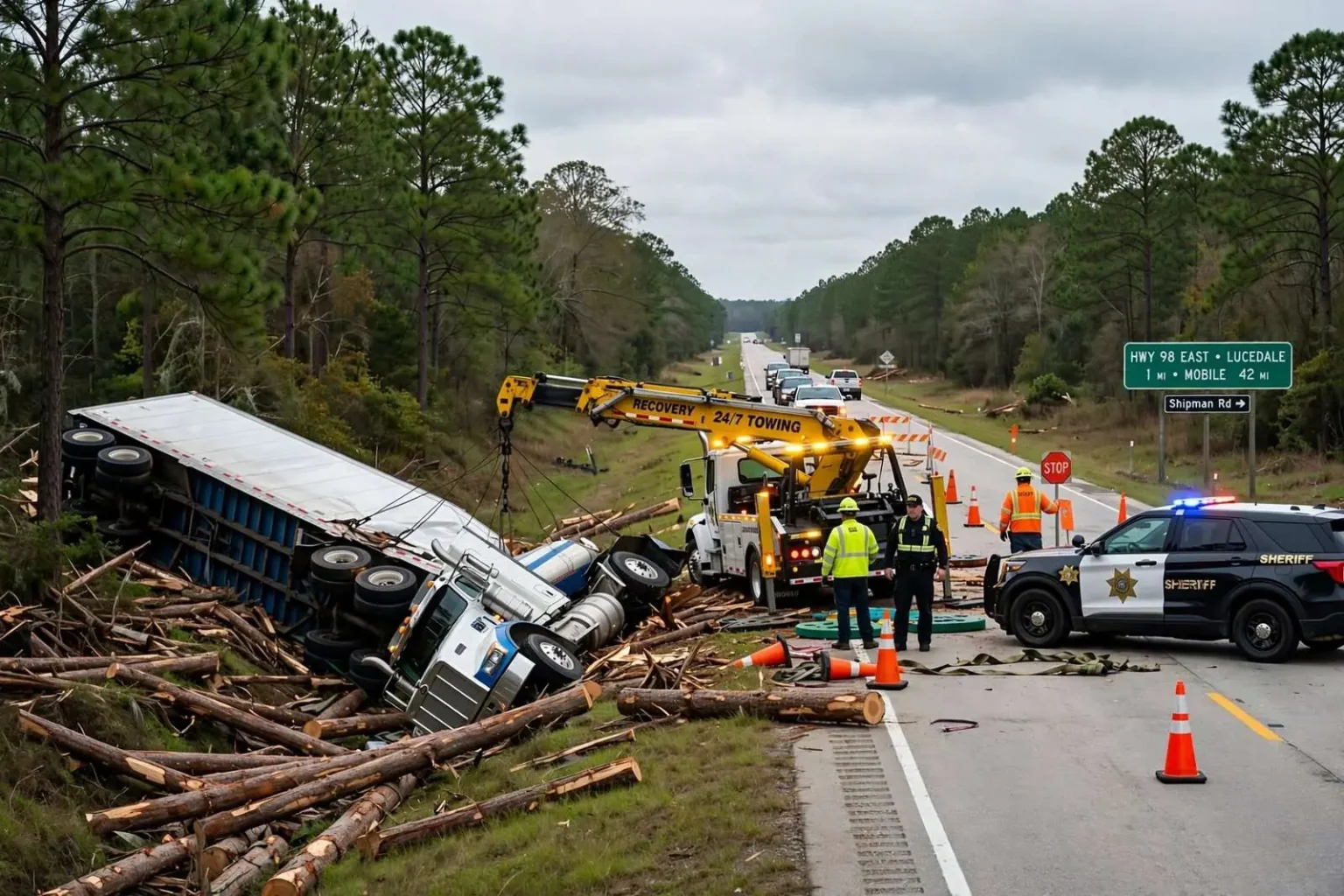
GEORGE COUNTY, Miss. — An overturned 18-wheeler is slowing traffic on Highway 98 at Shipman Road, just east of Lucedale, according to the George County Sheriff’s Department. Traffic reporter Kenny Fowler reported that one lane remains open and a wrecker is on the scene to clear the overturned tractor-trailer. Drivers in the area should expect delays and use caution near the cleanup operation.
The overturned rig narrowed the highway to a single lane, forcing eastbound and westbound traffic to funnel past the wreckage while the wrecker crew worked. Tractor-trailer recoveries are among the slowest cleanups on the road: the truck must be stabilized, sometimes offloaded if it is carrying cargo that shifts, uprighted with heavy wreckers, and cleared along with spilled freight, fluids, and debris before the closed lane can safely reopen.
Drivers traveling between Lucedale and the Alabama line were advised to allow extra time or seek alternate routes while the recovery operation continued. Authorities did not immediately say what caused the truck to overturn or whether the driver was injured in the crash.
The Highway 98 corridor
U.S. Highway 98 is a major east-west artery across southern Mississippi and southwest Alabama, connecting Hattiesburg, Lucedale, and Mobile along a route that carries a steady mix of local traffic, commuters, and heavy freight trucks. Through George County it is largely a two-lane highway, with stretches of rolling terrain and curves that demand attention from drivers of passenger vehicles and commercial trucks alike.
Lucedale, the county seat of George County, sits along the highway roughly halfway between the Pascagoula area and Mobile. The town serves as the commercial center for the county’s rural communities, and Highway 98 is its main street for commerce — which means a blocked lane near town backs up traffic quickly during daylight hours. Shipman Road intersects the highway just east of Lucedale, placing the crash site within a short drive of town services.
Commercial trucks hauling timber, poultry, fuel, and general freight move along this corridor in significant numbers, feeding industries across the Pine Belt and the Gulf Coast. Timber is a particular staple of George County’s economy, and log trucks are a familiar sight on Highway 98 and the county roads that feed it. Overturned truck crashes in the region most often involve speed through curves, cargo shifts, or swerves to avoid other vehicles.
Clearing an overturned tractor-trailer
Recovering an overturned 18-wheeler is a specialized job that goes beyond a routine tow. Heavy wreckers with rotators and multiple winch points are needed to lift a loaded tractor-trailer back onto its wheels, and crews must first assess whether the cargo can remain aboard during the uprighting or must be transferred to another trailer. Fuel spills and fluid leaks require containment to keep diesel and oil out of roadside ditches and streams, and environmental crews are summoned when tanks are breached.
Law enforcement secures the scene and manages traffic while the recovery proceeds, and the Mississippi Department of Transportation may assist with signage and lane control. Investigations into the cause follow, with commercial vehicle enforcement officers examining hours-of-service records, brake and tire condition, load securement, and the driver’s condition. Depending on findings, citations can range from log book violations to charges for careless driving.
The time required varies from a few hours for an empty trailer on flat ground to most of a day for a loaded truck on a curve or embankment. During that window, the open lane becomes a bottleneck where responders are at risk from passing traffic, which is why authorities repeatedly urge drivers to slow down and move over — Mississippi’s move-over law requires drivers to change lanes or reduce speed when passing emergency and recovery vehicles on the roadside.
What drivers should do
Sheriff’s officials and the traffic report both carried the same practical advice: expect delays, use caution, and give the crew room to work. Drivers who can shift their travel to other routes — county roads north of the highway, or waiting until the recovery is complete — reduce the congestion that makes the scene more dangerous. Those who must pass the site are asked to keep speeds down, avoid Rubbernecking, and watch for flaggers and emergency personnel directing traffic.
Travelers heading east toward Mobile or west toward Hattiesburg can also check traffic reports for updates before departing, since recovery times for heavy truck crashes are difficult to predict. Kenny Fowler’s traffic reports are a regular source of real-time road information for drivers across the Gulf Coast region, and updates on the Highway 98 situation were expected as the wrecker operation progressed.
The cost of truck crashes on rural highways
Overturned truck crashes carry costs that outlast the traffic backup. Recovery bills for heavy wreckers and environmental cleanup can run into tens of thousands of dollars, cargo is frequently destroyed, and the highway surface can be damaged by the weight and scraping of a fallen trailer. For local businesses along Highway 98, a blocked lane during business hours means customers arrive late or not at all.
For the broader community, each crash is a reminder of the pressure that heavy freight traffic places on two-lane highways that were never designed for modern truck volumes. Officials across southern Mississippi and southwest Alabama have long discussed improvements to corridors like Highway 98, but in the meantime, drivers and responders manage the risks with the tools at hand: enforcement, caution, and the heavy equipment that puts overturned trucks back on their wheels.
As of the latest report, one lane of Highway 98 at Shipman Road remained open, the wrecker was on scene, and traffic was moving with delays. The George County Sheriff’s Department said updates would follow as the roadway is fully cleared.
George County and its roads
George County sits in the southeastern corner of Mississippi, bordered on the east by the Alabama state line and anchored by Lucedale, its county seat and largest town. The county’s road network is a web of rural highways and farm-to-market roads connecting timber land, pastures, and small communities, with Highway 98 serving as the principal route between the county and the outside world. When that road is obstructed, there is no nearby interstate alternative — drivers must either wait or thread the back roads.
The county’s proximity to Mobile, less than an hour east, ties its economy to the Gulf Coast, and many residents commute or haul freight along the Highway 98 corridor daily. School buses, farm equipment, and commuter traffic share the highway with long-haul trucks, and the mix is familiar to everyone who drives the route regularly. Crashes that close a lane ripple outward through school pickup schedules, deliveries, and shift changes at industries across the county.
How crash news travels in the region
Traffic reporting in the Mobile and Gulf Coast market serves drivers on both sides of the state line, since the commuting and freight patterns of southwest Alabama and southeast Mississippi overlap heavily. Reports like Kenny Fowler’s reach drivers through radio broadcasts, social media, and television segments, and they rely on a network of scanners, law enforcement contacts, and spotters along the highways.
For rural crashes, that reporting matters more than most drivers realize. A wreck on a two-lane highway with no detour can strand traffic for hours, and drivers heading out of Lucedale or crossing from Alabama need to know before they commit to the route. Social media groups for George County and Lucedale residents routinely share crash reports within minutes, supplementing the formal traffic reports.
Safety around wreckers and recovery crews
Recovery operations like the one on Highway 98 put civilian and professional crews in one of the most dangerous work environments that exists — the roadside. Tow truck operators rank among the highest-risk occupations in the country, struck far too often by drivers who fail to slow down or move over. Mississippi’s move-over law, like Alabama’s, requires drivers approaching stopped emergency, recovery, or utility vehicles with flashing lights to move into the adjacent lane or slow to a safe speed when changing lanes is impossible.
The deputy sheriffs directing traffic, the wrecker operators rigging the truck, and the flaggers controlling the single open lane all depend on drivers following that law. Officials urged drivers approaching the Shipman Road scene to put away phones, keep both hands on the wheel, and watch for personnel on foot near the travel lane.
Waiting for the road to reopen
As the recovery continued, the George County Sheriff’s Department maintained its advisory: one lane open, expect delays, use caution. Motorists with flexibility were advised to postpone trips through the area until the scene was cleared, while those who had already committed to the route were encouraged to be patient and follow directions from responders on the ground.
The overturned 18-wheeler near Lucedale joined the long list of heavy truck incidents that punctuate travel on Highway 98 each year. Until the truck is uprighted and the lane reopened, drivers in George County will build a little extra time into their trips — and the wrecker crew will work to return the highway to normal as quickly and safely as the job allows.