

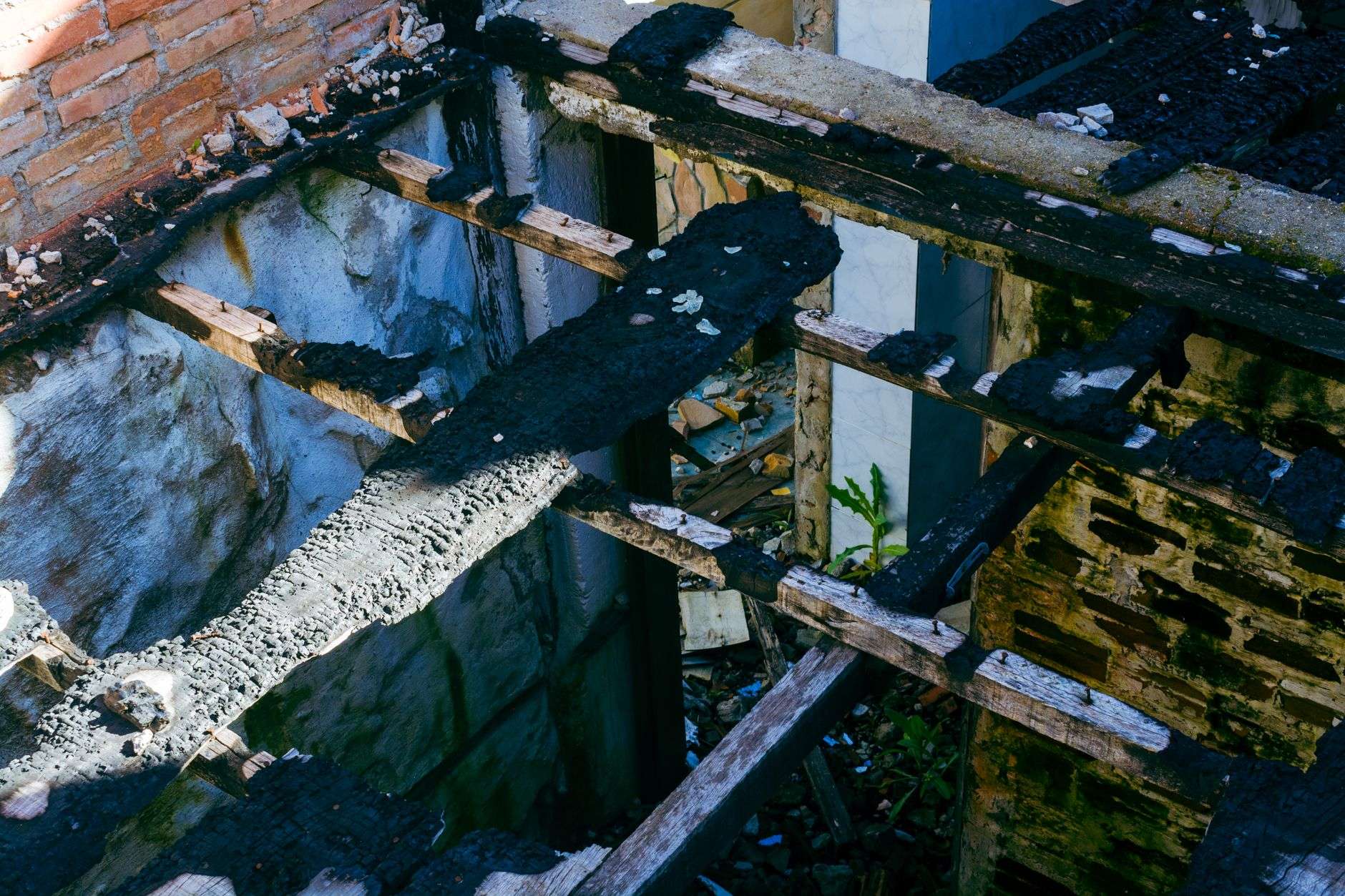
PERDIDO, Ala. — Dana and Michael Ledkins had nearly finished building a tiny home on their Perdido property when, in a matter of minutes, it was reduced to ashes — and their own security cameras caught the person responsible in the act.
The couple had been building the small structure themselves, piece by piece, as a long-term investment. It was almost complete and already fully furnished when, according to footage from their home security system, a man walked up to the back of the building, lit a torch and set it on fire.
“This man walked up to the backside of our tiny home and took that torch and lit it on fire,” Dana Ledkins said, describing what she saw when she reviewed the recording.
‘This Was Going to Be Our Backup Plan’
For the Ledkins, the tiny home was more than a side project. Dana Ledkins said the couple, who are not getting any younger, saw it as a financial safety net — something that could help cover the mortgage on their main house or serve as a fallback if anything happened to either of them. “This was going to be our backup plan, if something happened to me or my husband; we’re not getting any younger, something to invest in, something to help pay the mortgage for the real house,” she said.
The losses accumulate in ways that are easy for outsiders to miss. Building a structure yourself means evenings and weekends stretched across months, trips to suppliers, and the quiet satisfaction of watching a frame become a home. When that work is destroyed by another person’s hand rather than an accident or a storm, the emotional arithmetic is different — there is no weather to blame, and no check from an act of nature that arrives without the question of who lit the fire.
The tiny home movement that swept across the country over the past decade found a natural foothold in rural communities like Perdido, where land is available and property owners have the space to build. For many families, a small second structure serves as rental income, a place for aging parents or adult children, or a hedge against hard times — exactly the role the Ledkins envisioned for theirs.
Now, she said, there’s little left but ashes and the memory of what the home was becoming. “You feel grief for the things that you lost, maybe even a little bit of shame because maybe you could have done something better, and that’s not fair, and then you feel anger,” Ledkins said.
She was direct about the person responsible. “This person is not a good person,” she said. “There is no good reason to do what they did. We never did anything to them. We don’t know them.”
$3,000 Reward Offered for Information
With no clear motive and no known connection to the person seen on camera, the Ledkins are turning to the community for help. The family is offering a $3,000 reward for information leading to the identification of the person responsible, hoping the incentive will bring forward a tip before whoever is responsible strikes again.
The offer reflects a reality rural property owners know well: outside town centers, houses sit on lots large enough that a fire can burn without a single neighbor seeing it happen. In a case like this one, the security footage is the investigation’s backbone, and a reward is the tool most likely to shake loose the name that goes with the face.
Sheriff’s Office Releases Suspect Description
The Baldwin County Sheriff’s Office has opened an arson investigation into the fire and is asking the public for help identifying the man seen in the Ledkins’ security footage. Investigators describe the suspect as possibly White or Hispanic. At the time of the fire, he was wearing a plain white sleeveless shirt, shorts, athletic shoes and a balaclava covering his face. Investigators also noted a visible tattoo on his right arm.
The balaclava shows a level of deliberateness that investigators weigh carefully in arson cases. Covering the face before approaching a structure suggests the act was planned rather than impulsive, and that the person understood cameras might be watching even in a rural subdivision. The tattoo, however, is the detail that cannot be taken off — and it is the kind of identifying mark that friends, coworkers or acquaintances are most likely to recognize from a description or a still frame.
Anyone who recognizes the suspect from that description, or who has any information that could help investigators identify him, is asked to contact the Baldwin County Sheriff’s Office. Tips can help close the gap between the family’s reward offer and an arrest, investigators say, even seemingly minor details can matter in cases like this one — a vehicle seen nearby, a person remembered walking along the road, or a timeframe that places someone in the area.
No arrests had been announced as of this report. The investigation remains open.
How Arson Cases Move Through the Courts
Under Alabama law, arson is treated as a serious felony, with the charge and its potential punishment escalating based on whether people were endangered or injured and on the value and type of property involved. An unoccupied structure burned while no one is inside is typically charged under a lower tier than a fire that threatens lives, but a conviction still carries substantial prison time — a reflection of how seriously the state treats the deliberate destruction of property by fire.
Investigators building an arson case generally work from three kinds of evidence: what the fire itself tells them once the scene is examined, what witnesses and neighbors remember, and what recordings show. In the Ledkins’ case, the first element is complicated by the fact that the home burned almost completely, which makes the security footage and the public’s help all the more important to moving the case forward.
Rewards like the one the Ledkins have posted are a common feature of cases that stall without a named suspect. They serve two purposes at once — signaling to the community that the family is serious about seeing an arrest, and giving someone with partial knowledge a concrete reason to come forward rather than stay silent. Tips in cases like this often come not from witnesses to the fire itself, but from people who recognize a detail after the fact.
The Hidden Cost of Rural Arson
The financial damage from a fire like this one reaches further than the charred structure itself. A self-built home represents hundreds of hours of labor that no insurance claim fully captures, and for a family using the project as a financial safety net, the loss is measured in security as much as dollars. Rural fires also strain volunteer fire departments, which respond to structure calls across wide territories and depend on community support to keep equipment and training funded.
For neighbors in Perdido and the surrounding communities, the case is a reminder of both the vulnerability and the resilience of rural life. Perdido sits in the northern reaches of Baldwin County, an area of farms, family plots and long stretches of road where residents are used to looking out for one another. It is exactly the kind of place where a posted reward and a suspect description travel quickly — shared at feed stores, church gatherings and online community groups until someone recognizes the man on the video.
What Residents Can Do
Law enforcement agencies across Baldwin County encourage residents to treat home security cameras as a neighborhood tool, not just a personal one. Footage that captures a street, a driveway or a property line can help investigators establish timelines in cases far beyond the owner’s own — burglaries, missing persons, hit-and-runs. In the Ledkins’ case, their cameras did precisely what such systems are bought to do, recording the crime even though no one was close enough to intervene.
Residents who believe they recognize the suspect are urged to contact the Baldwin County Sheriff’s Office directly rather than confront the individual or post accusations publicly. A tip that reaches investigators becomes evidence they can verify and act on; an online accusation can warn a suspect off and complicate any eventual prosecution. The family, meanwhile, continues to hold out its $3,000 offer — small comfort for a lost backup plan, but a starting point for the answer they are waiting on.
Until an arrest is made, the ashes on the Ledkins’ property stand as the visible record of what happened there: a family project, built piece by piece for the years ahead, taken in minutes by a stranger with a torch — and caught on camera by the people it was taken from.