

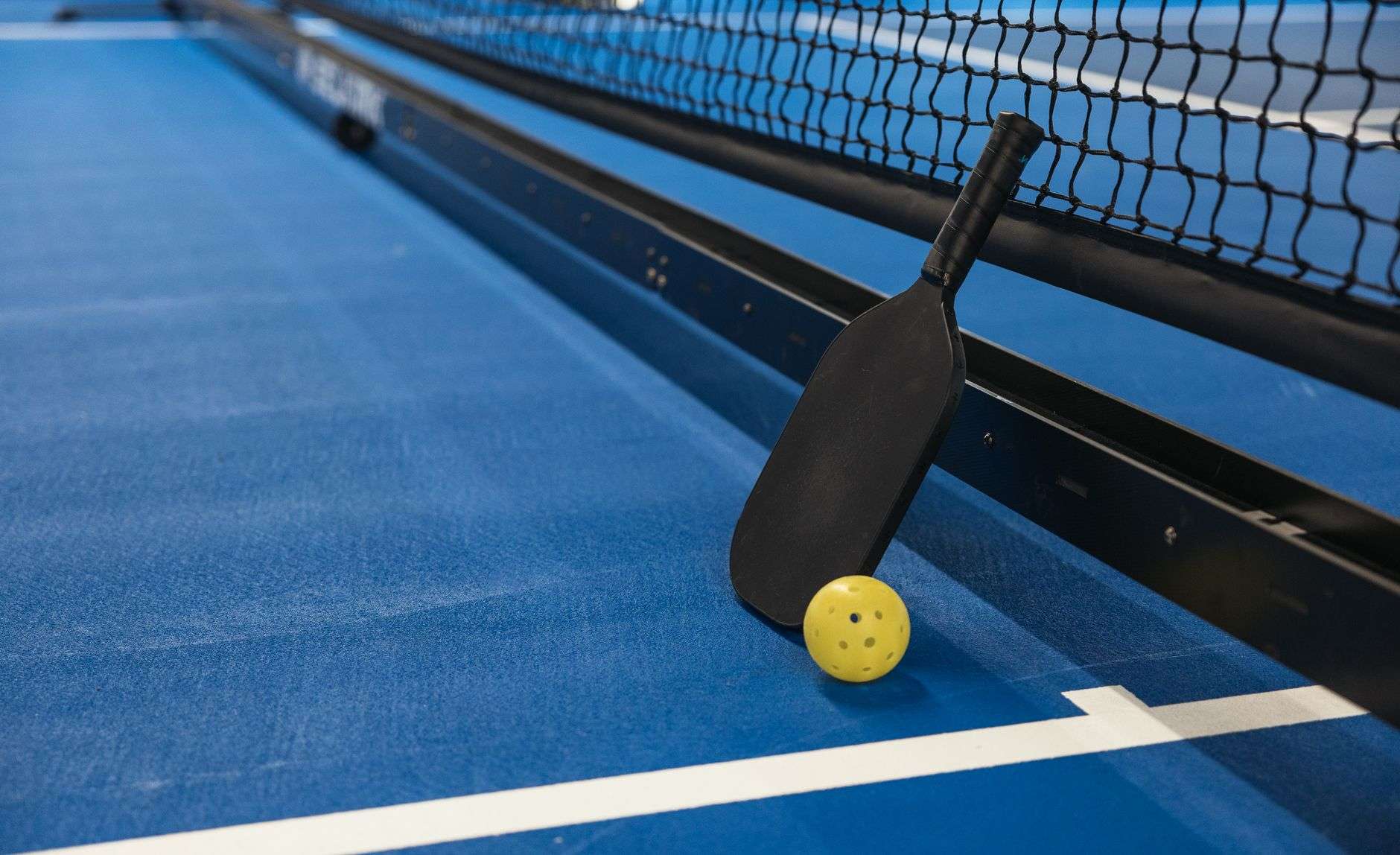
Pickleball players of all skill levels will gather in Foley next month for a tournament that doubles as a fundraiser for local schools, as the annual Foundation Paddle Classic returns to the Foley Pickleball Courts on Aug. 22.
Presented by Vulcan Inc., the one-day tournament features gender doubles play and benefits local education initiatives, with proceeds going toward resources, grants and opportunities for students and teachers throughout the community. The event is organized by the South Baldwin Chamber Foundation.
Play will take place at the Foley Pickleball Courts, located at 671 Kenny Stabler Avenue — a street that carries its own piece of Foley history. The road is named for Foley High School’s most famous graduate, the quarterback who starred for the Lions before winning a national championship at the University of Alabama and leading the Oakland Raiders to a Super Bowl. The city’s athletic credentials run deep, and the pickleball complex that hosts the tournament has become one of the newest anchors of a parks system that has grown alongside the city’s population.
Organizers describe the tournament as a day built around community competition, courtside fun and networking, all in service of raising money for a cause close to the area’s schools.
Spectators are welcome at no charge, and past editions of the event have drawn families, coworkers and school supporters who come to cheer on entrants as much as to watch the matches. Courtside seating and shaded areas around the complex give the day a festival feel that organizers say is part of the point — a fundraiser should feel like a gathering, not a gate. Local businesses have supported the event through the presenting sponsorship by Vulcan Inc. and smaller contributions, keeping overhead low so that entry fees translate into grants rather than costs.
How the Tournament Works
Teams of two will compete in gender doubles, with divisions organized by both skill level and age to keep matches competitive. Skill divisions include beginner, intermediate and advanced levels, while age brackets are split into 8-35, 35-50, 50-60, 60-69 and 70 and older.
Players may opt to compete in a lower age bracket than their own, but not a higher one, and tournament officials said age groups may be combined or split as needed to make sure brackets stay competitive and playable. That flexibility matters in a fast-growing sport whose player base now stretches from middle schoolers to octogenarians; a bracket with two teams is nobody’s idea of a tournament, and officials would rather merge two thin age groups than hand anyone a trophy by default.
The tournament will run as a round-robin followed by a playoff bracket. Round-robin play guarantees every team a full slate of matches against the rest of its pool — the format recreational players prefer, since entry fees buy a morning’s worth of games rather than a single-loss exit — before the top finishers advance to a playoff bracket that decides the division title.
Because the event is charity-focused, organizers noted that results will not affect players’ Dynamic Universal Pickleball Rating, or DUPR, letting competitors focus on the cause rather than their official ranking.
Gender doubles — men’s teams and women’s teams competing in separate draws — has been the backbone format of charity pickleball events across the Gulf Coast, keeping partner selection simple and fields balanced. Organizers of similar tournaments say the format also produces the day’s most social stretches: mixed warm-up courts, cross-draw friendships and a spectator crowd that stays through the afternoon finals.
The South Baldwin Chamber Foundation’s education mission gives the games their stakes. Grant checks funded by tournaments like this one have paid for everything from classroom technology to reading programs in south Baldwin County schools, and foundation leaders have framed events like the Paddle Classic as a way for the business community and the schools to meet outside the boardroom — on the courts, with paddles in hand, raising money that ends up in classrooms when the fall semester begins.
DUPR has become the de facto ranking currency of recreational pickleball, tracking results from sanctioned and club events into a single number that determines seeding — and sometimes partner eligibility — at competitive tournaments. Keeping the Paddle Classic outside that system is a deliberate choice by organizers: local players can play hard without a lopsided loss following them into their rating, and more casual entrants can pair up with friends regardless of their numbers.
Charity tournaments occupy a distinct niche in the sport’s ecosystem. Professional tours and sanctioned rankings events draw the competitive core of the game, but the local fundraiser — one day, one site, everyone welcome — is where most players first experience tournament pressure. Gulf Coast communities have embraced that model as pickleball has grown, from Mobile and Baldwin County to the Panhandle, with chambers of commerce and civic groups discovering that the sport’s famously social culture translates directly into fundraising turnout.
The Day’s Schedule
Player check-in and warm-ups are scheduled before competition begins, with exact times still to be announced. An opening ceremony and rules briefing are set for 7:45 a.m., with tournament play getting underway at 8 a.m. Organizers say a complete bracket schedule will be released closer to the event date.
An early start is standard for summer tournaments on the Gulf Coast, where August afternoons push heat indexes past 100 degrees and midday play becomes a safety question as much as a scheduling one. Players are advised to bring water, sun protection and extra grips; organizers typically build hydration breaks into the bracket, and shaded seating around the courts fills quickly once family members arrive.
Registration costs $40 per player and is handled through the Clever Pickleball registration platform. Participants are asked to register for only one event, and anyone needing to make changes after signing up should contact the tournament director directly.
The one-event rule keeps the day’s brackets moving on schedule — with multiple skill and age divisions sharing a finite set of courts, a player entered in two draws would create cascading delays across the schedule. Online registration through the Clever Pickleball platform lets organizers track entries by division in real time, close brackets that fill and flag the thin brackets that officials may need to merge before the final schedule posts.
The $40 entry covers the full day of round-robin and bracket play, with proceeds flowing to the South Baldwin Chamber Foundation’s education programs. The foundation, the charitable arm of the South Baldwin Chamber of Commerce, channels support to teachers and schools across the south end of Baldwin County — grants that fund classroom supplies, innovative projects and opportunities that school budgets do not always reach. Fundraisers like the Paddle Classic have become a fixture of how Baldwin County’s chambers bridge the gap between fast-growing school enrollment and the resources that follow it.
A Sport’s Rapid Rise
The Foundation Paddle Classic reflects pickleball’s continued growth as one of the fastest-rising recreational sports nationally, a trend that has taken hold across Baldwin County’s network of dedicated courts.
The sport’s appeal is easy to explain and hard to overstate: a court a third the size of a tennis court, a paddle lighter than a racket, and rules simple enough for a first-timer to follow within minutes — all of which make generations of a single family competitive on the same afternoon. Municipalities across Baldwin County have responded by converting tennis courts and building dedicated complexes, and Foley’s courts have become a regular gathering place for the area’s expanding league and drop-in play scene.
The growth shows up in the numbers as much as the parking lots. Pickleball participation nationwide has climbed year after year, with equipment makers, court builders and municipal parks departments all racing to keep pace, and Alabama’s coastal communities — where retirees and winter visitors meet a year-round playing season — have been ahead of the curve. What began a decade ago as a handful of converted tennis courts has become a network of dedicated facilities, organized leagues and regular tournaments that fill weekends from spring through fall.
For Foley, the tournament doubles as a showcase for a parks system that has become part of the city’s draw. The city has invested steadily in recreational amenities as its population has grown, from sports fields to the recreation center that anchors its civic campus, and the pickleball courts on Kenny Stabler Avenue sit within easy reach of the shops and restaurants of downtown Foley. Visitors coming in for the tournament — from across Baldwin County and from Pensacola and Mobile — will find the kind of one-day trip that has become Foley’s specialty: competition in the morning, lunch downtown, and a cause served by the end of it.
More information and registration details are available through the South Baldwin Chamber Foundation, or by contacting Christy Bledsoe at [email protected] or (251) 943-1062.