

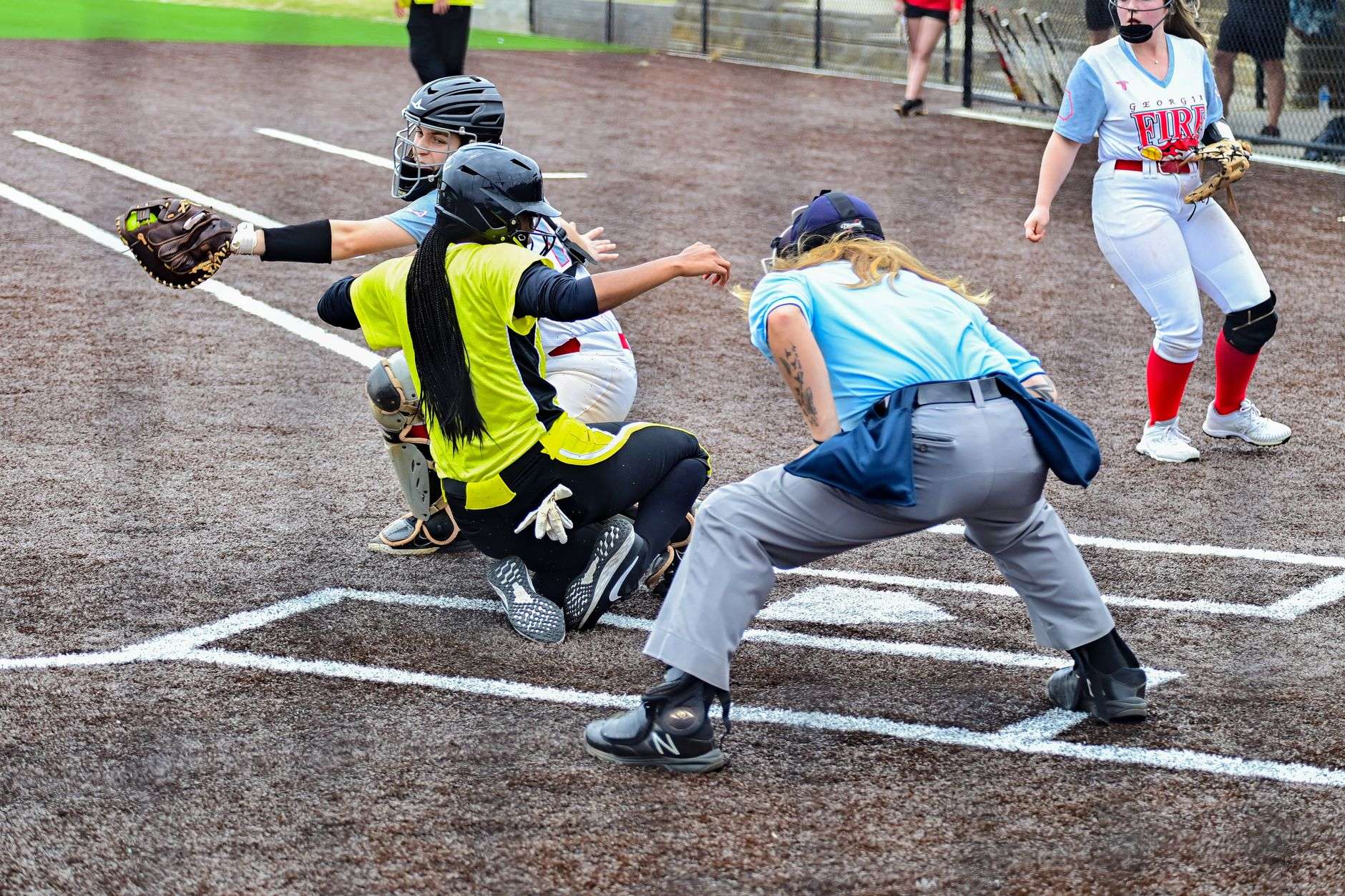
Before a single pitch was thrown at this year’s Native Classic Softball Tournament, players, coaches, family members and members of the Poarch Creek Indians Tribal Fire Department lined the baselines at Field No. 1 in Poarch for a moment of remembrance.
The pregame ceremony honored Ronnie Ray “Pookie” Jackson, a longtime tribal leader and beloved figure in the local baseball and softball community who died shortly after last year’s tournament wrapped up. The tribute marked one of the most visible community gatherings in Poarch this summer, drawing together generations of families connected through youth sports, tribal service and years of shared memories on the diamond.
Who Was Ronnie ‘Pookie’ Jackson
Jackson wore several hats throughout his years of service to the Poarch Creek community. He served as the tribe’s fire chief, leading the Poarch Creek Indians Tribal Fire Department, and he also held a seat on Tribal Council, giving him a direct hand in shaping decisions that affected the community he loved.
Alongside that public service, Jackson was a fixture at the ballfields, coaching, mentoring and supporting youth and adult baseball and softball players for years. That dual legacy of civic service and sports mentorship is part of why his death, coming not long after the close of the 2025 Native Classic Softball Tournament, hit the community so hard.
For many who play in the tournament each year, Jackson was not just an organizer or a familiar face at the fence — he was, as longtime player Mal McGhee put it, a “baseball hero.”
The combination of roles is worth sitting with. In small communities, the people who lead public institutions and the people who run the ballfields are often different people; Jackson was both at once. A fire chief answers calls on the worst days of a family’s life, and a youth coach spends ordinary evenings teaching kids how to turn a double play. Holding both jobs in a community the size of Poarch means being known, personally and completely, to nearly everyone — which is exactly how he was remembered at Field No. 1.
The Tribal Fire Department that Jackson commanded is one of the clearest expressions of the tribe’s self-governance. Fire protection in rural Escambia County is otherwise a patchwork of volunteer departments stretched across wide territories, and a tribal department with its own chief, apparatus and staffing gives Poarch a level of coverage and control a small community could not otherwise guarantee. Leading that department, as Jackson did for years, means standing up the budget, the training and the response culture from the ground up.
His seat on Tribal Council placed him on the other side of the same equation — the governing body that funds and directs the services he helped deliver. Tribal Council members answer directly to the community’s enrolled citizens, and decisions about public safety, education and community programs pass through that chamber. Few officials anywhere hold both the administrative and the policy end of public safety at once; Jackson did, and colleagues say he treated the two roles as one continuous job.
A Ceremony Rooted in Community
The pregame tribute brought out a wide cross-section of the Poarch Creek community. Family members stood alongside teammates and coaches who had played for or with Jackson over the years, while members of the Tribal Fire Department turned out in a show of solidarity with the department’s late chief.
The gathering along the baselines reflected how deeply Jackson’s influence stretched across both the tribe’s public safety operations and its recreational sports programs. Firefighters who served under him stood on the same lines as the players he coached, a picture of the two halves of his working life in a single moment.
Moments like this are common at the Native Classic Softball Tournament, an event that has grown into a signature gathering for the Poarch Creek Indians and visiting Native softball teams from across the region. The tournament combines competitive play with cultural connection, giving families a reason to travel to Poarch, reconnect with relatives and friends, and celebrate community identity through sport.
Tournaments of this kind do more than fill a weekend. Visiting Native teams from across the Southeast bring families, fans and spending into the Poarch community, and the games themselves run on a volunteer infrastructure — scorekeepers, grounds crews, concession stands — that depends on exactly the kind of long-term commitment Jackson represented. Honoring a departed organizer before the first pitch is a tradition that says as much about the event’s character as it does about the person honored.
The geography of the community matters in understanding the gathering. Poarch sits in the rolling farmland of Escambia County a short drive north of Atmore, and the tribe’s lands and enterprises anchor a community that extends well beyond the tribal reservation itself. Families in Poarch, Atmore and the surrounding communities share schools, churches and ballfields, and events at the sports complex draw from all of it at once.
Youth sports hold a particular weight in communities like this one. Summer softball and baseball are where children from different families and generations meet, where volunteer coaches put in years of unpaid evenings, and where the adults running the complex quietly become the community’s institutions. When one of those people is lost, the tournament that depends on them becomes the natural place for the community to gather and say so.
A Lasting Memorial
To ensure Jackson’s contributions are remembered well beyond this year’s tournament, tribal officials placed a permanent memorial near the concession stand at the sports complex, detailing his years of service and his impact on the community.
In an even more lasting tribute, the athletic complex itself has been renamed the Ronnie Ray Jackson “Pookie” Memorial Sports Complex, cementing his name into the fabric of Poarch’s recreational and civic life for years to come.
The renaming ensures that every team that steps onto the fields in Poarch — whether for the Native Classic Softball Tournament or another local event — will do so on a complex that carries Jackson’s name and legacy forward. For the youth players who will grow up knowing the fields by that name alone, the memorial is less a history lesson than a permanent part of the landscape of their summers.
The Native Classic itself has become the summer’s centerpiece by design. What began as a community softball gathering has grown into a regional draw that brings Native teams from across the Southeast to Poarch each year, filling the complex with tournaments brackets, family reunions and vendors over a weekend that doubles as homecoming for families spread across state lines. The tournament’s organizers have long treated that wider role — cultural gathering as much as competition — as the point of the event, and this year’s opening ceremony fit that identity exactly.
For the visiting teams, the moment of remembrance offered a picture of how the host community sees itself. Softball weekends across the region tend to run on the same volunteer labor and the same quiet institutional knowledge, and players from other tribal communities recognized in the tributes the kind of figure their own home fields depend on. The applause that followed, from visitors as much as from the home crowd, said that Jackson’s story landed well beyond the fences at Field No. 1.
Renaming an athletic complex is among the highest community honors a sports figure can receive, and it is rarely bestowed on the strength of one contribution. In Jackson’s case the record spanned departments and decades — the fire service, Tribal Council, coaching benches — and the memorial plaque near the concession stand now tells that story to every visiting team that stops for a drink between games.
Poarch’s Place in Escambia County
Poarch is home to the Poarch Band of Creek Indians, Alabama’s only federally recognized Native American tribe, located in Escambia County near Atmore. The tribe operates its own government, public safety departments and community services, including the Tribal Fire Department that Jackson once led.
The tribe’s federal recognition in 1984 marked the culmination of decades of self-organization, and the Poarch Band has since built a governmental structure that includes tribal courts, public safety services, education programs and economic enterprises that support services for tribal members. The Tribal Fire Department Jackson led is part of that infrastructure, protecting a community that sits well outside the response areas of the county’s municipal departments.
Community events such as the Native Classic Softball Tournament play an important role in tribal life, offering a chance to celebrate athletic tradition while reinforcing bonds among tribal members, neighboring communities and visiting Native teams.
For residents across Escambia County and the greater Poarch and Atmore area, the tribute to Jackson is a reminder of how deeply intertwined public service and community sport can become in a small, tight-knit region — and how a single figure’s dedication to both can leave a mark that outlasts a single tournament season.
The tournament will go on every summer, as it did this year, with new champions and new generations of players. But at the complex that now carries his name, the season begins the way it did this weekend: with a community standing together on the baselines, remembering the man who spent a lifetime making those fields what they are.