

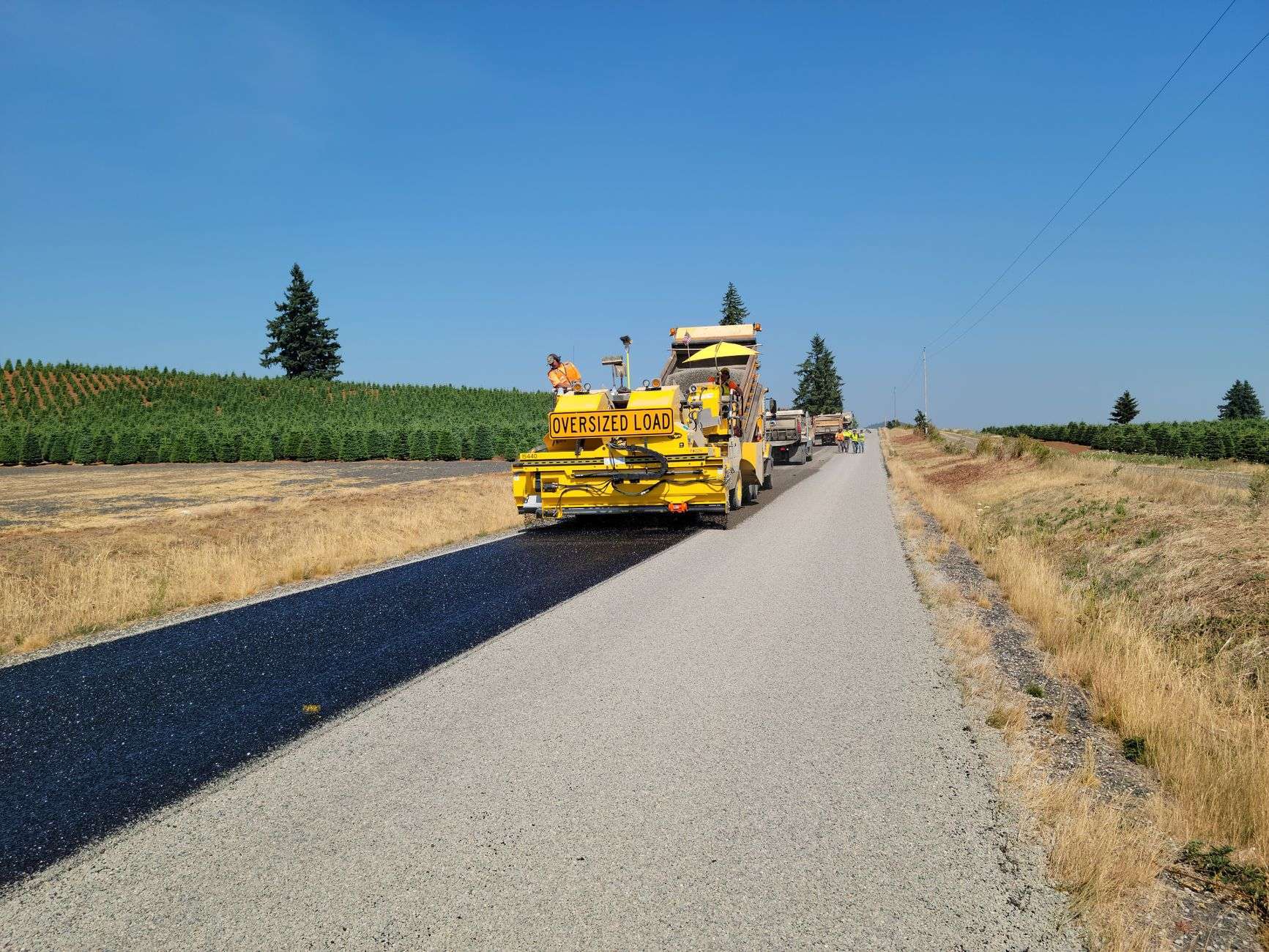
The Poarch Band of Creek Indians has been awarded a $24 million federal grant to overhaul Jack Springs Road, marking the largest single federal roadway grant the Tribe has ever received.
The funding, awarded through the U.S. Department of Transportation’s Federal Highway Administration, will pay for a four-phase infrastructure improvement project designed to modernize one of the primary corridors serving the Poarch community in Escambia County.
Tribal leaders say the award reflects years of planning and advocacy aimed at addressing long-standing safety and capacity concerns along the roadway, which serves tribal government offices, housing, businesses and community facilities in the Poarch area.
A Historic Investment for the Tribe
Tribal Council Member Keith Martin described the grant as a milestone moment for the Poarch Band of Creek Indians, calling it a historic investment in the safety and quality of life of tribal citizens and neighboring residents.
Federal highway grants of this size are typically reserved for major regional transportation corridors, making the award notable both for its scale and for what it signals about the growing infrastructure needs of the Poarch community as it continues to expand.
The comparison is worth sitting with. A $24 million award puts a tribal corridor in the same funding conversation as state-route widenings and urban arterial projects — categories the Poarch Band spent years learning to compete in. Federal transportation programs reward sponsors who can document need, marshal data and manage construction at professional standards, and the Tribe’s ability to win at this level reflects institutional capacity built over two decades of economic growth.
Jack Springs Road has long served as a key connector for residents, tribal employees and visitors moving through the area, and tribal officials have indicated that the upgraded corridor is intended to better accommodate current and future traffic while improving conditions for drivers, pedestrians and emergency responders alike.
The road carries more than commuter traffic. Tribal government operations, the community’s housing areas, its business enterprises and the facilities that host visitors all draw on the same corridor, and daily volumes that grew with the Tribe’s enterprises had begun to outpace a roadway designed for a smaller community.
What the Four-Phase Project Involves
The improvement initiative is structured in four phases, allowing crews to manage construction in manageable segments while limiting the overall disruption to traffic along the corridor.
Officials say the full project is expected to take approximately two years to complete, with a target completion date of March 2028.
Phasing a project across two years is the standard approach for corridor work, and it matters to the people who use the road every day. Rebuilding a road in a single sustained closure would be faster for the contractor and intolerable for the community; segmenting the work keeps at least part of the corridor usable at all times, at the cost of a longer overall schedule and repeated adjustments to traffic patterns.
Phase 1 of construction, valued at roughly $4 million, is set to begin with temporary road closures near Judson Cemetery scheduled for Aug. 5 through Aug. 10.
Drivers who regularly use that stretch of Jack Springs Road should plan for detours during that window, and officials have encouraged residents to watch for posted signage and updated traffic patterns as work gets underway. Starting the project near the cemetery also gives crews a contained, low-volume segment to establish their staging, sequencing and traffic-control plan before the work reaches the corridor’s busier sections.
Staying Informed Throughout Construction
To help keep the public informed as work progresses through each phase, a dedicated project webpage is being established to provide ongoing construction updates, closure notices and detour maps. Officials say the page will serve as the primary resource for residents, commuters and local businesses looking to track the project’s progress and plan around temporary road closures over the coming two years.
The communication plan is not a formality. Two years of construction on a corridor this central means hundreds of small daily decisions — which route to take to work, whether a delivery will arrive on time, how to reach a medical appointment on the far side of a closure. Communities that handle such projects well are the ones where the schedule is published and kept current, and tribal officials’ emphasis on the webpage suggests they understand that.
Multi-year infrastructure projects of this size often require coordination between construction crews, tribal government and local emergency services to minimize disruptions, and residents in Escambia County can expect additional public notices as later phases of the Jack Springs Road project move forward.
Emergency access deserves particular attention in any corridor rebuild. Fire, ambulance and law enforcement response times depend on uninterrupted routes, and each phase’s closure plan has to be reviewed against the area’s emergency coverage before detours go into effect. That coordination happens mostly out of public view, but it is among the most consequential parts of the project’s management.
What It Means for Escambia County
Road and bridge investments funded through Federal Highway Administration grant programs are designed to improve safety, reduce congestion and support long-term economic growth in the communities they serve.
For Escambia County, the Jack Springs Road project represents a significant infusion of federal infrastructure dollars into a rural corridor that has seen steady growth in recent years alongside the expansion of tribal government services and facilities in the Poarch area.
The benefits will not stop at the tribal boundary. Jack Springs Road serves non-tribal residents, school traffic, freight and through travelers alike, and the safety improvements — better geometry, upgraded intersections, accommodation for pedestrians — will accrue to everyone who uses the corridor. County emergency services and neighboring municipalities also gain from a main road rebuilt to modern standards.
The award also reinforces the Tribe’s role as an economic engine in a rural part of the state. The Poarch Band is Escambia County’s largest employer and one of the most significant tribal economies in the eastern United States, and its ability to attract federal infrastructure investment extends that position: every dollar of road work supports construction employment locally and lowers the transportation costs of everything the community builds afterward.
As construction begins in the coming days, tribal and county officials alike are expected to monitor the project closely, with Phase 1 serving as an early test of how smoothly the broader, multi-year effort will unfold.
First phases set the tone for every project that follows. If the initial closures, detours and communications go as planned, residents’ patience through the remaining three phases becomes easier to ask for; if the first week produces confusion, the project’s credibility suffers for two years. That dynamic is well understood by the officials managing the work, which is why the webpage, the signage and the advance notice of the Judson Cemetery closures received as much attention as the engineering itself.
For now, residents are being asked for patience during the initial closures as the first phase of a project years in the making finally gets underway. When the work is finished in 2028, the corridor that carries the community’s daily life will have been rebuilt for the traffic, the safety standards and the growth the next two decades will bring — a fitting return on the largest roadway investment the Tribe has ever secured.
The Corridor’s Role in the Community’s Growth
The Poarch Band’s reservation and surrounding community sit in rural Escambia County, north of Atmore, and Jack Springs Road functions as the connective tissue for nearly everything the Tribe operates there. Government offices, housing developments, community facilities and the commercial enterprises that fund tribal services all generate trips along the same stretch of pavement each day — employee commutes, visitor traffic, service and delivery vehicles, and the ordinary errands of residents who live along it.
Roads that grow gradually with a community tend to lag behind it, and Jack Springs Road followed that pattern. Each new facility added traffic that the original design never anticipated, and the safety concerns that accumulate with volume — turning conflicts, narrow shoulders, gaps in pedestrian accommodation — become harder to fix piecemeal. A full-corridor rebuild is the response of an institution that has decided to solve the problem once, systematically, rather than patch it annually.
The four-phase structure maps onto that logic. Each segment is redesigned as part of a whole: drainage, intersections and access points considered corridor-wide rather than lot by lot, so the finished road functions as a unified piece of infrastructure instead of a patchwork of prior repairs.
For tribal planners, the grant also validates years of preparation that never made headlines. Federal highway applications demand engineering studies, traffic counts, environmental review and matching commitments — documents assembled long before any announcement. The $24 million award is the visible result of an invisible, multi-year effort to put the Tribe’s transportation needs on the federal agenda and keep them there until the funding cycle produced an answer.
That answer, delivered in the largest roadway grant in the Tribe’s history, will now be measured in a more concrete currency: two years of construction notices, a corridor reopened in stages, and, by March 2028, a road built for the community that grew up along it.