Prichard Data Center Moratorium Extended as Residents Press for a Say in Future Projects
Prichard's pause on data centers will last longer after residents packed a council meeting, but a roughly $93 million project on Telegraph Road already holds a building permit.
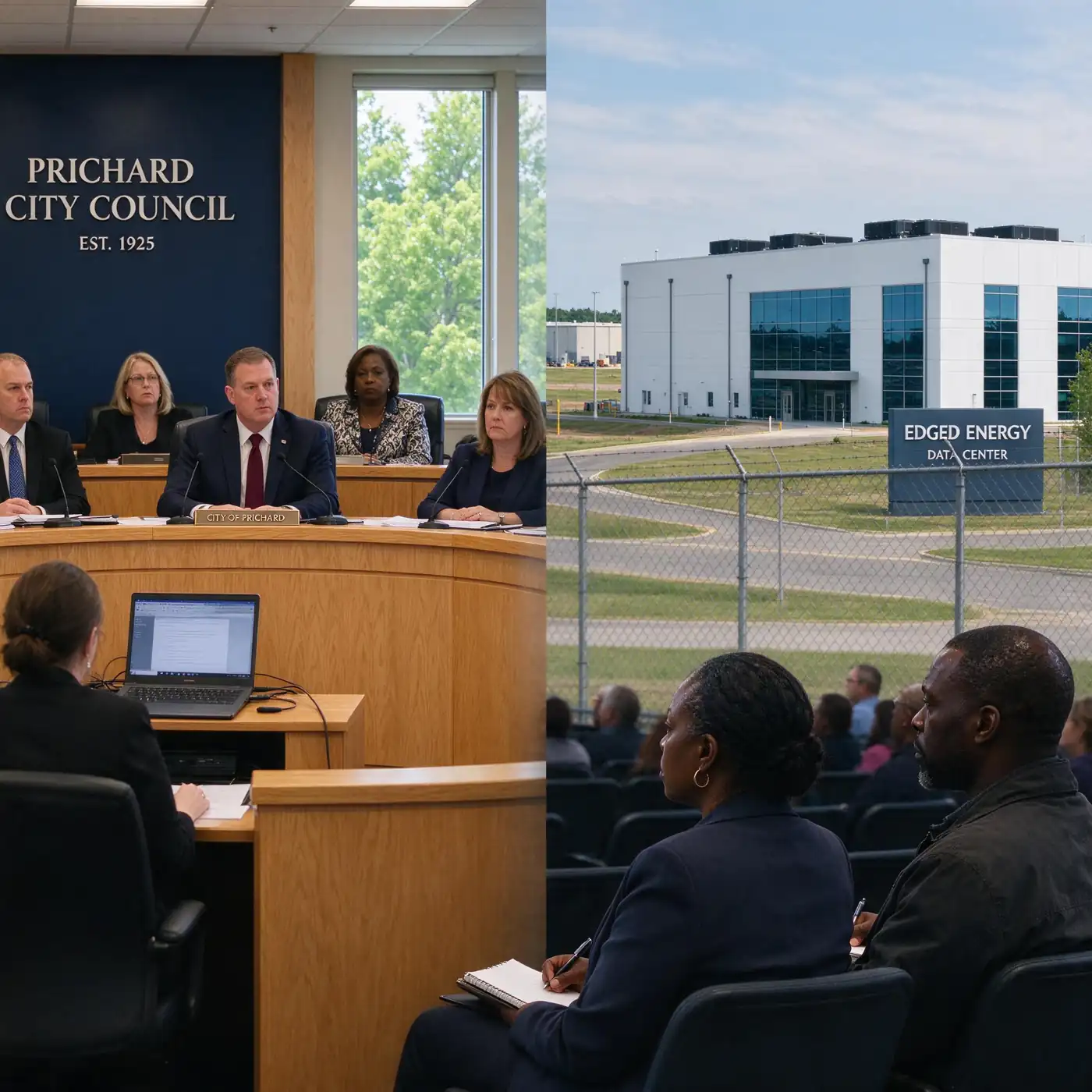
PRICHARD, Ala. — Developers hoping to build data centers in Prichard will have to wait a while longer. Prichard’s City Council voted Monday, Nov. 23, to extend the Prichard data center moratorium, buying the city additional time to study how the facilities could affect the community and to write rules for them.
The decision came at a meeting that drew more than two dozen residents, many of whom came to share their worries about data center proposals and what those projects could mean for their neighborhoods.
Even with the pause in place, one project is already further along. The city had already issued a building permit for the Edged Energy Data Center, with a Telegraph Road location, before the first moratorium took effect. City leaders said the project has not yet obtained a business license, and they see that gap as a window to set the terms for how it will operate in Prichard.
Key Points From Monday’s Meeting
- The council voted to extend the city’s moratorium on data centers.
- The extension lets the city spend more time studying possible effects and drafting regulations.
- More than two dozen residents turned out, many of them worried about data center proposals.
- The Edged Energy Data Center on Telegraph Road is a project of roughly $93 million.
- That project’s building permit was issued before the moratorium first took effect, but it does not yet have a business license.
Residents Fill the Council Chamber
Turnout at Monday’s meeting reflected how closely some residents are following the issue. Concerns aired at the meeting centered on the burden data centers could place on the community and on how much influence neighbors would have over any project that comes their way.
A resident told the council she is worried that data centers would put extra stress on local utility systems. She said a newcomer to the community either piles onto residents’ worries and burdens or helps lift them out of hard circumstances, and that so far it does not look to her as though lifting people up is what the projects have in mind.
She also urged the city to make sure residents have a voice in any project planned for their neighborhoods. If a data center is going to be built near her home, she told the council, she wants to have a real stake in it, to be fully informed about it and to know how the facility will be held accountable to her and her fellow residents.
City Leaders Want the Rules in Writing
City leaders said it is important for Prichard to decide what it wants from data centers and to spell those expectations out in writing. They said those standards should be shaped by what residents say they need and want.
That approach is the purpose of extending the moratorium. Rather than evaluating projects one by one without clear standards, the city intends to use the added time to research the possible effects of data centers and draft regulations that would apply to them.
Residents who want to follow the process can watch for the topic on upcoming council agendas, where any proposed data center ordinance would appear before a vote.
A $93 Million Project Already in the Pipeline
Among the data center proposals in Prichard, only the Edged Energy project has already cleared a major hurdle. The project, valued at roughly $93 million, would sit along Telegraph Road and secured its building permit ahead of the city’s original moratorium.
Because the permit came first, the moratorium did not stop that approval. But city leaders said the developer still has not received a business license. In their view, that gives Prichard time to craft an ordinance governing how data centers do business within the city.
Permits Versus Licenses: Why the Difference Matters
Prichard is a city in Mobile County, just north of Mobile, and like other Alabama municipalities it handles a range of approvals for new development, from building permits to business licenses. Those approvals happen at different stages and answer different questions.
In most cities, a building permit and a business license serve different purposes. A building permit is tied to construction. It confirms that plans for a structure meet building codes and other requirements and allows work to proceed on the site.
A business license, by contrast, is generally required for a company to operate within city limits. Alabama cities commonly require businesses to hold a municipal license, and the license process is one of the points where a city has regular contact with a business that operates inside its boundaries.
City leaders indicated that the business license stage is where they see room to shape how the Telegraph Road project will function in Prichard, through an ordinance written before that license is issued.
Why Data Centers Draw Scrutiny Nationwide
Data centers are large buildings filled with computer servers that store information and power online services, from streaming video and cloud storage to artificial intelligence tools. Demand for them has grown quickly in recent years, and developers have been looking for sites across the country, including in the South.
The facilities come in many sizes. Some are modest buildings serving a single business or a handful of customers, while others are sprawling campuses run by major technology companies, with several large buildings on one site. The scale of a project has a big influence on how much land, power and water it needs.
Their appetite for resources is the main reason communities take a closer look. Data centers can use very large amounts of electricity to run and cool their servers, and some cooling systems rely on significant volumes of water. That has led residents in many places to ask whether local power grids and water systems can handle the demand, and who will pay if upgrades are needed.
Other common concerns include noise from cooling equipment and backup generators, the amount of land the facilities occupy and how many permanent jobs they create once construction ends. Supporters often point to the property tax revenue and construction work that large projects can bring. Weighing those trade-offs is the kind of research a moratorium is meant to allow.
Utility questions often go beyond a single building. When a large new customer connects to the grid, utilities may need new substations, transmission lines or generation, and communities frequently want to know whether those costs could show up on household bills. Water systems face similar planning questions when a facility’s cooling needs are significant.
How the Prichard Data Center Moratorium Fits a Wider Trend
A moratorium is a temporary pause that a local government places on certain kinds of development or approvals. It is not a permanent ban. Instead, it freezes new applications or approvals for a set period so that officials can study an issue and adopt rules before more projects move forward.
Cities and counties in several states have used moratoriums in recent years as data center proposals arrived faster than local codes could address them. Many local zoning and licensing codes were written before large data centers were common, so they may not say where such facilities can be built or what standards they must meet for noise, buffers, utilities or water use.
Once the research is done, a city typically drafts an ordinance, presents it at a public meeting and votes on whether to adopt it. When a city decides it needs more time to finish that work, it can vote to extend the pause, as Prichard’s council has now done.
Data center ordinances adopted in other communities have dealt with a range of topics. Some limit the facilities to certain zoning districts, such as industrial areas. Others set minimum distances from homes, require landscaped buffers or sound walls, cap noise levels at property lines or ask developers to disclose expected electricity and water use. Some cities have also negotiated agreements that spell out what a project will provide to the surrounding community. Which, if any, of those approaches Prichard chooses will depend on the research the city does during the extended pause and on what residents tell their leaders.
What Comes Next for Prichard Residents
For now, the moratorium remains in place while the city studies data centers and works toward regulations. Any ordinance that results would come before the council, giving residents another chance to weigh in.
Questions that often come up in data center debates elsewhere could help frame the discussion in Prichard: how much power and water a facility would draw, who would bear the cost of any utility upgrades, how neighbors would be notified about projects near their homes and how a company would be held accountable for its commitments.
Residents who want their views considered can attend council meetings, speak during public comment periods and contact their council members directly. Watching meeting agendas is the most reliable way to know when data center rules are up for discussion or a vote.
City leaders have pointed to the Telegraph Road project’s business license as the stage where those rules could first come into play. How Prichard balances the interests of developers with the concerns voiced Monday will shape what data center growth, if any, looks like in the city.