Busy Holiday Kitchens Put Restaurant Food Safety Under the Spotlight in Mobile County
As holiday crowds fill dining rooms, Mobile County Health Department inspectors are urging restaurant crews to stick to the basics that keep diners from getting sick.
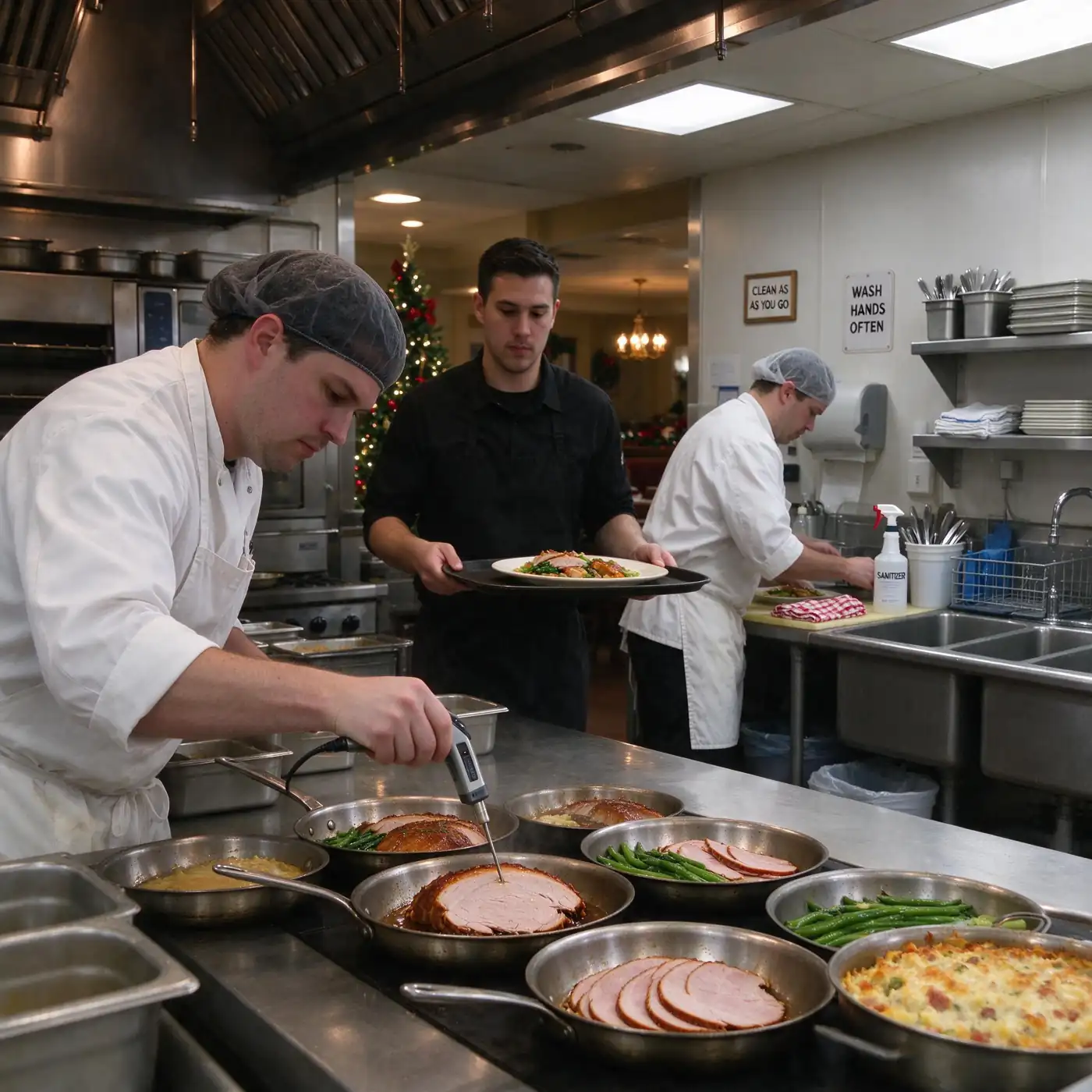
MOBILE, Ala. — The weeks between Thanksgiving and New Year’s Day are among the busiest of the year for many local restaurants, and Mobile County health inspectors want kitchen crews to keep restaurant food safety at the top of the order ticket. The Mobile County Health Department is reminding restaurants and food service workers that preventing foodborne illness matters even more when dining rooms are packed.
The department said the season brings bigger crowds, special holiday menus and catered gatherings. All of that adds pressure in the kitchen, and as the pace picks up, so does the chance that someone cuts a corner.
The reminder is aimed at everyone who handles food, from line cooks and servers to dishwashers and managers. Its central point is that the fundamentals should not slip, no matter how long the wait list grows.
Why the Holiday Rush Raises the Stakes
The health department’s inspection staff said that heavier volume and seasonal stress make it essential for every person on a restaurant team to hold to high standards. A kitchen that runs smoothly on a slow Tuesday can look very different on a crowded Saturday in December, when orders stack up and extra hands may be new to the job.
Holiday menus can add to the challenge. Large roasts, casseroles and other dishes prepared in big batches take longer to cook through and longer to cool, which leaves more time for bacteria to grow if temperatures are not watched. Catering orders and private parties can also mean food is transported, held for long periods or served buffet-style.
The department said kitchens that stay alert can head off outbreaks, protect their customers and avoid expensive citations or even closures. The county’s health department added that top-notch food safety is the most important thing a restaurant can give its customers, and that is especially true at this time of year.
The Restaurant Food Safety Mistakes Inspectors See Most
According to the department’s inspection staff, most of the violations they find, particularly during the holidays, come down to skipped basics rather than complicated failures. Four problems come up again and again:
- Workers not washing their hands when they should.
- Foods not cooked to the right temperatures.
- Prep areas not cleaned thoroughly.
- Foods held at the wrong temperatures while waiting to be served.
Each of those lapses gives harmful germs a chance to spread or multiply. The sections below look at how the department’s reminders address each one, along with widely used food-safety standards that help explain them.
Clean Hands and No Bare-Hand Contact
The department’s first reminder is strict hand hygiene. Workers should wash thoroughly and often, and they should use gloves or utensils, rather than bare hands, when touching foods that are ready to eat.
That rule matters because ready-to-eat items, such as salads, sandwiches, garnishes, bread and desserts, will not be cooked again before they reach the customer. Any germs passed from a worker’s hands have nothing to kill them. Federal food-safety guidance for restaurants generally calls for scrubbing with soap and warm water for about 20 seconds, then drying with a single-use towel or air dryer.
Gloves are not a substitute for handwashing. Hands should be washed before gloves go on, and gloves should be changed when they tear, when they become soiled or when a worker switches from raw meat to ready-to-eat food.
Temperatures: Cook It Right, Then Hold It Right
The health department urged kitchens to rely on a food thermometer to confirm that proteins have reached safe internal temperatures. It said cooks should never judge whether something is done just by how it looks or feels. Poultry, for example, is considered safe at 165 degrees Fahrenheit.
Cooking is only part of the job. Inspectors also check how food is kept after it is cooked or before it is served. Under the U.S. Food and Drug Administration’s model Food Code, which many states use as the basis for their restaurant rules, hot foods generally must be held at 135 degrees or above and cold foods at 41 degrees or below. The range in between is where bacteria grow fastest.
Cooling leftovers and make-ahead dishes is another common trouble spot, especially with the big batches that holiday menus bring. Spreading food into shallow pans, using ice baths and stirring help bring temperatures down quickly and safely. The FDA Food Code calls for cooked food to drop from 135 degrees to 70 degrees within two hours, and then to 41 degrees or below within the next four hours.
A thermometer is only useful if it is accurate. Many kitchens check their probe thermometers regularly with an ice-water test, in which a properly calibrated thermometer should read 32 degrees. Probes should also be cleaned and sanitized between uses, especially when a cook moves from raw meat to a finished dish.
Clean and Sanitize at Every Stage
The department’s guidance calls for cleaning and sanitizing all utensils and surfaces that touch food before prep begins, while it is underway and after it wraps up. That means cutting boards, knives, prep tables, slicers, mixing bowls and serving utensils.
Cleaning and sanitizing are two different steps. Cleaning removes visible food and grime with soap and water. Sanitizing then reduces the remaining germs to safe levels, usually with an approved chemical solution or very hot water. Sanitizer works best on a surface that has already been cleaned, which is why both steps matter.
During a rush, it can be tempting to give a work area a quick wipe and move on. Those hurried moments are when germs from raw meat are most likely to find their way onto foods that will not be cooked again.
Extra Care for Catering, Buffets and Takeout
The holidays bring a surge in large orders, office parties and family gatherings that rely on restaurant food served away from the restaurant. Those meals can sit out longer and travel farther than a plate carried from the kitchen to a table, which makes temperature control even more important.
Insulated carriers, chafing dishes with working heat sources and containers set over ice all help keep food out of the range where bacteria grow quickly. Labeling trays with the time they left the kitchen can help staff and customers know how long food has been out.
Diners who take home leftovers or catered trays also share responsibility. U.S. Department of Agriculture guidance calls for refrigerating perishable food within two hours, or within one hour when it has been sitting somewhere hotter than 90 degrees, and reheating leftovers to 165 degrees before eating.
Sick Workers Stay Home
The department was clear that an ill employee should never prepare or serve food. It said managers are legally required to keep sick workers out of food duties until they are well again.
That rule can be hard to follow when a restaurant is short-staffed during its busiest weeks, but public health agencies consider it one of the most effective ways to prevent outbreaks. The Centers for Disease Control and Prevention has identified norovirus, which spreads easily through contaminated food and surfaces, as a leading cause of foodborne illness outbreaks in the United States, and infected food workers are a frequent source.
Workers with symptoms such as vomiting or diarrhea should tell a manager before their shift, and managers should have a plan for covering those shifts so no one feels pressured to come in sick.
Paperwork Counts as Much as the Kitchen Floor
The department’s final reminder for restaurants is about records. Kitchens should keep written logs of temperature checks, cleaning schedules and staff training. In 2026, the department said, those records carry as much weight as the physical inspection itself.
Training records matter for a similar reason. Seasonal hires and new employees may not know a kitchen’s routines, and holiday turnover can leave a team with less experience than usual. Making sure every worker knows the handwashing, temperature and sanitizing rules before a busy shift is one of the simplest protections a manager can put in place.
Good records show that safe practices are happening every day, not just on the day an inspector visits. Temperature logs can also help managers spot a cooler or hot-holding unit that is starting to fail before it puts food at risk.
How Diners Can Check a Restaurant’s Rating
Customers can play a part too. The health department offers a database of restaurant ratings that users can search through its smartphone app, called My MCHD Health Check. The app costs nothing and is available on Google Play and the App Store; typing its name into either store’s search bar will bring it up.
Anyone who believes they got sick from something they ate at a restaurant can also contact the health department. Public health agencies generally look into complaints of suspected foodborne illness, and hearing from more than one diner can help investigators spot a problem early and keep others from getting sick.
Checking a rating before booking a holiday dinner or ordering a catered tray takes only a moment. Together with careful work in the kitchen, that kind of attention can help make sure the season’s meals are remembered for the right reasons.