Thanksgiving Health and Safety: A Day-by-Day Plan for Mobile County Cooks, Hosts and Guests
From thawing the turkey days ahead to checking on loved ones after dinner, the Mobile County Health Department has a game plan for a healthier Thanksgiving at home.
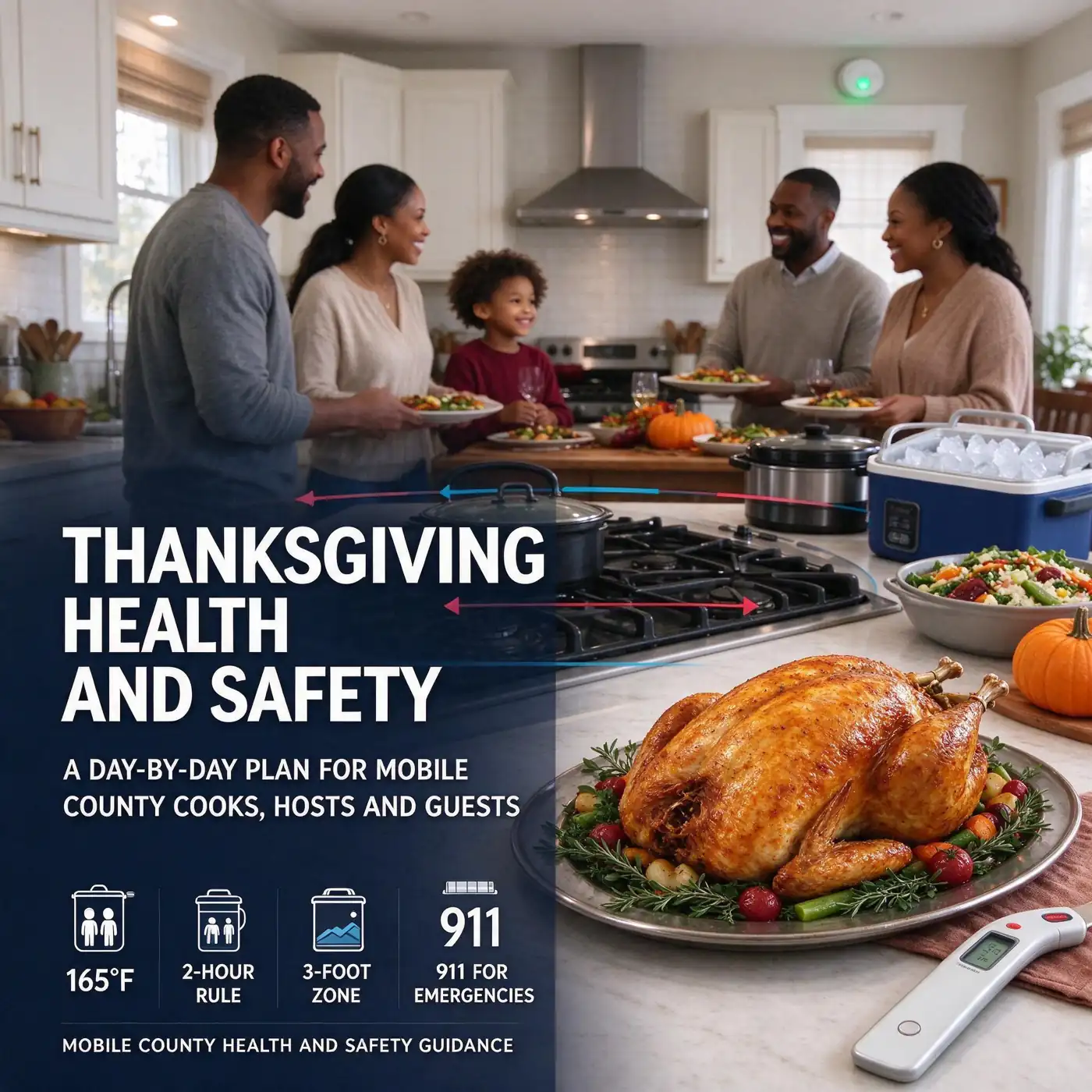
MOBILE, Ala. — A safe holiday meal starts long before anyone carves the turkey. With Thanksgiving arriving Thursday, Nov. 26, officials at the Mobile County Health Department are urging households to treat Thanksgiving health and safety as part of the menu, from how the bird is thawed to how families spend the hours after dinner.
The department’s advice covers three areas: keeping germs out of the food, keeping fires and burns out of the kitchen, and carving out time for the relationships that keep people well. Its message is that a bit of planning helps everyone around the table stay healthy and safe.
The county’s health department said families should handle and cook food correctly, keep a close watch on the stove and set aside time for the people they care about. Below, that guidance is laid out in the order most households will need it.
Days Ahead: Give the Turkey Time to Thaw
For many cooks, the first Thanksgiving task happens days before the holiday. The health department recommends thawing a frozen turkey in the refrigerator and budgeting roughly a full day of thawing for every five pounds of bird. By that math, a 20-pound turkey needs about four days in the fridge, which means a bird of that size should be moved from the freezer by Sunday for a Thursday meal.
The department warned against two common shortcuts: leaving the turkey out on the counter, and soaking it in hot water. Both let the outer layers of meat sit at temperatures where bacteria multiply quickly, even while the center is still frozen.
Refrigerator space is worth planning for, too. The USDA recommends keeping the refrigerator at 40 degrees Fahrenheit or colder, and setting the wrapped turkey on a tray or in a pan on a lower shelf keeps any dripping juices from reaching other foods. Clearing room early in the week also leaves space for side dishes made ahead of time.
Cooks who run short on time have another option recognized by the U.S. Department of Agriculture: thawing in cold water. The turkey stays in its leak-proof wrapping, is fully submerged in cold tap water and gets fresh water every 30 minutes. The USDA estimates about 30 minutes per pound with this method, and a bird thawed this way should be cooked right away.
Cooking Morning: Keep Germs Off the Counter
Clean hands are the first line of defense. The health department urged cooks to wash their hands before they start, again while they work and once more when they finish handling raw food. Soap and running water, with a good scrub of at least 20 seconds, is the standard advice from federal health agencies.
Cutting boards matter too. The department recommends keeping one board for raw meat and a separate one for fruits, vegetables and other produce. That simple habit keeps juices from raw poultry away from foods that will be eaten without further cooking, such as salad greens or sliced fruit.
Federal food-safety officials also advise against rinsing a raw turkey in the sink. Washing raw poultry does not make it safer and can splash bacteria onto nearby surfaces, dishes and other food.
Countertops, sinks and utensils that touch raw turkey should be washed with hot, soapy water before they are used for anything else. Families who are bringing a dish to someone else’s home can keep cold foods in a cooler with ice packs and hot foods wrapped and insulated, so nothing spends long stretches at room temperature on the road.
Thanksgiving Health and Safety at the Stove
The stove is where food safety and fire safety meet. No other day brings as many home cooking fires as Thanksgiving, the department said, with the count running more than triple the number seen on a typical day. Cooking that is left unattended is the top cause.
The department’s advice for the cook is straightforward. Stay close by whenever something is boiling, frying or broiling, and use timers as reminders. Kids and pets should stay a minimum of three feet back from the stovetop and from hot food, a buffer some families mark off as a kid-free zone. Turn pot handles toward the back of the stovetop so they cannot be bumped or grabbed, and use oven mitts when moving hot cookware.
It is also a good week to press the test button on every smoke alarm in the home, a step fire-safety groups recommend doing regularly. A working alarm gives the household precious extra seconds to react if something goes wrong.
Clothing and clutter can also cause trouble. The department suggests sleeves that are short or close-fitting, and it advises keeping dish towels, food packaging and other items that burn easily clear of the burners.
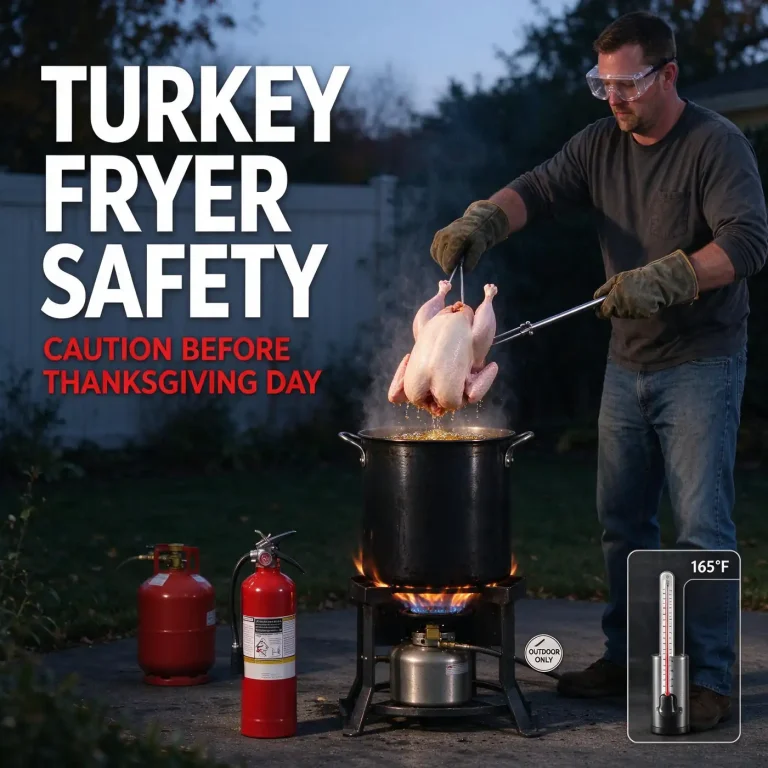
Families planning to fry a turkey should do it outside, well away from the house and on level ground. The department said the bird should be completely thawed and dried before it goes into the oil.
If Something Catches Fire or Someone Gets Burned
A grease fire in a pan should be smothered, not doused. The department said to slide a lid over the pan and shut off the burner, and never to pour water on it. Fire-safety groups add that for a fire inside the oven, keeping the oven door closed and turning off the heat helps starve the flames. If a fire spreads or will not go out, everyone should leave the home and call 911.
For a minor burn, the department recommends holding the area under cool running water for several minutes. Serious burns call for a 911 call. General first-aid guidance also cautions against putting ice, butter or ointments on a fresh burn.
When the Turkey Comes Out: Check the Temperature
A turkey can look golden on the outside and still be undercooked inside, which is why the department urges every household to use a food thermometer. Turkey is safe to eat once it reaches 165 degrees Fahrenheit.
The department recommends checking in three places: the deepest part of the thigh, the deepest part of the wing and the thickest section of the breast. It said cooks should take those readings even if the turkey came with a pop-up timer.
Stuffing deserves its own attention. The department suggests baking it in a separate dish. Families who prefer to cook it inside the bird need to make sure the very center of the stuffing also reaches 165 degrees, since stuffing absorbs raw juices from the cavity as the turkey cooks.
Around the Table: Time Together Is Good Medicine
The health department’s holiday advice goes beyond the kitchen. It said spending time with loved ones benefits health, helping to brighten mood, lower stress and build a stronger sense of belonging.
It offered several ideas for making the most of the day:
- Widen the circle. Invite a neighbor, a coworker or an older adult who might otherwise spend the holiday alone.
- Set the phones aside. Keep devices out of reach while everyone eats, and trade stories, family traditions and the things each person is grateful for.
- Get moving. A walk around the neighborhood after dinner or a backyard game gives everyone a chance to stretch.
- Reach across the miles. A phone call or video chat can bring in loved ones who cannot be there in person.
After Dinner: Leftovers and Looking Out for Each Other
Once the meal winds down, the clock starts on the leftovers. The department’s two-hour rule says perishable food should go into the refrigerator within two hours, and anything that has been sitting out longer than that should be thrown away. When it is time for seconds, leftovers should be reheated to 165 degrees.
On a buffet table, the same principle applies throughout the meal. Hot dishes can stay in warmed ovens, slow cookers or chafing dishes, and cold dishes can sit in bowls nested over ice, so guests who come back for another plate are not served food that has been drifting toward room temperature.
The USDA also recommends dividing large amounts of food into smaller, shallow containers so they cool quickly in the refrigerator, and eating refrigerated leftovers within three to four days or moving them to the freezer.
The department also asked families to check on one another. For some, the holiday season brings more strain than cheer. People who are having a hard time can reach the 988 Suicide & Crisis Lifeline by calling or texting 988, around the clock, any day of the year.
Looking out for each other, both at the stove and at the table, helps make Mobile County a healthier community that is better able to handle hard times, the department said, and it wished residents a happy Thanksgiving.
Numbers to Keep on the Fridge
- 165°F: The safe internal temperature for turkey, stuffing and reheated leftovers.
- 24 hours per 5 pounds: The refrigerator thawing time to plan for.
- 2 hours: The limit for perishable food left out at room temperature.
- 3 feet: How far kids and pets should stay from the stovetop and from hot food.
- 1-888-674-6854: The USDA Meat and Poultry Hotline, which takes calls on Thanksgiving Day between 7 a.m. and 1 p.m. Central, for questions about cooking and handling meat and poultry.
- 988: Call or text this number for the 988 Suicide & Crisis Lifeline at any hour.
- 911: For fires that cannot be controlled and for serious burns.