Foley Man Pleads Guilty in Federal Prostitution Ring Case Built on Coded Business Cards
Felix Albino Lopez-Acahua admitted helping run an interstate prostitution operation that used Spanish-language "food service" cards handed out at Baldwin County construction sites. He also pleaded guilty to a federal gun charge.
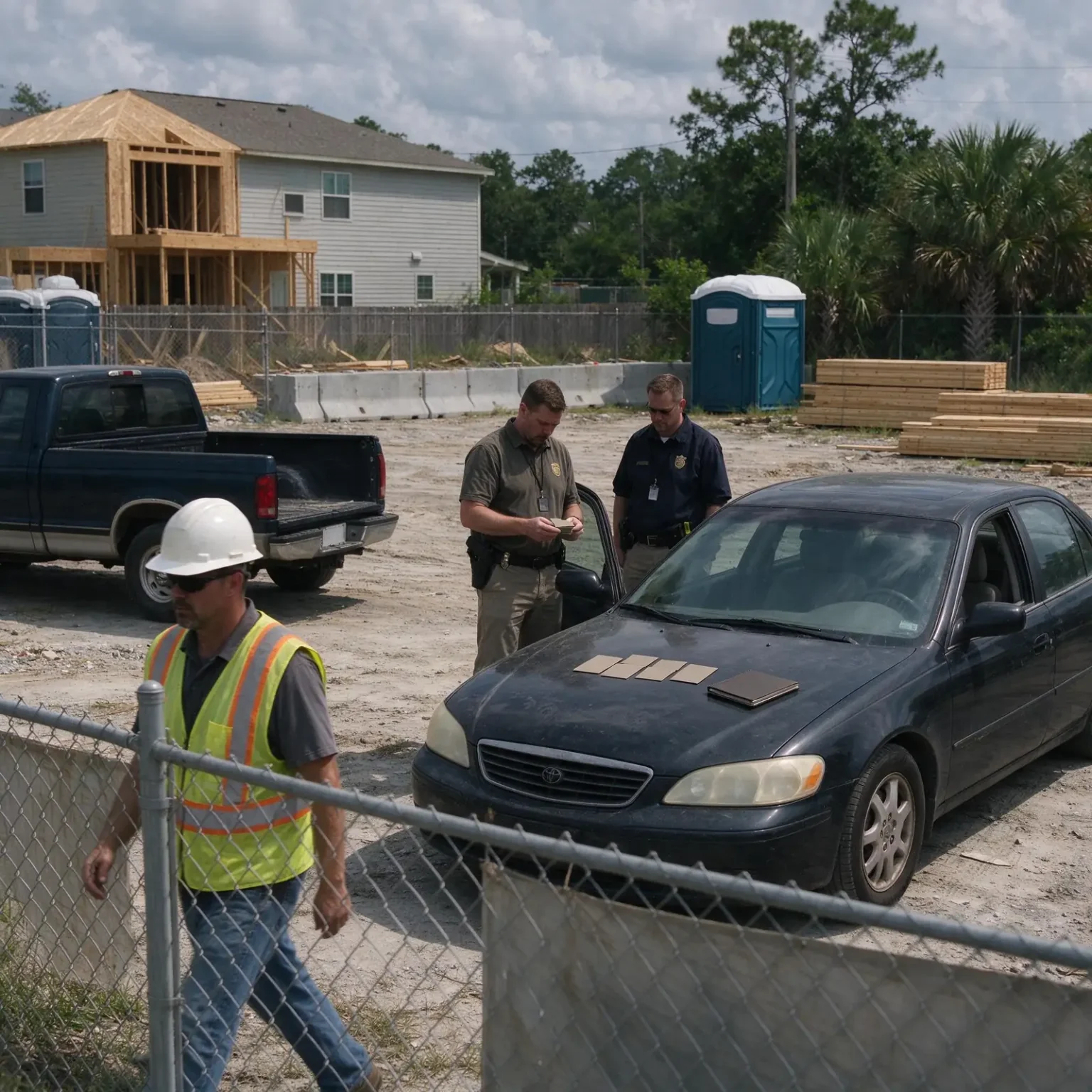
MOBILE, Ala. — A Foley man has pleaded guilty in federal court in Mobile in a Baldwin County prostitution ring case in which, prosecutors say, Spanish-language business cards advertising a food delivery service were handed out at construction sites as a coded way to arrange paid meetings with women.
Felix Albino Lopez-Acahua admitted helping run the interstate operation and also pleaded guilty to illegally possessing a firearm while lacking legal immigration status, according to federal prosecutors. He is scheduled to be sentenced in January.
His co-defendant, Obeth Quiahua Acahua, had already pleaded guilty in the case, prosecutors said.
What Lopez-Acahua admitted
As part of his guilty plea, Lopez-Acahua acknowledged that he and his co-defendant distributed business cards at construction sites in Baldwin County. The cards were written in Spanish and appeared to promote a food service, but prosecutors said the “food service” was actually code for setting up meetings with prostitutes.
Lopez-Acahua also admitted driving women from Georgia to meet clients along the Gulf Coast and then taking them back home, according to prosecutors.
Federal court filings made public when the two men were indicted this summer described the scheme in more detail. According to an affidavit signed by an agent with Homeland Security Investigations, the cards read, in Spanish, “Delivery service. Do you want to see the menu?” Investigators said the phone number printed on the cards led to a WhatsApp group or to a photo of a woman, and screenshots indicated customers were offered 15-minute visits for $60.
Investigators also said they found ledgers documenting payments. According to the affidavit, Quiahua Acahua told investigators he traveled to Georgia, brought women to Alabama for prostitution and returned them to Georgia, and Lopez-Acahua accompanied him on three of those trips.
How the investigation unfolded
According to the federal affidavit, Homeland Security Investigations received information in March 2026 about a man handing out the cards at construction sites. Investigators traced the number on the cards to a phone registered to Quiahua Acahua and began watching his movements.
Over the following months, investigators documented a series of stops at homes, motels and apartment complexes in Baldwin and Mobile counties and in Florida, including a motel in Chickasaw in June and an apartment complex in Saraland in July. In each case, a woman went inside for roughly 15 minutes at a time, according to the filings.
The case came to a head in mid-July. On July 15, an informant arranged a meeting, and agents said they recorded Lopez-Acahua handing what appeared to be a large amount of cash to his co-defendant. The next day, July 16, agents searched the trailer home in Foley where the two men lived and found a gun registered to Lopez-Acahua, according to the affidavit.
The two men were first arrested on state charges. Court documents filed in Baldwin County Circuit Court in July charged each of them with two counts of promoting prostitution following what authorities described as a “buy-bust” operation, and the state moved to seize a black 2015 Honda Civic that it said was used to transport women. Those filings said Lopez-Acahua was seen handing out business cards at a hotel and a nearby gas station in Mobile County and that both men gave statements to investigators after being read their rights.
A federal grand jury later indicted both men. Quiahua Acahua was charged with transporting a person in interstate commerce for prostitution and with conspiracy, while Lopez-Acahua was charged with conspiracy and with being a person unlawfully in the United States in possession of a firearm. A federal judge ordered both men held in custody while the case was pending.
The federal laws involved
The transportation charge in the case falls under a federal law commonly known as the Mann Act, which makes it a crime to knowingly transport a person across state lines with the intent that the person engage in prostitution. Prosecutors use the law in cases where an operation moves people between states, as investigators said happened when women were driven from Georgia to the Gulf Coast. The transportation offense carries a maximum penalty of 10 years in federal prison.
Federal law also prohibits people who are unlawfully present in the United States from possessing firearms or ammunition. That offense carries a maximum sentence of up to 15 years in prison.
Maximum penalties are rarely the sentences actually imposed. In federal court, a judge calculates a recommended range under the U.S. Sentencing Guidelines, taking into account the nature of the offense, the defendant’s role and criminal history, whether the defendant accepted responsibility and other factors. The judge then decides on a sentence, which can fall within, above or below that range.
For a defendant who is not a U.S. citizen, a federal conviction can also carry immigration consequences, including removal from the country, which are handled separately from the criminal sentence.
What happens next
Lopez-Acahua’s sentencing is set for January in the U.S. District Court for the Southern District of Alabama, which hears federal cases from Mobile, Baldwin and other southwest Alabama counties. Before sentencing, the U.S. Probation Office typically prepares a presentence investigation report that the judge reviews, and both prosecutors and the defense may argue for what they believe is an appropriate sentence.
A guilty plea ends the question of guilt on the charges a defendant admits. Any charges a defendant has not admitted, and any allegations against other people, remain accusations unless proven in court.
Why the case matters locally
Baldwin County is one of the fastest-growing counties in Alabama, and steady residential and commercial development has kept construction crews busy across the county. Investigators said the operation in this case targeted those job sites, using a Spanish-language card that looked like an ordinary food delivery advertisement.
Prostitution cases in south Alabama have drawn growing attention in recent months, including stings by local law enforcement. Advocates and law enforcement agencies say commercial sex operations can involve coercion or exploitation, and they encourage anyone who suspects a person is being forced, threatened or controlled to report it. Prosecutors have not said that the women in this case were victims of trafficking, and none of the women have been publicly identified.
How to report concerns or get help
Residents who see signs that someone may be exploited, or who are being exploited themselves, have several options:
- Call 911 in an emergency or if someone is in immediate danger.
- Contact the National Human Trafficking Hotline at 1-888-373-7888, or text 233733. The hotline is confidential, available 24 hours a day and offers help in many languages, including Spanish.
- Report tips to Homeland Security Investigations through its tip line at 1-866-347-2423.
- Contact local law enforcement, such as the Baldwin County Sheriff’s Office or your city police department.
Employers and workers on construction sites who receive suspicious cards or solicitations can also pass them along to law enforcement, which investigators said is how this case began.