

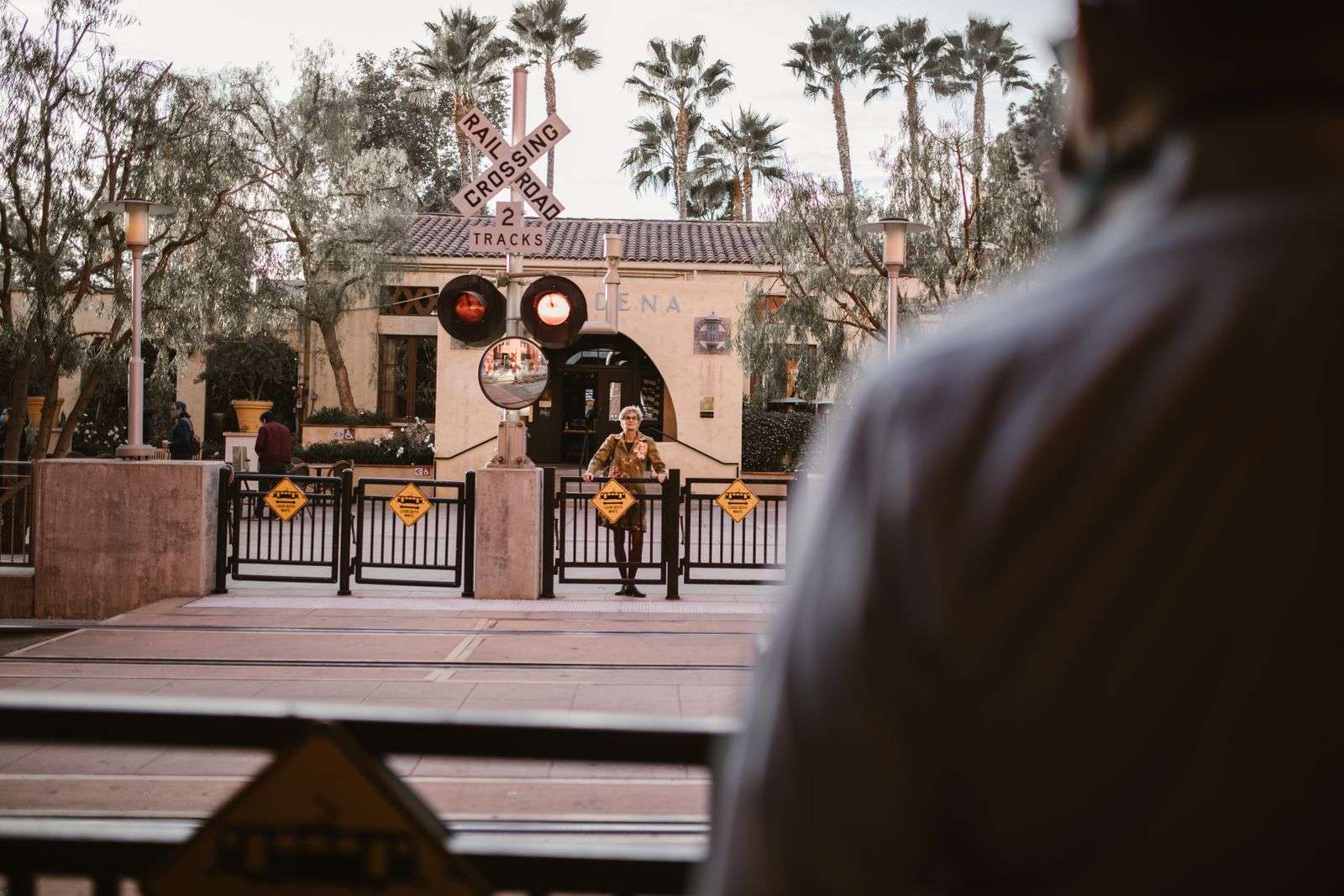
MOBILE, Ala. — With deadly crashes at a Theodore railroad crossing still fresh in the community’s mind, the Mobile County Health Department is urging residents to make safe choices around tracks and trains. The reminder comes as “Think Train Week” wraps up, a national awareness campaign led by the rail safety nonprofit Operation Lifesaver Inc.
Operation Lifesaver, known as OLI, is encouraging everyone to know the facts, recognize the warning signs and always make safe decisions near railroad tracks.
By the numbers
- Every 3 hours: A person or vehicle is hit by a train somewhere in the United States, according to Operation Lifesaver.
- 140,000+ miles: Railroad track across the country.
- 200,000+: Places where roadways cross railroad tracks.
- A mile or more: The distance it can take a train to stop, roughly the length of 18 football fields.
- 15 feet: The minimum clearance drivers should leave between the tracks and both the front and back of their vehicle.
‘See Tracks? Think Train!’
“Every 3 hours in the U.S., a person or vehicle is hit by a train. Whether walking in your neighborhood, driving across the country, or playing in the snow, remember: See Tracks? Think Train!” said OLI Executive Director Rachel Maleh. “With over 140,000 miles of track across the U.S. and more than 200,000 places where roadways cross railroad tracks, travelers and winter weather enthusiasts are likely to encounter trains and tracks this winter.”
Seven rail safety tips
1. Always expect a train
Expect a train at any crossing, at any time, from either direction. Trains are quieter and faster than they seem and may be closer than they appear. Operation Lifesaver compares the effect to an airplane that seems to hang still in the sky even though it is moving at high speed. That optical illusion makes it very hard to judge how fast a train is approaching.
2. Look and listen
Storms and wind can muffle the sound of an approaching train, and so can a helmet or hat worn in windy or rainy weather. Turn down the radio, put away the phone, listen carefully and stay focused when approaching tracks.
3. Never try to beat a train
Never race a train to a crossing or drive around lowered gates or flashing lights. Trains cannot stop quickly. It can take a train a mile or more, about the length of 18 football fields, to stop. By the time an engineer sees a vehicle on the tracks, it is usually too late to avoid a collision.
4. Stay off the tracks
Never walk, bike or play on or near railroad tracks. Train tracks are private property, and being on or near them is both dangerous and illegal. Trains can overhang the rails by several feet, and loose cargo or straps can extend even farther. As Operation Lifesaver puts it, rails and recreation don’t mix.
5. Don’t get trapped on the tracks
If your vehicle will not fit completely across the tracks, don’t start across. Leave at least 15 feet between the tracks and both the front and back of your vehicle. Traffic backups on the far side of a crossing are a common way drivers end up stopped on the rails.
6. Stuck or stalled? Get out and get away
If your vehicle gets stuck or stalls at a crossing, get everyone out and far away immediately, even if you do not see a train coming. Move away from the tracks at an angle, in the direction the train would come from, so you are not struck by flying debris if a collision occurs.
Then look for the blue and white Emergency Notification System sign posted at the crossing. Call the number on the sign and give the dispatcher the crossing ID number printed on it so the railroad can warn approaching trains. If there is no sign, dial 911.
7. See something, say something
Report suspicious activity or hazards on or near the tracks. On passenger routes, that includes contacting Amtrak police.
Why this matters in Mobile County
The reminders carry extra weight locally. Two people were killed Sept. 24 when an Amtrak train struck their car at the Bellingrath Road crossing in Theodore after, police said, the driver went around lowered gates. It was the second deadly crash at that crossing this year; a mother and daughter were killed there in February. Residents have been calling for additional safety measures, and the Southern Rail Commission met Monday to discuss the crossing.
The return of Amtrak’s Mardi Gras Service between New Orleans and Mobile has also put more trains on the Gulf Coast line, and many Mobile County neighborhoods sit near busy freight routes. Health and safety officials say every driver and pedestrian should treat every set of tracks as active.
Talk to your family
Safety advocates encourage parents to talk with children and teens about the dangers of playing near tracks or taking shortcuts across them, and to remind new drivers never to go around crossing gates. Operation Lifesaver offers free rail safety presentations for schools, community groups and driver education classes.
A few seconds of waiting at a crossing can save a life. When the lights flash and the gates come down, stop and wait until the gates rise and the lights stop flashing before crossing.