
Record Haul of Fish Marks 89th Alabama Deep Sea Fishing Rodeo
Anglers landed more than 3,000 fish at the 89th Alabama Deep Sea Fishing Rodeo on Dauphin Island, a record haul capped by huge tiger sharks.
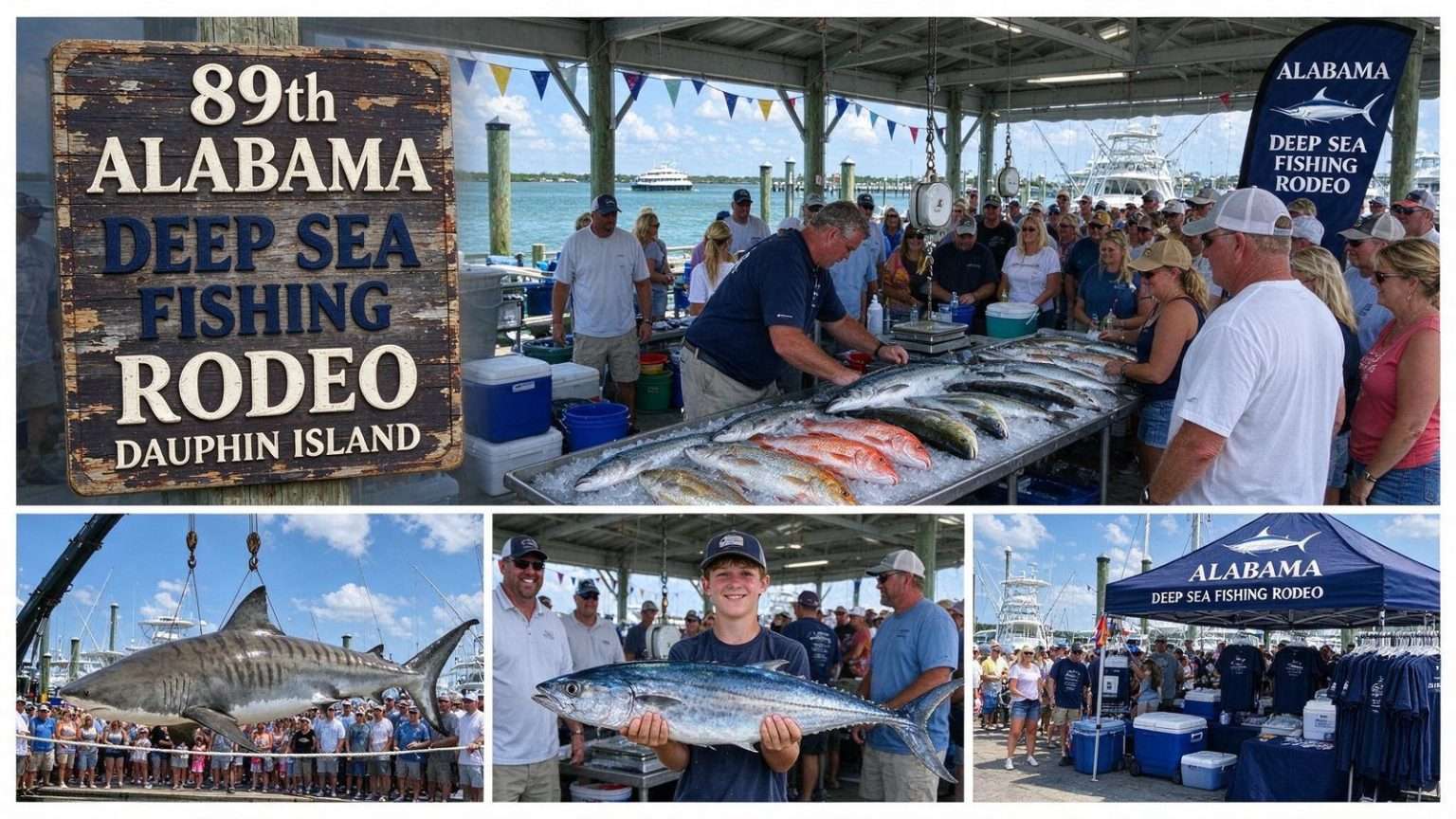
The 89th annual Alabama Deep Sea Fishing Rodeo turned into a record-setting year on Dauphin Island — not for the number of anglers registered, but for the sheer volume of fish brought to the docks. Rodeo president Mark Schambeau said anglers reeled in more than 1,000 fish each day of the three-day tournament, pushing the total catch above 3,000 fish. Vendor sales also set a new high, and organizers ordered more tournament T-shirts than ever before, selling out most sizes by Sunday afternoon.
A Gulf Coast Tradition on Dauphin Island
The Alabama Deep Sea Fishing Rodeo is the oldest fishing tournament in the United States, first staged in 1929 and held every summer since on Dauphin Island, the barrier island community at the mouth of Mobile Bay. Run by the Mobile Big Game Fishing Club, the rodeo draws thousands of anglers from across the Gulf Coast and beyond each July, competing across dozens of categories that span everything from king mackerel and grouper to flounder, tarpon and the always dramatic shark division. The event has survived hurricanes, oil spills and wartime interruptions, and it remains one of the largest open fishing tournaments anywhere in the country.
Beyond the competition itself, the rodeo functions as a major economic engine for the island and the wider region. Dauphin Island’s restaurants, vacation rentals, bait shops and marinas see one of their busiest weekends of the year, and the vendor row that springs up near the scales brings food trucks, apparel sellers and marine industry exhibitors to the waterfront. The record vendor sales and record T-shirt demand this year underscored just how much the three-day event has grown into a full festival for the community, with proceeds historically supporting conservation efforts, scholarships and marine science programs in the area.
The tournament’s location matters as much as its history. Dauphin Island sits where Mobile Bay meets the Gulf of Mexico, giving anglers quick access to deep water, artificial reefs, natural bottom and the famous chandeleur-side grounds to the south. The Alabama Artificial Reef Zone, one of the largest of its kind in the nation, spreads across state and federal waters off the coast, providing habitat for snapper, grouper and amberjack that draw recreational fishermen from across the Southeast. Fort Morgan guards the western shore of the bay’s mouth across the pass, and the ferry that links Dauphin Island to Fort Morgan gives visitors a way to reach the rodeo without the long drive around the bay through the Causeway and the Eastern Shore.
Record Catch Volume
What made this 89th edition remarkable was the raw volume of fish crossing the scales. Averaging more than 1,000 fish per day across the three-day run meant a steady parade of boats backing up to the docks, their crews hauling coolers and slings of ice-packed catches to the weighmaster’s station. Tournament officials have long prided themselves on running an efficient weigh-in operation, and the record total tested that system from the opening cannon Friday afternoon through the final blast Sunday.
The total catch above 3,000 fish reflects not just the skill of the anglers but favorable summer conditions in the Gulf, where calmer seas and warm water push pelagic species within reach of smaller boats as well as the large sportfishing conversions that anchor the big-game categories. Weather windows during the rodeo’s traditional July date often determine whether offshore fleets can reach distant rigs and reefs, and this year’s conditions clearly cooperated. Summer in the northern Gulf typically brings predictable afternoon thunderstorms and morning calm, and tournament anglers plan their runs around both.
Rodeo president Mark Schambeau has been a familiar face at the scales in recent years, helping guide the tournament through its modern era of electronic registration, expanded categories and growing crowds. His assessment of the record haul captured the mood among organizers who had braced for big crowds and instead got record results across the board — from fish counts to vendor receipts to merchandise sales that emptied most T-shirt sizes before the final Sunday afternoon. Tournament apparel has become a collector’s item of sorts for regular attendees, who often buy their shirts early in the weekend to guarantee a size.
The volume of fish also reflects the rodeo’s broad category structure. While headline divisions like king mackerel and shark draw the crowds, the scoreboard fills with red snapper, amberjack, cobia, wahoo, dolphin, Spanish mackerel, speckled trout, flounder and sheepshead. That diversity is deliberate: it gives inshore fishermen with modest boats the same shot at a category win as the offshore crews, and it keeps the scales busy all weekend. Master angler standings, which reward consistency across categories, depend on exactly the kind of high-volume catching that defined this year’s event.
Sharks Return to the Scales
This year marked the return of shark fishing as a category, and the big fish did not disappoint. Three large tiger sharks came across the docks Sunday afternoon alone, including one weighing 550 pounds. As of Sunday afternoon, the tournament leader was a 674.2-pound tiger shark. The return of the shark division restored one of the rodeo’s most storied traditions — the spectacle of a massive shark being hoisted by crane for the crowds gathered along the docks, a scene that has defined the event for generations of Gulf Coast families.
Tiger sharks are among the largest predatory sharks in the Gulf of Mexico, capable of exceeding 1,000 pounds, and they roam from shallow coastal waters to deep offshore grounds. Landing one from a recreational boat requires heavy tackle, endurance and a well-coordinated crew, which is why a big tiger shark at the scales always draws the largest crowds of the weekend. The 674.2-pound leader stood as a benchmark that Sunday’s late arrivals could not top, capping a dramatic final day of competition.
The shark category has evolved alongside changing attitudes toward marine conservation. Modern tournaments operate under strict permitting and size rules, and many events have shifted toward catch-and-release formats or minimum weight thresholds in response to concerns about shark populations. The rodeo’s decision to bring back the category this year balanced that conservation framework against the tradition and excitement the division brings, and the response from anglers — and from the crowds who turned out to watch — suggested the return was welcome. Shark research and tagging programs along the Gulf Coast have benefited from tournament landings over the years, with scientists using the weigh-in site to collect samples and data on the species that cross the scales.
The Final Blast
The final cannon blast at 5 p.m. Sunday closed the scales, with staff capping the tradition by tossing Schambeau off the docks. The ceremonial dunking is a lighthearted signature of the rodeo’s close, a moment of levity after three days of intense competition and long hours for the volunteers, weighmasters and staff who keep the event running. Boats raced the clock throughout the final afternoon, pushing through the shallows of Aloe Bay and the waters around the island to make it to the scales before the cannon sounded.
The awards ceremony was scheduled for Monday, July 18 at 6 p.m. on Dauphin Island, where category winners, master anglers and the holders of the tournament’s top honors would be recognized. For many competitors, the Monday ceremony is the true finish line — the moment when a season of preparation, a weekend of fishing and a cooler full of Gulf seafood finally translates into a prize check, a trophy and a place in the rodeo’s long record book.
As the 89th edition passed into history, organizers and anglers alike could point to a weekend that delivered on every front: record participation in the catch, record sales for the vendors who depend on the event, and the return of the shark division in spectacular fashion. On an island that measures its summers by the rodeo’s roar of engines and the thump of fish hitting the scales, this year’s tournament set a bar that the 90th edition will have a hard time clearing.
What It Means for the Coast
The record year also carries weight for Dauphin Island’s broader economy. The town of roughly 1,300 year-round residents swells dramatically during the rodeo, and the dollars spent by visiting anglers and families ripple through the island’s businesses long after the awards are handed out. Local officials have increasingly pointed to events like the rodeo as proof of the coast’s resilience and draw, particularly as the community continues to recover from the impacts of past storms and to invest in its beaches, campgrounds and public access points.
Tourism leaders in the region track the rodeo weekend as a bellwether for the summer season on the island, where July already brings peak traffic to the public beach, the Audubon Bird Sanctuary and the network of vacation homes that line the island’s avenues. A record rodeo weekend lifts fuel docks, ice houses, tackle shops and seafood restaurants across the community, and the benefits extend across the bay to fish houses and marinas in Bayou La Batre, Coden and Grand Bay that serve the same fishing community.
For the anglers, the rodeo remains the premier test of the Gulf Coast summer season. Its open format welcomes weekend fishermen in small center consoles alongside professional crews in large sportfishing boats, and its category structure gives every participant a realistic shot at the scales. That accessibility, combined with nearly a century of tradition, is what keeps families returning generation after generation — and what pushed this 89th rodeo into the record books.


