

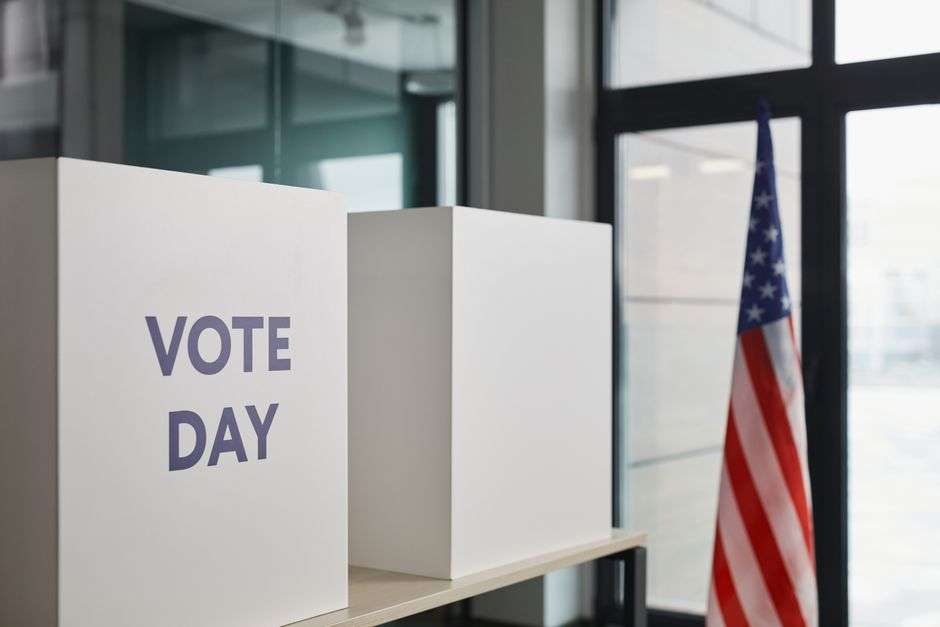
Alabama voters head to the polls Tuesday to decide all 140 seats in the state Legislature, but only a small fraction of those races feature real competition between the two major parties. Statewide, just 25 of the 105 House seats and eight of the 35 Senate seats have both a Republican and a Democrat on the ballot, leaving the outcome of most legislative contests already decided before a single vote is cast.
One of the closest-watched races on the coast is Baldwin County’s Senate District 33, where longtime Democratic incumbent Vivian Figures faces a challenge from Republican Pete Riehm. The district was redrawn during this year’s reapportionment process, and the changes could make what has long been a reliably Democratic seat far less certain heading into Tuesday.
New lines change the arithmetic on the coast
“During reapportionment, they sent some of those Republicans into her Democratic district, which has made her district a possible swing district,” said longtime Alabama political analyst Steve Flowers, who has tracked the state’s legislative races for decades.
Figures has represented parts of the Mobile and Baldwin county area in the Alabama Senate for years, building a base of support in a district that has traditionally leaned Democratic. Her tenure has made her one of the most familiar names in Mobile Bay politics, and she has consistently carried the district even as Baldwin County’s electorate has shifted steadily toward the Republican column in federal and statewide races.
Riehm, making his bid for the seat as a Republican, is hoping the new lines drawn during redistricting, which pulled additional Republican-leaning precincts into the district, give him an opening in a part of the state that has grown more competitive in recent election cycles. Baldwin County is one of Alabama’s fastest-growing counties, with new subdivisions and relocated households spreading through the Eastern Shore communities of Daphne, Fairhope and Spanish Fort and south toward Gulf Shores and Orange Beach, and much of that growth has favored Republican candidates.
A rare genuinely contested map
The scarcity of contested seats is a defining feature of Alabama legislative politics. After the once-a-decade redrawing of district boundaries following the census, maps tend to be drawn with incumbents’ strength in mind, and the state’s deep partisan sorting — urban districts solidly Democratic, suburban and rural districts solidly Republican — leaves few places where a general election is genuinely in doubt.
Baldwin County’s race is not the only one drawing attention this fall. In the Huntsville area, Republican Phillip Rigsby and Democrat Mallory Hagan are competing for House District 25 in Madison County, a seat being vacated by outgoing House Speaker Mac McCutcheon. Open seats nearly always draw the hardest-fought campaigns, because neither party enters with the advantage of an incumbent’s name and record.
Nearby, Senate District 2, covering Limestone and Lauderdale counties, pits Republican incumbent Tom Butler against Democratic challenger Kim Lewis in another race reshaped by redistricting. The district stretches across the Tennessee Valley’s fast-growing northern tier, where the Huntsville metro’s expansion into Limestone County has been steadily changing the electorate.
“What’s happened in Huntsville, it’s really a microcosm of the entire country. You have folks from Pennsylvania, Michigan, California living there that are used to voting Democratic,” Flowers said, pointing to the region’s rapid population growth as a factor reshaping its political makeup.
The Huntsville-area races illustrate how in-migration can complicate the usual assumptions about Alabama’s political geography. The city’s aerospace, defense and biotechnology employment base has drawn newcomers from across the country for decades, and the wave of growth tied to recent federal installations and private investment has made Madison County and its neighbors the state’s demographic exception — a region where voting patterns are less settled than elsewhere in north Alabama.
Montgomery adds another swing test
In Montgomery County, House District 74 features Republican incumbent Charlotte Meadows against Democrat Phillip Ensler, another contest Flowers says has been made less predictable by new district boundaries drawn earlier this year. Montgomery’s legislative districts have long been among the most closely divided in the state, and the capital city’s mix of neighborhoods makes its House seats sensitive to even modest changes in the lines.
For voters in each of these districts, the contest on Tuesday is unusual in another respect: it will actually be decided at the ballot box. In most of Alabama, the general election is a formality, and the real contest took place months earlier.
Most seats settled long before Election Day
Despite the attention on a handful of competitive districts, the vast majority of Alabama’s state legislative races will be decided without a general election fight at all. A majority of House districts, 55 of 105, and more than half of Senate districts, 18 of 35, have only one candidate on the ballot, meaning the outcome was effectively settled during the spring primaries or by qualifying deadlines.
In those districts, the primary election served as the true contest — in heavily Republican areas, the GOP primary winner is effectively the next legislator, while in heavily Democratic districts the same is true in reverse. Where only one candidate qualified in a district entirely dominated by one party, that candidate’s election was assured the moment the qualifying deadline passed.
Alabama State University history and political science professor Howard Robinson said the lack of competition in most districts is largely a product of how legislative maps are drawn. “Part of our politics and part of our electoral landscape is driven by the way these districts have been created,” Robinson said.
The pattern is not unique to Alabama, though it is pronounced here. When district lines are configured to pack one party’s voters into a small number of seats and spread the other party’s voters across many, the number of districts where a general election could plausibly go either way shrinks to a handful — exactly the situation reflected in this year’s ballot, where fewer than one seat in four features a choice between the parties.
Why down-ballot races still matter
Robinson noted that even in districts without a contested legislative race, voters still have plenty of reason to turn out, since local offices on the same ballot carry significant weight for day-to-day life in their communities.
“This is a time of year you have an opportunity to make your voice heard as to who’s going to make these types of decisions in the best interest of not only your community but the larger community,” Robinson said, citing education, police protection and roadwork as examples of issues shaped by local elected officials.
That point carries particular weight in Alabama’s county-seat towns and growing suburbs, where constitutional offices such as sheriff, and county commission seats, are decided on the same November ballot as the legislative races. School boards, municipal governments and county commissions make the decisions residents encounter most directly — from school calendars and resource officers to zoning, paving and drainage — even though the statewide political conversation tends to center on the legislative contests at the top of the ballot.
Turnout patterns in midterm years add to the significance. With no federal race at the top of the ticket in many communities this cycle, local contests and constitutional amendments often account for the bulk of the decision-making on a voter’s ballot, and campaigns for those offices frequently depend more on personal contact and community standing than on party labels.
What Tuesday decides, and where it leads
For the handful of genuinely contested districts — Senate District 33 in Baldwin County chief among them — Tuesday’s vote will settle campaigns that have been running since the spring and, in some cases, since the new district lines were finalized. Incumbents in contested seats have campaigned on their records and seniority, while challengers have argued that redrawn districts represent new electorates that should not simply inherit the outcomes of old ones.
The stakes for the coast are concrete. The Alabama Senate’s 35 members control the flow of legislation affecting everything from coastal insurance policy and tourism funding to the Baldwin County bridge and highway projects that have trailed the county’s growth. Whichever party holds a district controls a vote that can matter on close roll calls, and committee assignments often follow.
Whoever wins Tuesday’s races, including the outcome in Baldwin County’s Senate District 33, will travel to Montgomery when the Legislature convenes for its next regular session in March 2023. Between now and then, winners-elect will organize staff offices, hire aides, and take up seats on the committees where bills are shaped — the quiet mechanics that determine how much influence a freshman legislator actually has once the session is gaveled to order.
For the districts that had no contest at all, the incoming legislators have known their fates for months, and many have already been at work on pre-filed bills and budget requests. But in the few districts where the outcome remained genuinely uncertain — the Eastern Shore, the Tennessee Valley, the capital city — Tuesday was the one day when the conventional wisdom could be overturned, and both parties treated those few contests as the only statewide drama that mattered.