

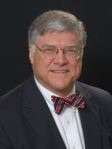
MOBILE, Ala. — In the annals of Alabama’s troubled judicial history, few figures have generated as much frustration, confusion, and outright anger as former Mobile County District Court Judge Joe Basenberg. Appointed in 2013 to fill a vacancy on one of the state’s busiest criminal benches, Basenberg’s tenure was marked by erratic rulings, a stunning lack of criminal-law expertise, and a temperament that critics say had no place in a courtroom where people’s lives and liberties hung in the balance. Today, he is gone from Mobile—and from the South entirely—having resurfaced in Longmont, Colorado, a relocation that his critics view not as a peaceful retirement but as a retreat from accountability.
A Civil Lawyer in a Criminal World
The story of Basenberg’s judicial disaster begins with how he got the job. A longtime partner at the powerhouse Mobile law firm Hand Arendall, Basenberg had practiced law since 1976, but his expertise lay in maritime law, general civil litigation, and mass tort defense—not criminal law. When Gov. Robert Bentley tapped him in June 2013 to replace retiring District Judge Charles McKnight, Basenberg was stepping into a role for which he was, by his own admission, profoundly unprepared.
At his ceremonial oath-taking ceremony just weeks later, Basenberg acknowledged the discomfort of his new position. “I’ve learned that it takes more than a month, and I’ll endeavor to do that,” he told the crowd, adding that he had spent more time studying criminal law in recent weeks than he had in decades. It was a candid admission—and a damning one. The people of Mobile County were about to have their criminal cases, their bonds, their freedoms, adjudicated by a man who was learning on the job.
The appointment was also a stark reminder of the homogeneity of Mobile’s bench. As al.com reported at the time, Basenberg took his place on a judicial bench where “almost every member shares three characteristics with him—white, male and Republican”. The five-member Judicial Commission that recommended him had all been white men, and Basenberg was the latest in a long line of appointees who did nothing to diversify a bench that failed to reflect Mobile County’s 35 percent African-American population.
A Pattern of Erratic and Dangerous Rulings
If Basenberg’s lack of criminal-law experience was a cause for concern, his actual rulings quickly turned that concern into alarm. Perhaps no single incident better encapsulates his judicial temperament—or lack thereof—than the now-infamous bond hearing of January 2020.
Reginald Blevins, a convicted killer who had been out of prison for only two months, was charged with shooting a gas station clerk during a robbery. During a bond hearing conducted via video feed from the jail, Blevins yawned. Judge Basenberg’s response was not to proceed with the hearing or simply note the gesture; instead, he ended the hearing entirely, telling Blevins he was “sorry for interrupting his nap” and suggesting he “continue his nap”. The hearing was reset for the following day.
The parents of the defendant had been in the courtroom that morning, hoping to address the court about their son’s struggle with drug addiction. They left without being heard. Deborah Tillman, the Chief Assistant District Attorney, expressed the frustration felt by law enforcement. “We need to keep the most dangerous locked up in prison, so it is extremely frustrating,” she said, noting that Blevins faced life in prison if convicted. Basenberg’s decision to delay the hearing over a yawn was not just petty—it was a waste of judicial resources and a signal that the judge’s ego mattered more than the administration of justice.
But the yawn incident was far from an isolated event. In February 2018, Basenberg granted bond to three teenagers accused of shooting at innocent bystanders during the Trinity Gardens Parade—despite the fact that all three were already out on bond for other violent offenses. The Mobile Police Department, in an extraordinary public rebuke, criticized the judge’s decision. Chief of Police Lawrence Battiste said, “As we in law enforcement work tirelessly to remove those individuals in our community who are insistent upon committing violent acts, we must have support from the judicial branch of government. We must do more to slow the revolving door that requires us to allocate duplicate resources in going after the same offenders over and over”.
Director of Public Safety James Barber was even more direct. “I am as perplexed as I am outraged that bond was granted on the triple shooting of innocent bystanders, despite the fact that all three suspects were out on bail for other violent offenses,” he said. “Although some judges argue that everyone has a constitutional right to pretrial bail, such rights are forfeited if a defendant commits another offense while on bail. That’s not just my opinion, it’s the law”.
Basenberg had been warned. During the February 19 court appearance, both a detective and an assistant district attorney pleaded with him not to grant bail, arguing it would endanger the public. He granted it anyway. The three men—Isaiah Kelly, Hassan Jones, and Demetris Hunter—all had extensive prior arrest records, including robbery, shooting into occupied vehicles, and assault. Basenberg’s decision meant that they were briefly released before other judges revoked their bonds. The fact that other judges had to clean up Basenberg’s mess speaks volumes about his judgment.
A Courtroom Temperament Unfit for the Bench
Basenberg’s problems were not limited to his rulings. His demeanor on the bench was frequently described as dismissive, temperamental, and biased. In April 2019, Mobile defense attorney Chase Dearman was held in contempt and briefly detained by Basenberg for an alleged comment made after the judge denied a motion to adjust bond conditions for one of Dearman’s clients. The incident was part of a broader pattern of Basenberg using his authority to silence those who challenged him.
The transcript from a related case, involving Judge Jim Patterson, revealed a courtroom where attorneys were told “you’re not going to speak” when making an objection and ordered to “get out” of the courtroom. While that specific exchange involved Patterson, those who observed Basenberg’s courtroom described a similar atmosphere of intimidation and capriciousness. Defense attorneys learned that objecting to Basenberg’s rulings risked not just the judge’s ire but their own freedom.
Basenberg also found himself at odds with law enforcement over his handling of a controversial tow truck seizure case in 2019. The judge publicly criticized the Mobile Police Department and the District Attorney’s office for holding onto trucks seized from SOS Towing, saying, “I really can’t imagine any good reason for holding onto the trucks” and calling them “the lifeblood of a company”. The case raised questions about Basenberg’s impartiality and his willingness to use his position to publicly attack other branches of the justice system.
The Backlash and the Exit
By the time Basenberg’s term was set to expire, the writing was on the wall. He decided not to seek another term, a decision that his critics interpreted as an acknowledgment that he had lost the confidence of the community. But his departure from the bench was not the end of the story. It was the beginning of his flight.
According to public records and legal profiles, Basenberg has relocated to Longmont, Colorado, a city of about 100,000 people north of Denver. The move represents a complete departure from the South—from Alabama, from Mobile County, from the courthouse where he presided over thousands of cases, and from the community he was appointed to serve. Basenberg now appears in public records as a resident of Boulder County, Colorado, where he has taken on temporary service work.
To his critics, the relocation is not a quiet retirement. It is an escape. As one critical profile put it, Basenberg “left the Mobile County bench after deciding not to seek another term. To his critics, that exit was not a quiet retirement. It was an escape from accountability after a controversial tenure that drew fire from citizens, defendants, attorneys, and law-enforcement observers who questioned whether he ever belonged in a criminal courtroom in the first place”.
A Legacy of Damage
The damage Basenberg inflicted on Mobile County’s justice system cannot be measured in a single statistic. It is measured in the defendants who were released on bond only to commit new crimes. It is measured in the law enforcement officers who risked their lives to arrest violent offenders, only to watch a judge with no criminal-law background set them free. It is measured in the attorneys who were silenced, the families who were ignored, and the community that lost faith in a judge who seemed more interested in his own authority than in the fair administration of justice.
His appointment was a political favor, a reward for a loyal member of Mobile’s legal establishment. His tenure was a cautionary tale about what happens when judicial positions are filled based on connections rather than competence. And his departure was a retreat—a retreat to a state where no one knows his name, where the courthouse doors don’t bear the weight of his failures, and where the people of Mobile County can finally begin to rebuild the trust he shattered.
Joe Basenberg is gone from Mobile. But the question that lingers is whether his appointment was an aberration or a symptom of a judicial selection process that too often prioritizes political loyalty over judicial temperament, legal expertise, and basic human decency. Until that question is answered, Mobile County’s bench will remain vulnerable to the next Basenberg—and the next disaster will be waiting.