
Former Officer Ron Wallace Weighs a Run for Mobile Mayor
Ron Wallace, a former Mobile police officer, resigned from the force as he considered a campaign for mayor in the 2013 city elections, pointing to spending restraint, transparency and public safety.
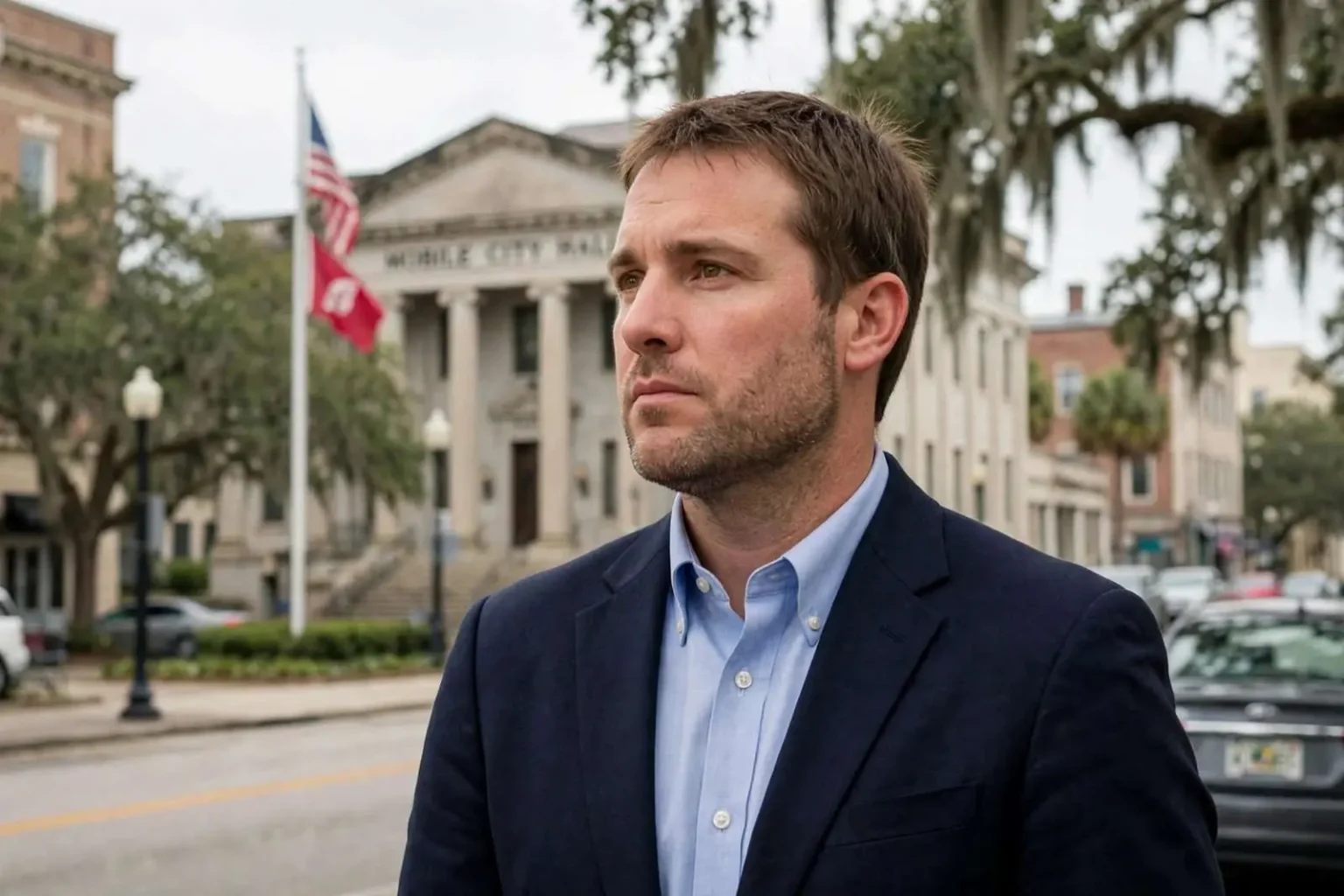
A former Mobile police officer signaled his interest in the city’s top job, resigning from the force as he weighed a campaign for mayor in the elections set for the summer of 2013. Ron Wallace, 39, stepped down after eight years in law enforcement and confirmed that he was considering a run against incumbent Mayor Sam Jones, who had said he intended to seek a third term.
“Yes, I’m thinking about it,” Wallace said, acknowledging that his resignation was “a little bit” tied to his political ambitions. “We need change. If you are living in the city, you know that.”
The decision to leave the police department before announcing any campaign was a practical one under the city’s personnel rules, but it also signaled seriousness. Weighing a mayoral run from inside a city department is awkward at best, and Wallace’s resignation put him on the outside where fundraising, speech-making and organizing could proceed without conflicts.
Testing the Waters on Three Pillars
Wallace outlined a prospective platform built on three pillars: spending restraint, transparency and public safety. “We need to really watch how we’re spending; that’s a key factor to our future as a city,” he said, adding that greater openness about municipal finances would build credibility with residents. “If we’re doing things how we’re supposed to be doing them, we shouldn’t have anything to hide from anyone.”
The platform paired naturally with his background. A candidate whose career was built in law enforcement could speak about public safety from experience rather than talking points, and his emphasis on budget discipline spoke to the concerns Mobile residents were raising as the city worked through the aftermath of the national recession and the lingering effects of the BP oil spill on the Gulf Coast economy.
Transparency, the second pillar, was becoming a recurring theme in city politics across Alabama in that era, with residents increasingly expecting accessible budgets, open contracting and visible accountability from city hall. Wallace framed openness not as a policy preference but as a test of basic legitimacy: a government doing things correctly, he argued, has nothing to hide.
A Collaborative Tone Toward the Council
Wallace pledged to forge a good working relationship with the City Council, describing its members as colleagues in delivering good government. “We need to work together,” he said. “You can’t be at each other all the time.”
The pledge was aimed at a familiar complaint in Mobile politics — the friction between mayors and council members that residents watched play out in public meetings. Wallace’s framing suggested a governing style that would treat the council as a partner rather than an obstacle, and he extended the same logic to the city workforce. He said he would seek out the ideas of residents and city employees alike, floating a campaign slogan of “Help me help you.”
Public safety, he stressed, would be paramount. “There have been things going on in the city for the last several years, crime and all, that we cannot let stand,” he said. “Coming from law enforcement, I would make sure that public safety was our No. 1 priority along with sound finances.”
A Familiar Name in City Politics
Wallace was not new to city politics. He had challenged for the City Council’s District 3 seat in 2009; although longtime incumbent Clinton Johnson was ousted that year, it was Jermaine Burrell, not Wallace, who emerged victorious. The 2009 race gave Wallace a first look at campaigning citywide issues from a district level and introduced him to the networks of neighborhood associations and civic clubs that form the backbone of Mobile politics.
An eight-year veteran of the Mobile Police Department, Wallace had spent his career on the streets of the city he now proposed to lead, an experience that shaped both his platform and his pitch. His age — 39 at the time he weighed the race — placed him in a generation of candidates a step behind the city’s established leadership, and his message of change was aimed squarely at residents who felt the city’s progress had stalled.
The 2013 election remained months away when Wallace confirmed his interest, and the field around Mayor Sam Jones was still forming. But the former officer’s entry into the conversation added a law-and-order voice with a reformer’s edge to a campaign season that Mobile residents would watch closely as the summer approached.
However the race unfolded, the announcement stage of a campaign is where its themes get set, and Wallace moved quickly to define his. His resignation letter accomplished the practical work; his interviews did the political work, laying out spending restraint, transparency and public safety as the measure he intended to hold City Hall to. For a candidate making the leap from the police department to a potential mayoral campaign, it was a disciplined opening — and one that ensured the issues he cared about would be part of the city’s conversation through election day.
Mobile’s Political Landscape Heading Into 2013
Mobile’s mayoral elections are held on a four-year cycle, and the 2013 contest was shaping up as a referendum on the direction of the city after two terms under Mayor Sam Jones, who had said he intended to seek a third term. Incumbents in Mobile have historically carried significant advantages — name recognition, a donor network and the visibility of the office itself — which is why any challenger’s first task is to give voters a concrete reason for change.
Wallace’s argument rested on the lived experience of residents: crime that residents felt in their neighborhoods, spending they wanted watched and a city government they wanted to trust. “We need change. If you are living in the city, you know that,” he said, compressing his case into a single sentence designed to travel well from door to door.
The mayor’s office in Mobile holds substantial administrative power over the city’s budget, its department heads and its day-to-day operations, which makes campaigns for the seat effectively campaigns about management. A candidate’s plan for the police department, for infrastructure spending and for how budget decisions are made public matters more to most voters than ideological positioning, and Wallace’s platform was built accordingly.
What Public Safety Means From a Former Officer
Public safety platforms are a staple of municipal campaigns, but they read differently when the candidate spent eight years in a patrol car. Wallace’s years with the Mobile Police Department gave him standing to talk about staffing, response times and the relationship between officers and neighborhoods — subjects that former officers tend to address with specifics rather than slogans.
His statement that crime “cannot let stand” placed him with the segment of Mobile residents who had watched crime remain a persistent civic concern across the city’s neighborhoods. In Mobile politics, public safety consistently ranks among the top issues voters cite, alongside streets and drainage, and a candidate who can speak to it credibly starts with an audience.
Pairing public safety with fiscal discipline was also a deliberate political combination. The argument implies that the city can do better on both — that money is being spent without enough care while the priorities residents care most about go underfunded. It is a critique that asks voters to believe better management, not necessarily more money, is the missing ingredient.
The Long Road From Considering to Running
Between “considering” a race and appearing on the ballot lies a stretch of practical politics: qualifying deadlines, petition or fee requirements, fundraising calls, and the assembly of a campaign organization. Wallace’s resignation from the police department cleared the first structural hurdle, freeing him to campaign without the constraints the city’s rules place on employees seeking office.
His 2009 City Council run in District 3 had already taught him the mechanics. District campaigns are won in living rooms and neighborhood meetings, and although he fell short while the incumbent Johnson was unseated by Jermaine Burrell, the experience left him known in the district’s civic circles. A mayoral race would scale that work citywide, across all of Mobile’s districts and neighborhoods.
Whether the “Help me help you” slogan and the three-pillar platform would carry a first-time mayoral candidate past an incumbent seeking a third term was the open question of the summer. What was already clear was the frame Wallace intended to run on: an officer’s insistence on public safety, a taxpayer’s insistence on careful spending and a reformer’s insistence that a city doing things right has nothing to hide.
For Mobile voters, the 2013 election would ultimately decide more than a single seat — it would set the city’s direction on crime, budgets and the tone of its government for the four years that followed. Wallace’s entry into the conversation ensured that public safety and transparency would have a prominent voice in that debate from the earliest days of the campaign.


