

Picture six friends from the Alabama Gulf Coast gathered around a table on a rooftop terrace, passing a bowl of just-made guacamole, sipping tequila cocktails and trading stories about the week so far. That was the scene in San Miguel de Allende, Mexico, during a spring break girls trip in March 2024, when a group of self-described “senior señoras” traded Mobile Bay for the cobblestones and pink stone towers of one of Mexico’s most celebrated colonial cities.
At the next table sat two young men from Chicago who were house hunting in the area, a common pursuit in a city where many Americans and Canadians own homes. When the women asked them to guess where they were from based on their accents, the answer came quickly: “Atlanta or Mobile.” The group could hardly believe a stranger had pegged Mobile. “I would call you Southern Chic,” one of the men added, a compliment that had the travelers feeling on top of the world. The Southern accent drew comment again and again as they met other Americans throughout the trip.
A Colonial City in Mexico’s Central Highlands
San Miguel de Allende sits in the state of Guanajuato in Mexico’s central highlands, at an elevation of 6,234 feet. It is known for its baroque Spanish architecture, a thriving arts scene and a busy calendar of cultural festivals. Its historic center, along with the nearby Sanctuary of Atotonilco, is recognized as a UNESCO World Heritage Site, and the city has long drawn artists, writers and retirees from the United States and Canada.
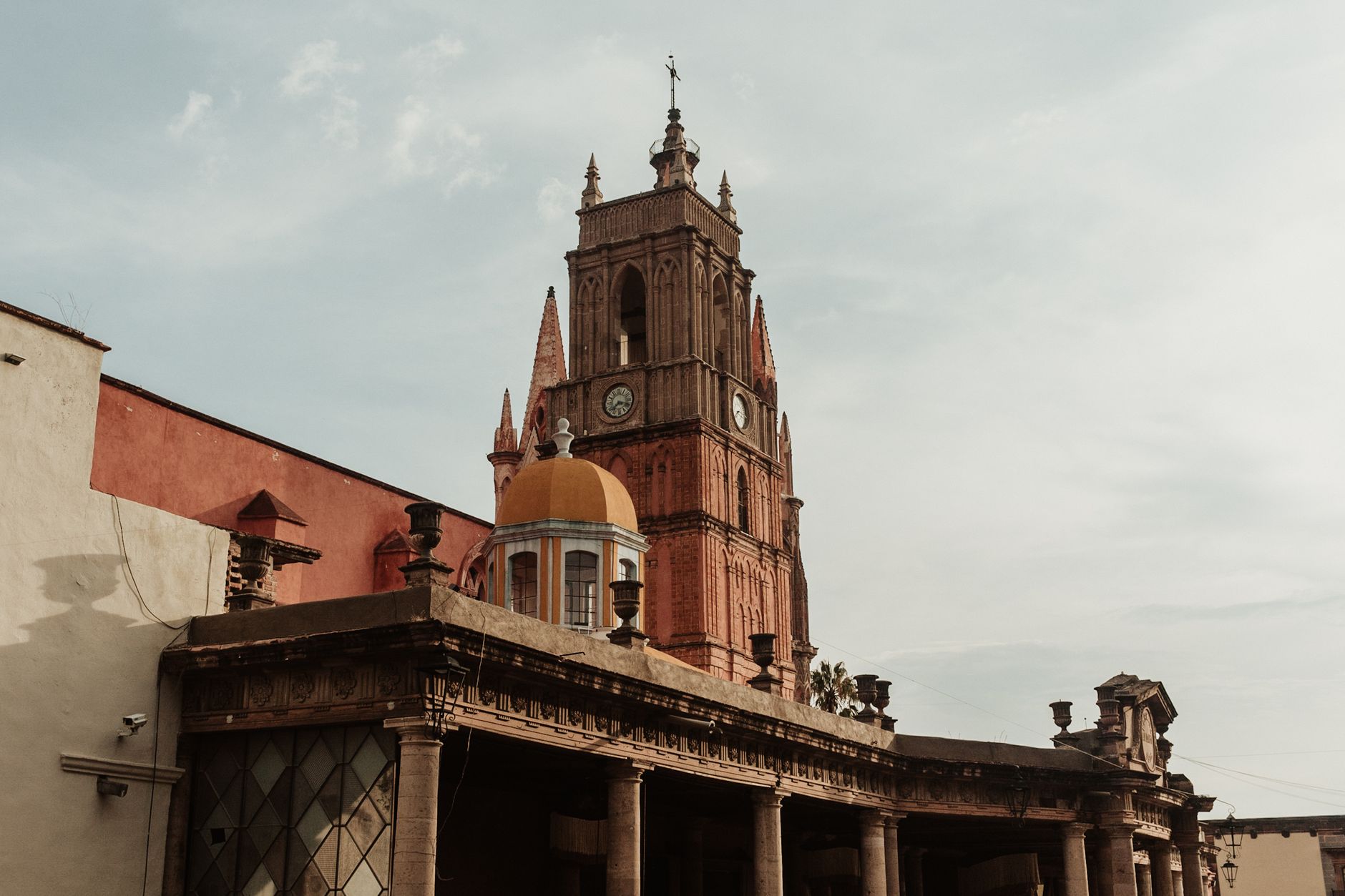
The heart of town is El Jardín, the main plaza, where the neo-Gothic Parroquia de San Miguel Arcángel rises above the square with its dramatic pink towers. The church is the city’s signature landmark and the backdrop for countless photographs. During the group’s visit, bougainvillea spilled over walls and purple jacaranda trees were in full bloom, turning every street into a visual delight.
Rooftop restaurants and terraces are a way of life in San Miguel. When the friends were not dining up high, they were relaxing on the terraces of a rented home worthy of a design magazine spread, with views across what many travelers consider one of the most beautiful cities in the world.
Two Thousand Doors and the Courtyards Behind Them
The historic district is said to hold an estimated 2,000 doors, each opening onto a courtyard of its own, some small and some grand. Many of these homes have been restored to their colonial character, with facades painted in ochre, orange and yellow and windows and doors framed by handcrafted ironwork.
Walking the narrow streets, which climb and dip over the city’s hilly terrain, became one of the trip’s simple pleasures. The travelers took note of how each door was different, and how the stonework patterns on the buildings varied from one block to the next. For visitors, comfortable walking shoes are a must: the cobblestones are charming but uneven, and the hills can be steep, especially at that altitude.
Shopping as a Team Sport
With six women on holiday, shopping quickly became a serious pursuit. Their first stop was Fábrica La Aurora, a former textile mill that has been converted into shops and galleries. Linens, jewelry, pottery and home furnishings, all made in San Miguel, found their way into suitcases bound for Alabama.
The next day brought a more traditional experience at the Mercado de Artesanías, where locals and tourists browse stalls stacked with hand-painted Mexican ceramics, hanging lamps, Oaxacan rugs, clothing and jewelry. A favorable exchange rate meant the group’s pesos stretched a long way. Back in the center of town, higher-end boutiques offered more beautiful things to admire.
Friends back home asked repeatedly about safety. The travelers reported that they felt perfectly safe wherever they went. As with any international trip, visitors should review current U.S. State Department travel information for Mexico before booking, since advisories vary by state and can change.
World-Class Dining, Tequila and a Cooking Class
The restaurants proved to be world-class, and the group was glad it made reservations in advance, because most of the popular spots were packed. Quince was a standout. Both elegant and hip, the restaurant combined its menu, music, service and atmosphere into a high-energy evening. A DJ spun music while a tightrope walker performed on a neon-lit suspended line, and during breaks a young woman wandered among the tables playing an electric violin. For diners who want something other than Mexican food, San Miguel offers a wide range of international cuisines.
The friends also visited Casa Dragones, a tequila producer, where they tasted and bought bottles to carry home. Another highlight was a hands-on cooking class with Chef David Jahnke, where the group prepared:
- Creamy corn soup
- Shrimp tacos with fresh pico de gallo
- Tuna with mole sauce
- Flan for dessert
Cooking classes have become a popular way for travelers to bring a destination home with them. Mole in particular is one of the defining sauces of Mexican cuisine, with regional versions built from chiles, spices, seeds and sometimes chocolate, and learning to make it offers a window into the country’s culinary traditions.
The ‘Sistine Chapel of Mexico’
About 15 minutes outside town, the group visited the Sanctuary of Atotonilco, El Santuario de Atotonilco, often called the “Sistine Chapel of Mexico.” Built in the 18th century, the sanctuary is famous for interiors in which the walls and ceilings of the main nave and chapels are almost entirely covered in oil paintings, poems, sculptures and frescoes in vivid blues, reds, greens and black.
The imagery is striking: mythical creatures, flowers, gilded baroque virgins, horned devils, red-robed priests and biblical figures, most of it depicting pivotal moments in the life of Christ. The sanctuary also holds a place in Mexican history. In 1810, at the start of the War of Independence, Father Miguel Hidalgo is said to have taken a banner bearing the image of the Virgin of Guadalupe from Atotonilco, and it became an emblem of the insurgent cause.
Because the visit came close to Holy Week, the group learned about a local tradition in which pilgrims carry a sculpture of Christ, wrapped in silk, on an 8-mile walk from Atotonilco into San Miguel to a local church. There, a piece of the silk is unwrapped each day until Easter.
A Goodbye to Remember
That tradition gave the trip an unforgettable final scene. On the way to the airport in León for the flight home, the group’s driver pulled over to point out that the worshippers were walking into town. Singing hymns and carrying religious icons, the pilgrims made their way against a backdrop of cactus-covered hills. For at least one member of the group, it was a goosebump moment and a fitting farewell to a stunning city.
Tips for Gulf Coast Travelers Planning a Visit
- Getting there: Many visitors fly into León, which serves the Bajío region, and continue to San Miguel by car or shuttle. Mobile-area travelers typically connect through a hub airport.
- Book restaurants early: The most popular dining rooms fill up, particularly during busy seasons and holidays.
- Consider the calendar: Spring brings blooming jacarandas, and the weeks around Holy Week feature religious processions and traditions that many visitors find deeply moving.
- Prepare for altitude and hills: At more than 6,000 feet, the air is thinner than on the Gulf Coast, so pace yourself and stay hydrated.
- Pack room for purchases: Between the ceramics, textiles, jewelry and tequila, most travelers come home with more than they brought.
For six friends from the Alabama coast, San Miguel de Allende delivered art, history, food, faith and more than a few compliments on their Southern accents. Their parting words for the city said it all: Adiós, San Miguel, until we meet again.