

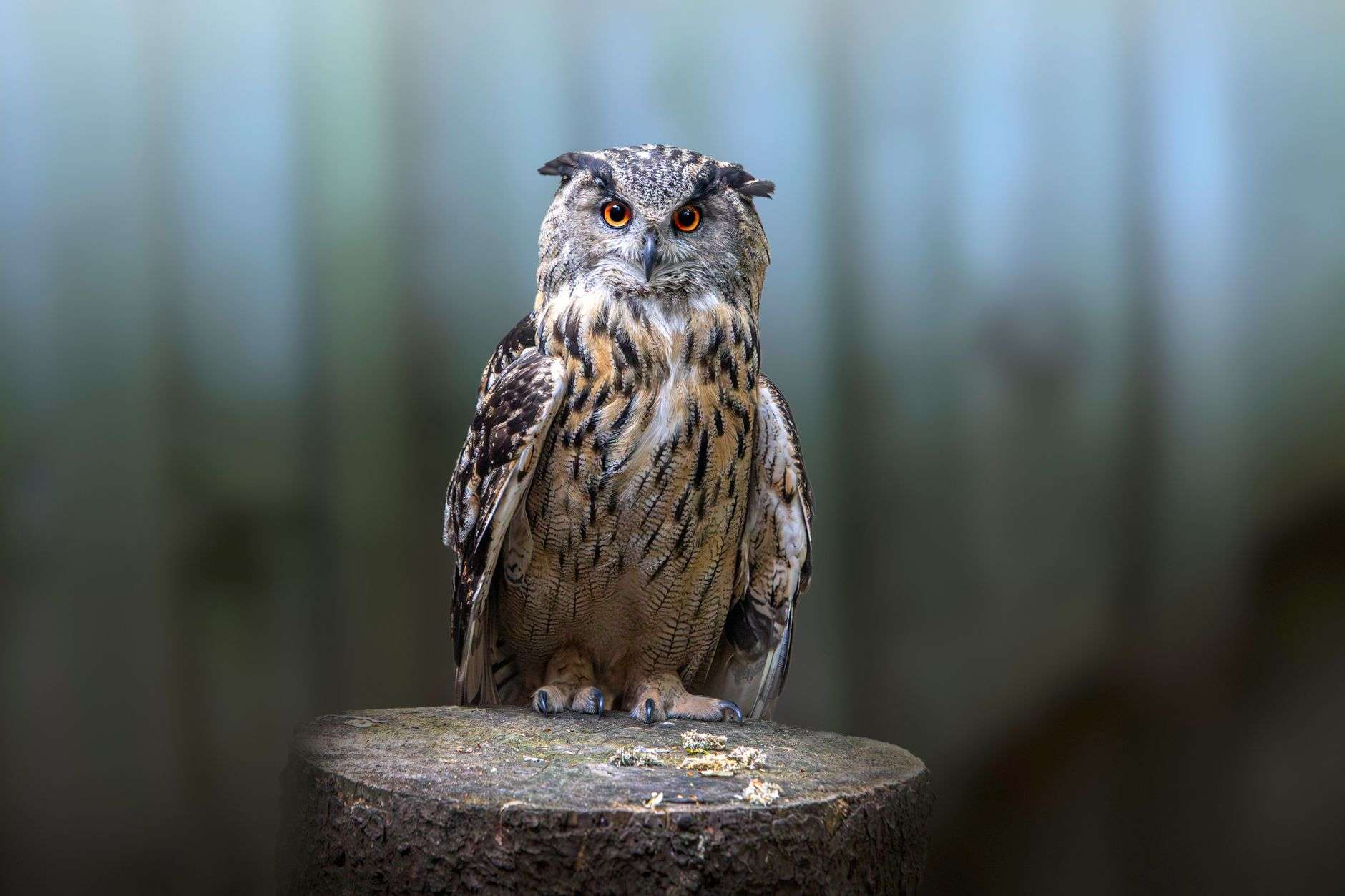
SARALAND, Ala. — When a Saraland woman found an owl tangled and hurt in her backyard tree, she didn’t call a wildlife hotline first. She called the people she trusts most in her neighborhood.
“I wasn’t real sure who to call, so I called Saraland. They are always my go-to people up here,” said Denise Stafford, the resident who later nominated the officer who responded.
Stafford said several officers arrived that night, and once daylight broke, the problem became clear: the owl was caught in fishing line dangling from a tree branch, unable to lower one of its wings.
The timing of the discovery added to the difficulty. The bird was found at night, when nothing could safely be done for it, and the responders who came could only wait for daylight to assess the entanglement. That wait — hours in which the owl remained pinned in the tree — is the stretch that made the overnight response matter. Without someone watching, a tangled animal is left to predators, weather and its own exhausted struggling; with someone on scene, it at least spent those hours protected until the line could be cut.
Most of the responding officers left once the immediate scene was handled, but Officer Jon Barnes of the Saraland Police Department chose to remain with the injured bird until animal control could take over.
Stafford described watching him free the owl from the line at first light.
“When the sun came up, Officer Barnes saw the line, got behind the owl, he clipped it, and the owl ran off, and they left, but Officer Barnes came back, and he stayed,” Stafford said.
Barnes ended up keeping watch over the owl for roughly two and a half to three hours, making sure the disoriented bird was safe until animal control arrived to take it into care.
“It just touched my heart”
For Stafford, the extended vigil said something about the kind of officer Barnes is, and about the department as a whole.
“It was like he guarded that owl,” she said. “I just thought, wow, as busy as the world is, for one officer to do that, it just touched my heart.”
Barnes downplayed the time commitment when asked about it directly.
“It doesn’t matter how long it takes; it’s just getting it done. Wherever we can help, that’s what we need to do,” Barnes said.
The episode began the way many wildlife encounters do — with a resident unsure who is responsible for an animal in distress. Police departments field those calls routinely, and most end with an officer confirming the situation and referring the caller to a wildlife rehabilitator or animal control. What distinguished this one was what happened in the hours between the call and the handoff: someone stayed.
Wildlife rescuers note that tangled animals face two dangers — the entanglement itself and the panic that follows it. An owl with a wing pinned by fishing line exhausts itself struggling, and the hours before help arrives are often as damaging as the line. Barnes’ vigil was, in practical terms, a form of first aid: keeping the bird calm, contained and protected until the professionals could take it in.
A difficult ending, handled with care
Despite the rescue effort, the owl’s injuries proved too severe, and it was later euthanized. Even so, Barnes made certain the bird was not left alone in its final hours, an act Stafford and others in the community saw as an extension of the same compassion he brings to his regular police work.
“We come to work, and we provide for the community, but it’s not always about the people; it’s about everything around us: animals, people, traffic, everything,” Barnes said.
The outcome was not what anyone on the scene had hoped for, but wildlife rehabilitators are blunt about the reality: fishing line causes injuries that often cannot be reversed, particularly when a wing has been immobilized for hours or days before the animal is found. The measure of the response in such cases is not the ending but the handling — whether the animal spent its last hours tangled, exposed and alone, or calm, safe and watched over. Stafford’s account makes clear which this was.
Her decision to nominate Barnes afterward turned a quiet backyard episode into a public one, and that, too, reflects how recognition of good police work usually travels: not through official channels, but through the residents who noticed.
Recognized with smiles behind the shield
Barnes’ patience and care earned him this month’s Smiles Behind the Shield Award, a recognition given to officers who go beyond routine duty to show kindness in their community.
Awards like this one exist to capture the part of police work that never appears in an arrest report. Departments measure response times, clearance rates and calls handled, but the daily texture of a small-city force is made of moments like this one — the officer who waits, the extra hour given to a problem that could have been handed off. Naming those moments publicly is how departments tell their communities what kind of service they consider worth honoring.
For a small-town department like Saraland’s, stories like this one are a reminder that community policing often shows up in unexpected, small-scale moments — including a few quiet hours spent watching over an injured wild animal until help could arrive.
The economics of small departments make such stories possible in a way they are not in big cities. Saraland’s officers patrol a compact, fast-growing city where call volumes allow — and expectations encourage — the kind of discretionary attention that three hours with an owl represents. Residents who hear about the episode draw their own conclusions about the force, and those conclusions matter more to a small city’s reputation than any recruiting brochure: this is what our police do when you call them.
Why the call went to the police
Stafford’s choice to dial the police department rather than a wildlife agency is common in communities like Saraland, and it says something about how residents actually use local government. State wildlife agencies and rehabilitators handle animal cases, but they are regional, office-based and reachable mainly during business hours. The city police department answers the phone at night, knows the addresses, and can put an officer in a backyard within minutes. For a resident with an animal in distress, that is the call that works.
Saraland, a growing city in northern Mobile County, has built its identity partly on the accessibility of its local government, and its police department operates at the scale where officers are known by name to the residents they serve. In that environment, a call about an owl in a tree is not an oddity to be deflected; it is a neighbor asking for help, and the department treated it as such — sending several officers on the initial night response and letting one stay through the morning.
The fishing line that ensnared the owl is one of the most common hazards to urban and suburban wildlife. Discarded line from ponds, creeks and backyards hangs in trees and along shorelines for years, invisible until an animal flies into it or steps in it. Wildlife groups regularly ask residents to cut and properly dispose of used line, and the Saraland episode is a local illustration of why that small habit matters — the difference between a stray coil in a tree and an animal that cannot lower its wing.
What residents can do
For anyone who finds an injured or tangled wild animal, the sequence Stafford followed is a sound one: secure the scene so the animal cannot struggle further, call the local authorities, and let trained responders handle the animal itself. Owls and raptors have sharp talons and fragile wings, and untrained handling tends to make injuries worse — another reason the professionals’ arrival mattered.
Animal control took the owl into care after Barnes’ vigil, and the rehabilitators who examined it made the difficult judgment that its injuries could not be treated. Euthanasia in such cases is the standard humane outcome when a raptor’s wing damage would leave it unable to fly or survive in the wild. For the people who spent the morning with the bird, the ending was still hard; the difference is that it was reached deliberately, by professionals, rather than slowly and alone in a backyard tree.
Stafford said the experience reaffirmed why she calls Saraland police first whenever something unusual happens in her yard.
“They are always my go-to people,” she said.
For the department, the episode and the award that followed it distill what community policing means at its most local scale: a resident who trusts the force enough to call it for an owl, an officer willing to spend three hours on the answer, and a city that names the moment worth remembering.